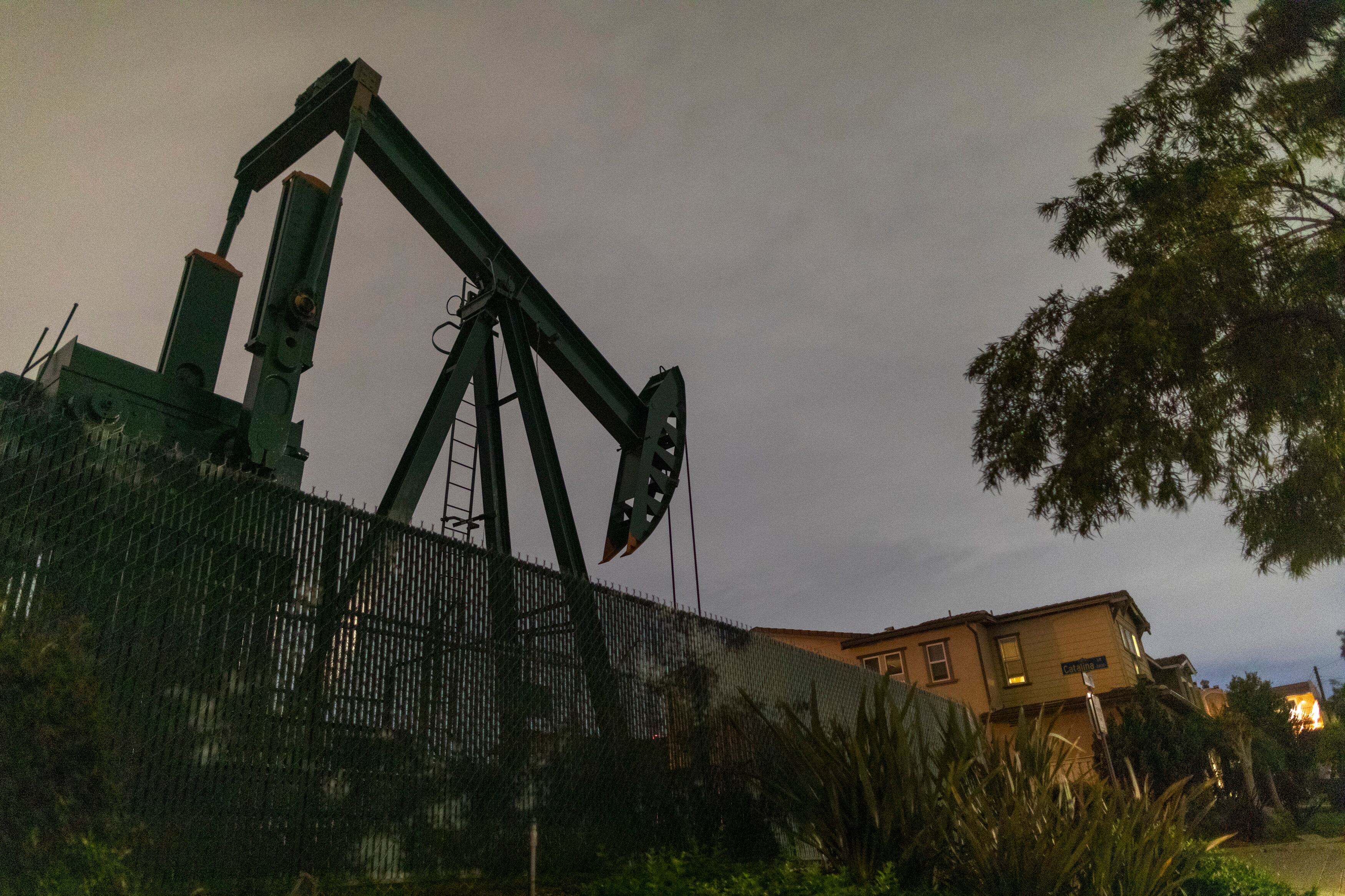
The grim outlook for oil is getting even gloomier.
The world's top oil-producing countries — and some GOP lawmakers — are effectively pleading with Saudi Arabia to end its price war with Russia, which has sent prices plummeting to four-year lows.
But even if Saudi leaders relent, the abrupt drop in global oil demand spurred by restrictions on travel, tourism, and shipping to contain the spread of coronavirus is expected to cause the biggest drop in consumption since the Carter and Reagan administrations.
Brent crude oil, the benchmark for global oil prices and for U.S. gasoline, had plunged to just over $25 a barrel as of Wednesday afternoon — a 10-percent one-day drop that has brought prices to levels not seen since January 2016 and, previously, June 2003.
West Texas Intermediate, the bellwether for U.S. oil production, has plunged even further, falling 20 percent since Tuesday to roughly $23 a barrel as of Wednesday afternoon.
The abrupt downturn has roiled OPEC, which until last week had periodically renewed agreements with Russia to cut production to help shore-up sagging oil prices. After Russia earlier this month refused to go along with the latest round of proposed cuts, though, Saudi Arabia lashed out by suddenly slashing prices and ramping up production in a bid to grab market share — a move that has sent oil prices into a deep spiral.
That's inflicted sharp pain on countries that heavily depend on oil revenues to fund their budgets — including Saudi Arabia and Russia. But while the kingdom and the Kremlin are now locked in an economic battle of attrition to see which government's treasury will buckle first, other OPEC members are openly signaling their dissent.
Iraq's government this week publicly called on OPEC and its erstwhile ally, Russia, to convene a special meeting to bring Saudi and Russian negotiators back to the bargaining table. Days earlier, the head of the International Energy Agency and OPEC's secretary general, who represents Nigeria, issued a statement expressing "deep concerns" about — euphemistically — "the most recent developments in global oil markets."
"They agreed that these create material impacts, particularly for citizens of developing countries including those that rely heavily on income from oil and gas production for essential services and that are especially vulnerable to market volatility," IEA Executive Director Fatih Birol and OPEC Secretary General Mohammad Sanusi Barkindo said in the statement recounting their meeting. "This is likely to have major social and economic consequences, notably for public sector spending in vital areas such as healthcare and education."
World leaders have expressed especially sharp concern that the plunge in oil prices will impair OPEC member nations' ability to fund any kind of effective response to the coronavirus.
More than a dozen Republican senators sent a letter this week to Crown Prince Mohammad bin Salman, calling on the kingdom to "assert constructive leadership in stabilizing the world economy by calming economic anxiety in the oil and gas sector at a time when countries around the world are addressing the pandemic." A group of Republican senators was reportedly scheduled to meet Wednesday with Saudi Arabia's ambassador to the U.S. to press the case. Whether such pressure will have any impact, however, is far from clear.
"Iraq looks desperate and forcefully called on OPEC Sec Gen Barkindo to do something," said Ellen Wald, a senior fellow with the Global Energy Center at the Atlantic Council — a DC think tank — and the president of Transversal Consulting. "The GOP senators' letter admonishing Saudi Arabia is purely political on their end and will have zero impact."
Energy consultants have meanwhile painted an ugly picture of the months ahead. Goldman Sachs slashed its price outlook for Brent by close to a third, projecting second-quarter prices to reach as low as $20 a barrel, down from its previous projection of $30. Rystad Energy offered an even more pessimistic outlook, predicting in what it called a "shock revision" that demand will fall by 2.8 percent — a scale not seen since 1980-1982 as markets recovered from the 1973 and 1979 oil crises.
"There's going to be four months of really bad oil data on the demand side, and we're not really sure how long it's going to last," said Steven Kopits, managing director of Princeton Energy Advisors. "This is not a game of averages — there's going to a really bad part, and then a recovery with some lingering areas."