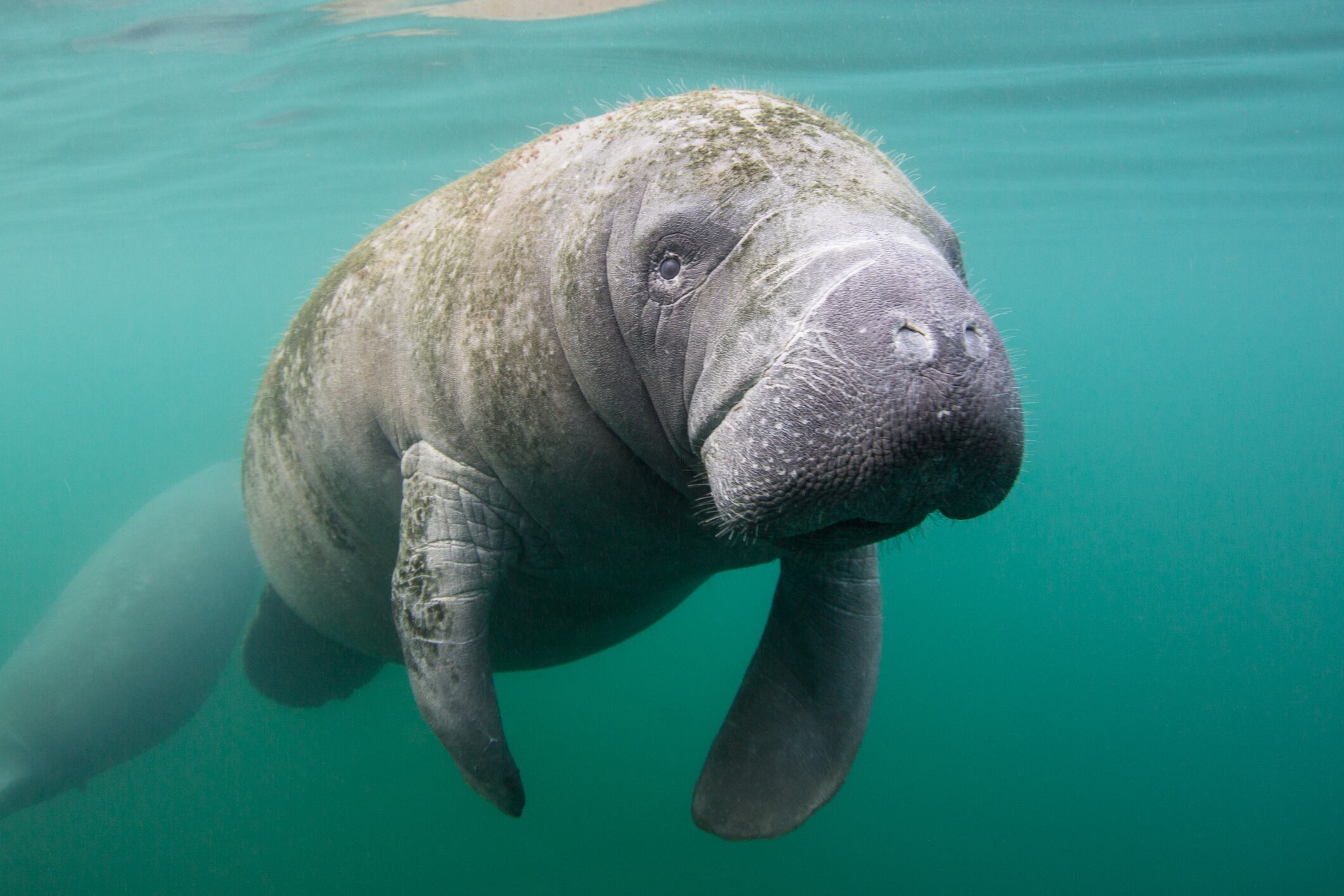
A stock image of a manatee swimming just below the surface in Crystal River, Florida. Credit: Brent Durand / Getty Images
State and federal wildlife officials are investigating reports of a manatee found with “Trump” drawn on its back in a Florida river.
The aquatic mammal was spotted over the weekend in the Homosassa River in Citrus County, the U.S. Fish and Wildlife Service and the Florida Fish and Wildlife Conservation Commission confirmed. The area is about 80 miles (130 kilometers) north of Tampa.
“West Indian manatees are essential members of the ecosystems in which they inhabit and are protected under the Endangered Species Act and the Marine Mammal Protection Act,” USFWS Director Aurelia Skipwith said in a statement.
The manatee does not appear to be seriously injured, officials said. It appears that the word was written in algae that had grown on the animal’s back, not scratched into its skin.
Wildlife officials are looking for any information regarding the animal's harassment. Tips can be reported at 888-404-3922. The Center for Biological Diversity, a nonprofit group that protects endangered animals, is offering a $5,000 reward for information leading to a conviction in the case.
Harassing a manatee, a federal crime, is punishable by a $50,000 fine and up to one year in prison.
Speaker Kevin McCarthy plans to force a vote Tuesday on the far-right effort to oust him from his leadership position and insists he will not cut a deal with Democrats to remain in power, setting the stage for an extraordinary and unpredictable showdown on the House floor.
Hunter Biden pleaded not guilty on Tuesday to three federal firearms charges filed after a plea deal imploded, putting the case on track toward a possible trial as the 2024 election looms.
Speaker Kevin McCarthy is facing an extraordinary referendum on his leadership of the House after Rep. Matt Gaetz, a longtime critic, moved to launch a vote to oust him from the helm.
The office of Montana’s Republican attorney general is appealing a landmark climate change ruling that said state agencies aren't doing enough to protect 16 young plaintiffs from harm caused by global warming.