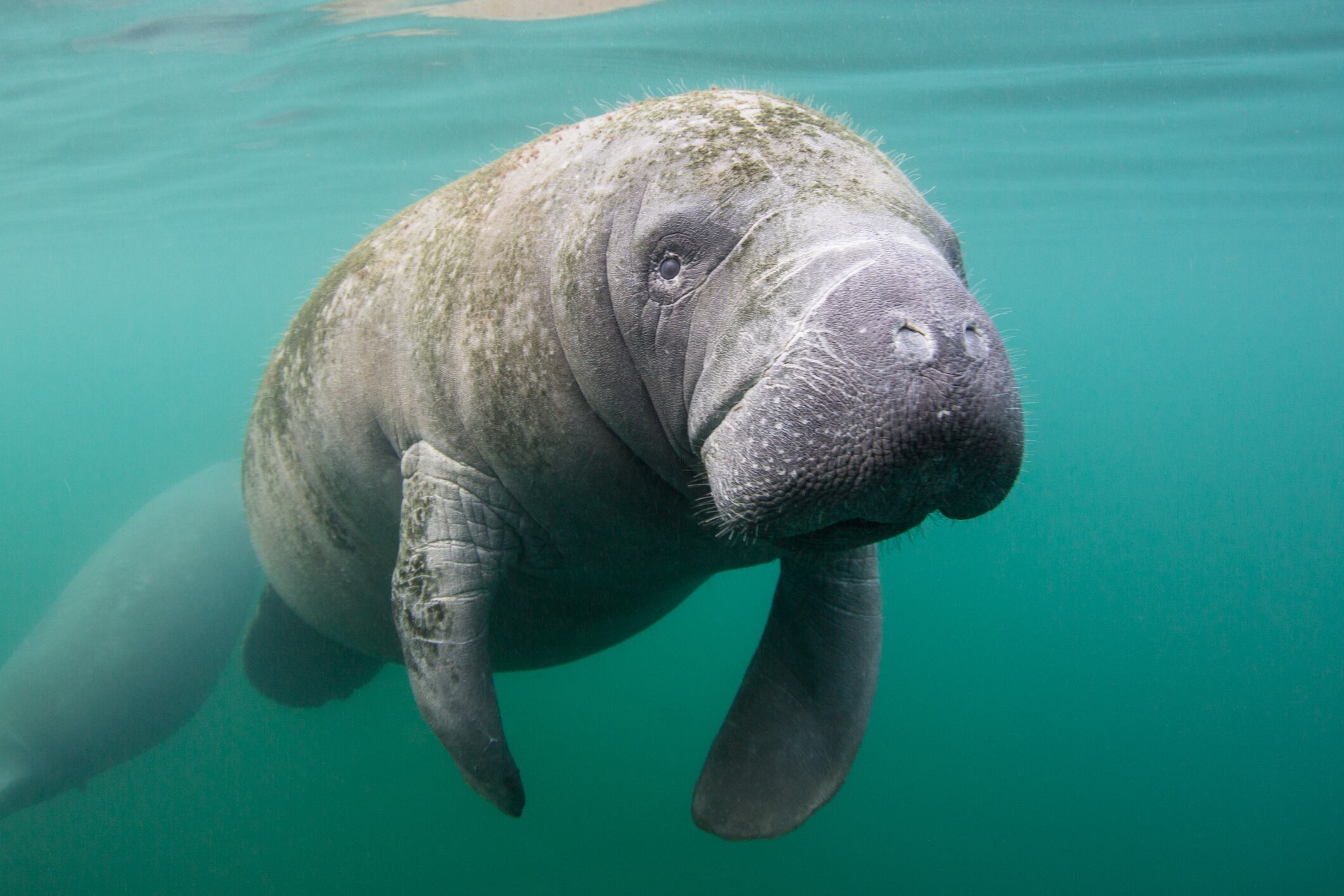
A stock image of a manatee swimming just below the surface in Crystal River, Florida. Credit: Brent Durand / Getty Images
State and federal wildlife officials are investigating reports of a manatee found with “Trump” drawn on its back in a Florida river.
The aquatic mammal was spotted over the weekend in the Homosassa River in Citrus County, the U.S. Fish and Wildlife Service and the Florida Fish and Wildlife Conservation Commission confirmed. The area is about 80 miles (130 kilometers) north of Tampa.
“West Indian manatees are essential members of the ecosystems in which they inhabit and are protected under the Endangered Species Act and the Marine Mammal Protection Act,” USFWS Director Aurelia Skipwith said in a statement.
The manatee does not appear to be seriously injured, officials said. It appears that the word was written in algae that had grown on the animal’s back, not scratched into its skin.
Wildlife officials are looking for any information regarding the animal's harassment. Tips can be reported at 888-404-3922. The Center for Biological Diversity, a nonprofit group that protects endangered animals, is offering a $5,000 reward for information leading to a conviction in the case.
Harassing a manatee, a federal crime, is punishable by a $50,000 fine and up to one year in prison.
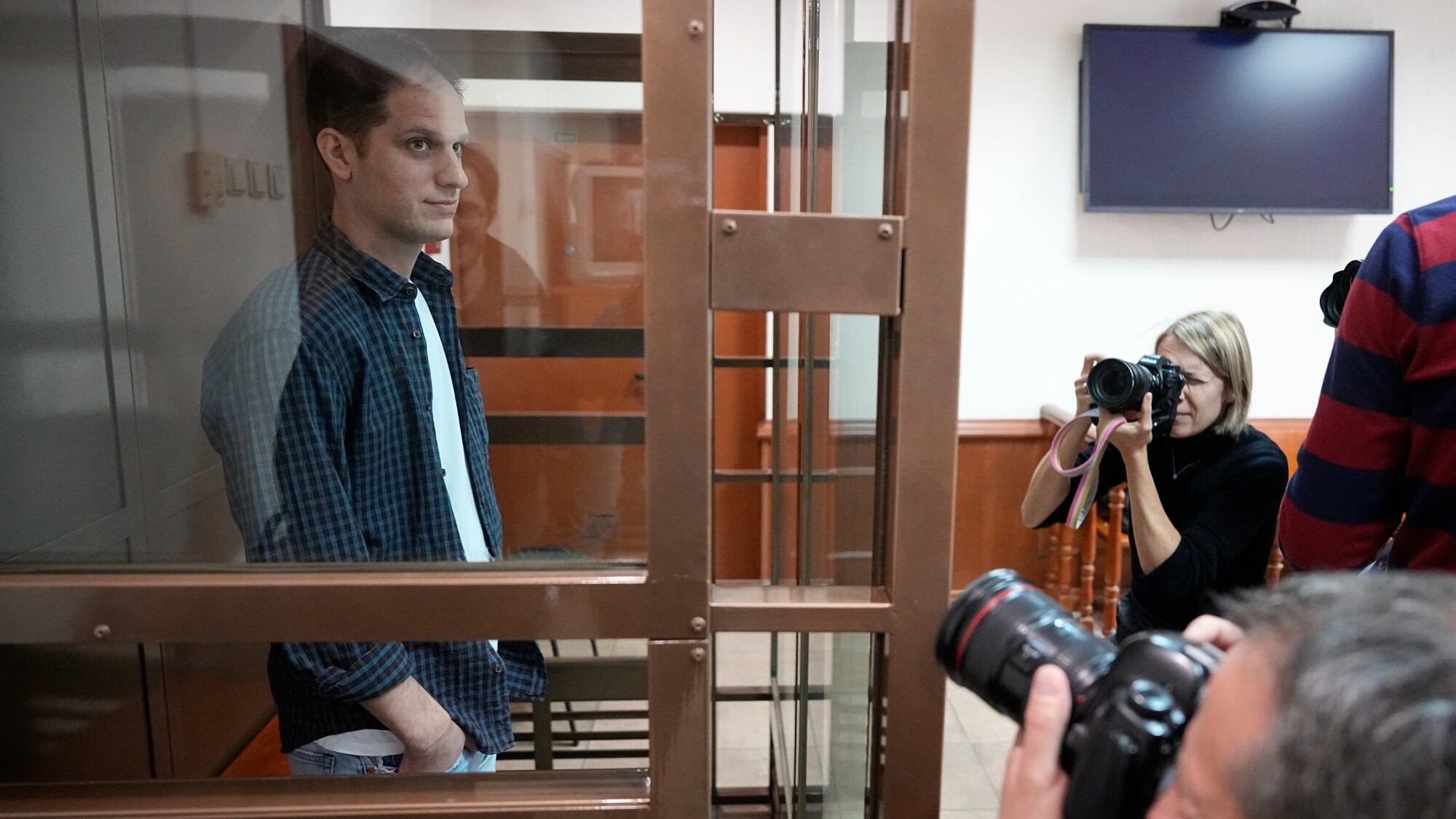
Wall Street Journal reporter Evan Gershkovich lost an appeal Tuesday to be released from jail on espionage charges, meaning he will remain behind bars at least through Nov. 30.
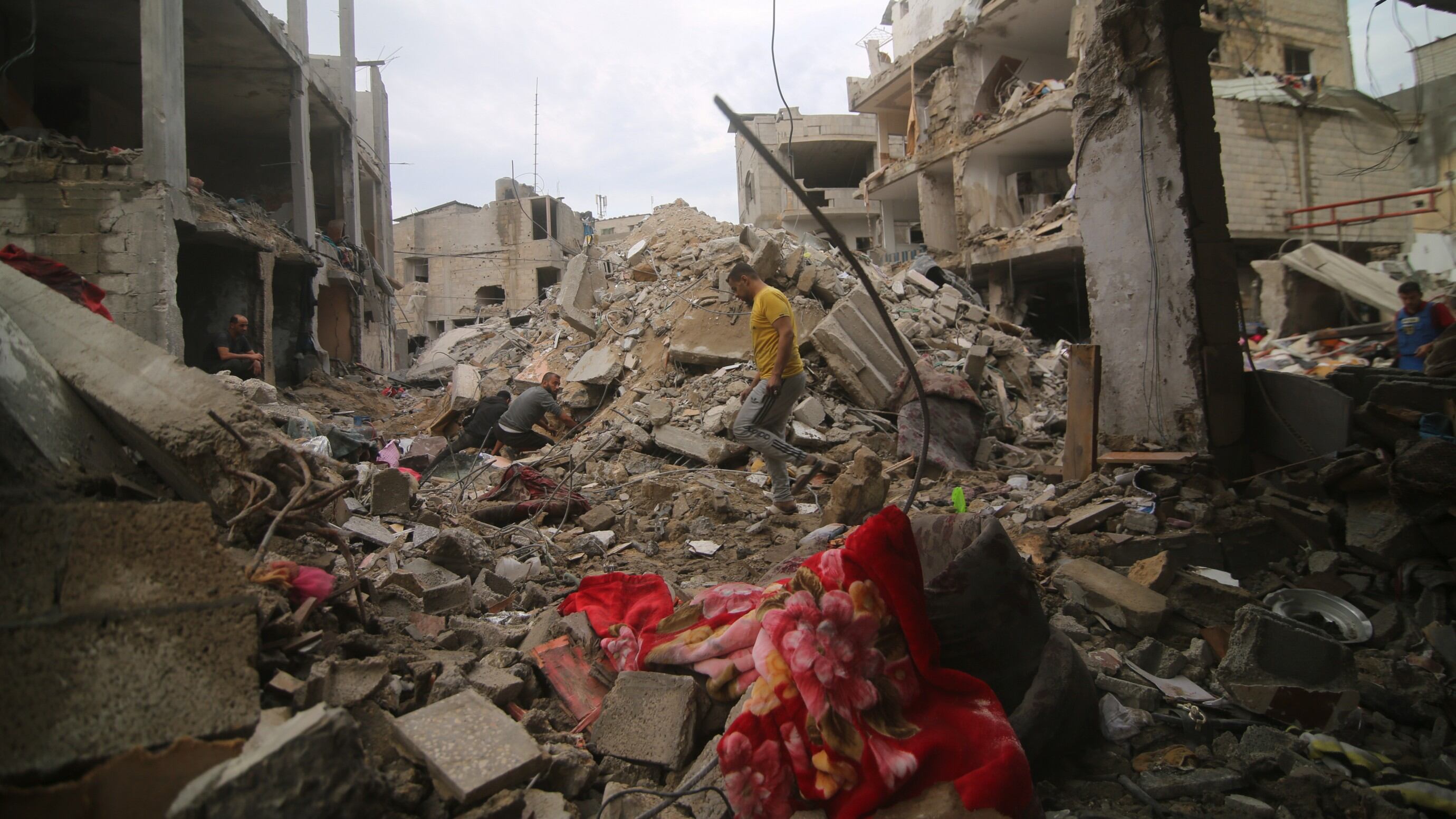
Palestinians in the sealed-off Gaza Strip are scrambling to find safety, as Israeli strikes demolish entire neighborhoods, hospitals run low on supplies and a power blackout is expected within hours.
The U.S. has already begun delivering critically needed munitions and military equipment to Israel, and the State Department now says that at least 11 American citizens have been killed in the weekend Hamas attacks on Israel.
California Gov. Gavin Newsom rejected a bill on Sunday that would have made free condoms available to all public high school students, arguing it was too expensive for a state with a budget deficit of more than $30 billion.