Oculus Go Aims to Be Facebook's VR Gateway for the Masses
*By Alisha Haridasani*
With its sights trained on a broader market for its virtual reality headsets, Facebook’s Oculus began selling its mid-range device on Tuesday.
The Oculus Go, which is available for sale on the Oculus website, Amazon, and in Best Buy stores, starts at $199, about half the price of the company’s high-end Rift product. The company also produces the cheaper Oculus Gear VR, which only works with select Samsung phones. The Go, unlike the Rift or the Gear VR, doesn’t need to be tethered to another device.
“We think that Oculus Go is a fantastic entry point for people who may not have tried getting into VR yet,” said Madhu Muthukumar, the product manager for Oculus Go, in an interview with Cheddar’s Alex Heath.
“We think of VR as a spectrum,” said Muthukumar, with the Rift at one end and the Gear VR at the other. The Go fits “nicely in the middle," he said.
The Go includes its own for-sale VR video library and access to Oculus TV, a new platform that allows users to access TV apps such as ESPN, Netflix, and Hulu. The new Go headset is also compatible with personal photos and videos from a user's phone, social media accounts, and Dropbox. The Go can also be fitted with prescription lenses.
“This is how people imagine VR should work,” said Muthukumar.
Oculus has grown from the Kickstarter-funded brainchild of [Palmer Luckey](https://www.wired.com/2014/05/oculus-rift-4/), who created the first prototype in 2011, when he was 18 years old, to a major player in virtual reality. Facebook acquired the company in 2014 for $2 billion, prompting other tech companies such as Microsoft and Google to try to develop their own competitive VR products. Apple is [reportedly](https://www.cnet.com/news/apple-is-working-on-an-ar-augmented-reality-vr-virtual-reality-headset-powered-by-a-wireless-wigig-hub/)working on its own headset that can run both VR and AR technology.
Despite Silicon Valley's push into VR, the technology hasn't been widely adopted by consumers. In 2016, only 200,000 Rift headsets were sold globally, according to a study by [SuperData](https://www.economist.com/news/business/21724863-vr-has-been-more-about-hype-substance-will-change-reality-check-virtual). The VR software and hardware industry made $1.8 billion in 2016, half the amount estimated in the study.
For the full interview, [click here](https://cheddar.com/videos/facebook-looks-to-take-vr-mainstream-with-oculus-go).
CES, the largest tech convention in the world, kicks off this Wednesday ending on Friday, one day earlier than originally planned. The annual event features more than 2,000 exhibitors showing off their latest tech products in Las Vegas. Richard Lawler, Senior News Editor, The Verge joined Wake Up with Cheddar to preview the large event.
Amazon employees and activists staged a worldwide strike today--calling on the tech giant to raise wages, pay more taxes and reduce its carbon footprint. The 'Make Amazon Pay' protests took place at factories, warehouses, data centers and corporate offices all around the world. Ian Sherr, Editor at Large, The Verge, joined Wake Up with Cheddar to discuss.
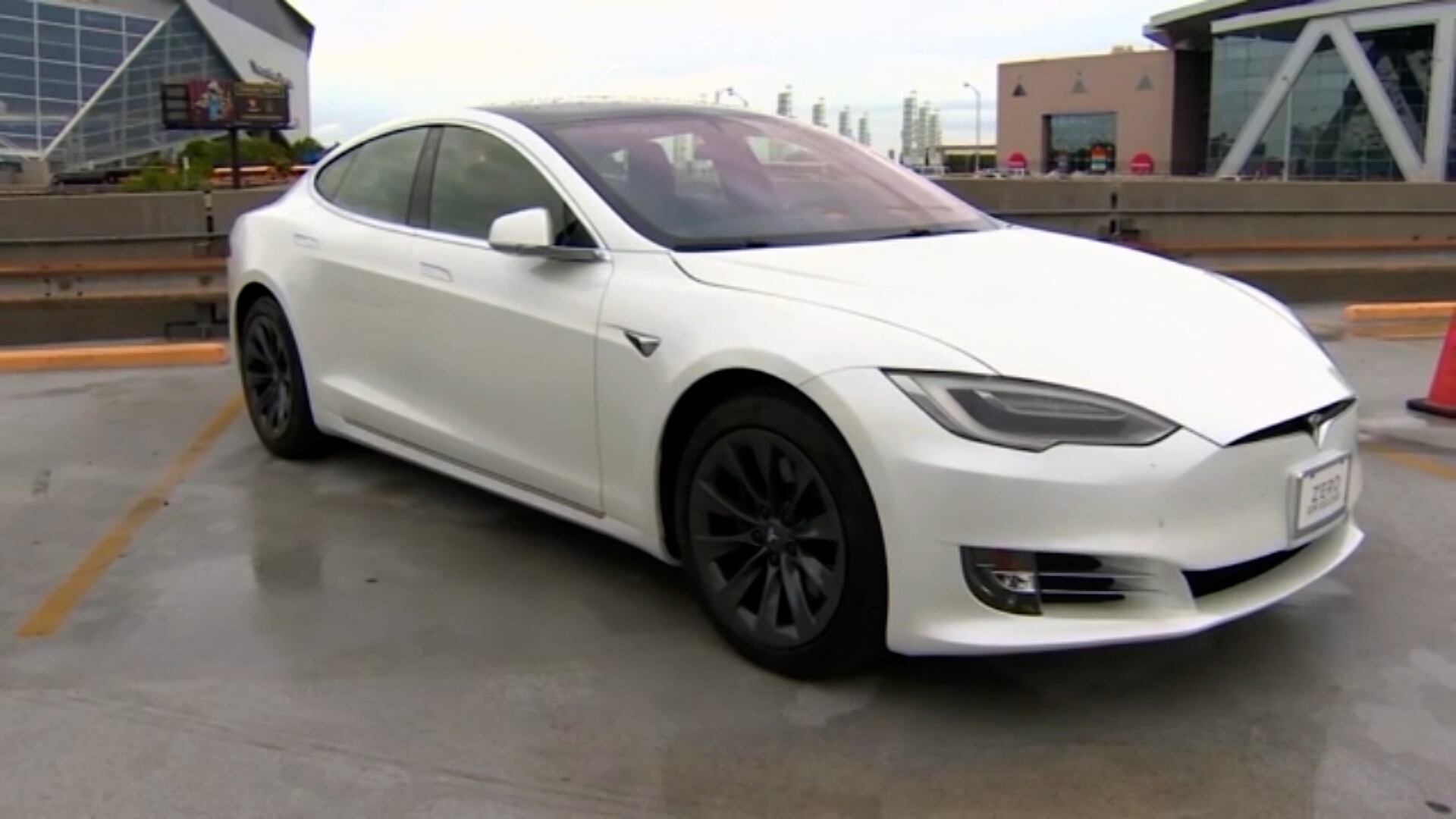
Tesla posted solid delivery numbers over the last year, with deliveries surpassing over 930,000, an 87 percent jump from the same period in 2020. Anthony Sassine, CFA, Senior Investment Strategies, KraneShares joined Wake Up with Cheddar to discuss the top EV stocks as well as how Tesla will stay relevant in the crowded space.
Apple became the first publicly traded U.S. company to hit the $3 trillion valuation mark after its stock price jumped to $182.86 in morning trading before slipping back just under the mark. The tech giant has tripled its worth since 2018.
There is a new player in the mobile app stock trading space.
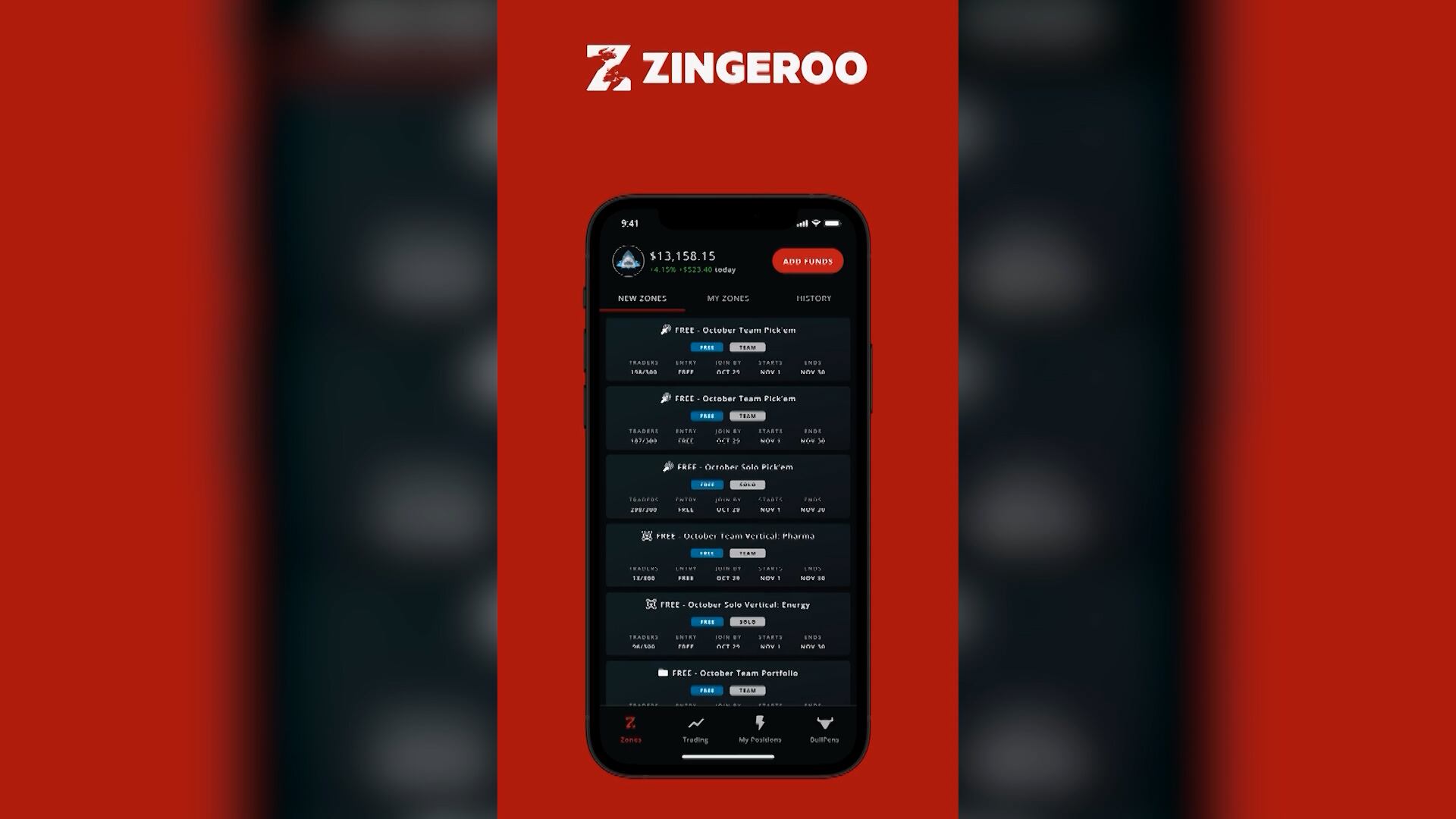
Zingeroo recently announced a funding round of $8.5 million. The company says it aims to bring 'friendly competition' to stock trading, by literally breaking trading down into daily and weekly competitions between friends. Zingeroo also says it hopes its new approach can make trading more accessible, educational, and social than ever before. Zingeroo co-founder and CEO Zoe Barry joins Cheddar News' Closing Bell for more.
As cell carriers AT&T and Verizon planned to roll out nationwide 5G service this week, the FAA and U.S. DOT are asking the companies to pause their plans so more research can be done on the impact 5G has on aircraft technology. The companies are refusing, citing French regulations that limit wireless signals around airports while allowing research to continue. This week's launch wasn't the first time concerns have delayed 5G — last year, Airbus and Boeing express concerns, pushing the deadline into November, December, and then into this year. So what happens now — and what happens next? Will 5G roll out this year as expected? Jon Swartz, Senior Reporter at MarketWatch, joins Cheddar News' Closing Bell to discuss the state of the planned 5G rollout, why the FAA and U.S. Department of Transportation are asking carriers to stall the launch, and more.