This story was originally published on January 21, 2021
New York City has brought a number of new vaccine hubs and facilities online as it ramps up for mass vaccinations after a rocky early rollout of the process. But even robust infrastructure won't help the city if it runs out of doses of the scarce vaccine — which it is expected to as early as the end of the week.
A new 24/7 vaccine site opened last week alongside Brooklyn Army Terminal, a former military supply base that is now used as a commercial hub. One of the first such facilities in the city, it was originally constructed for COVID-19 testing but has been retrofitted to vaccinate up to 2,000 people per day when fully operational. Each borough will have a similar facility with an additional mega-site expected to open at Citi Field in Queens within the week.
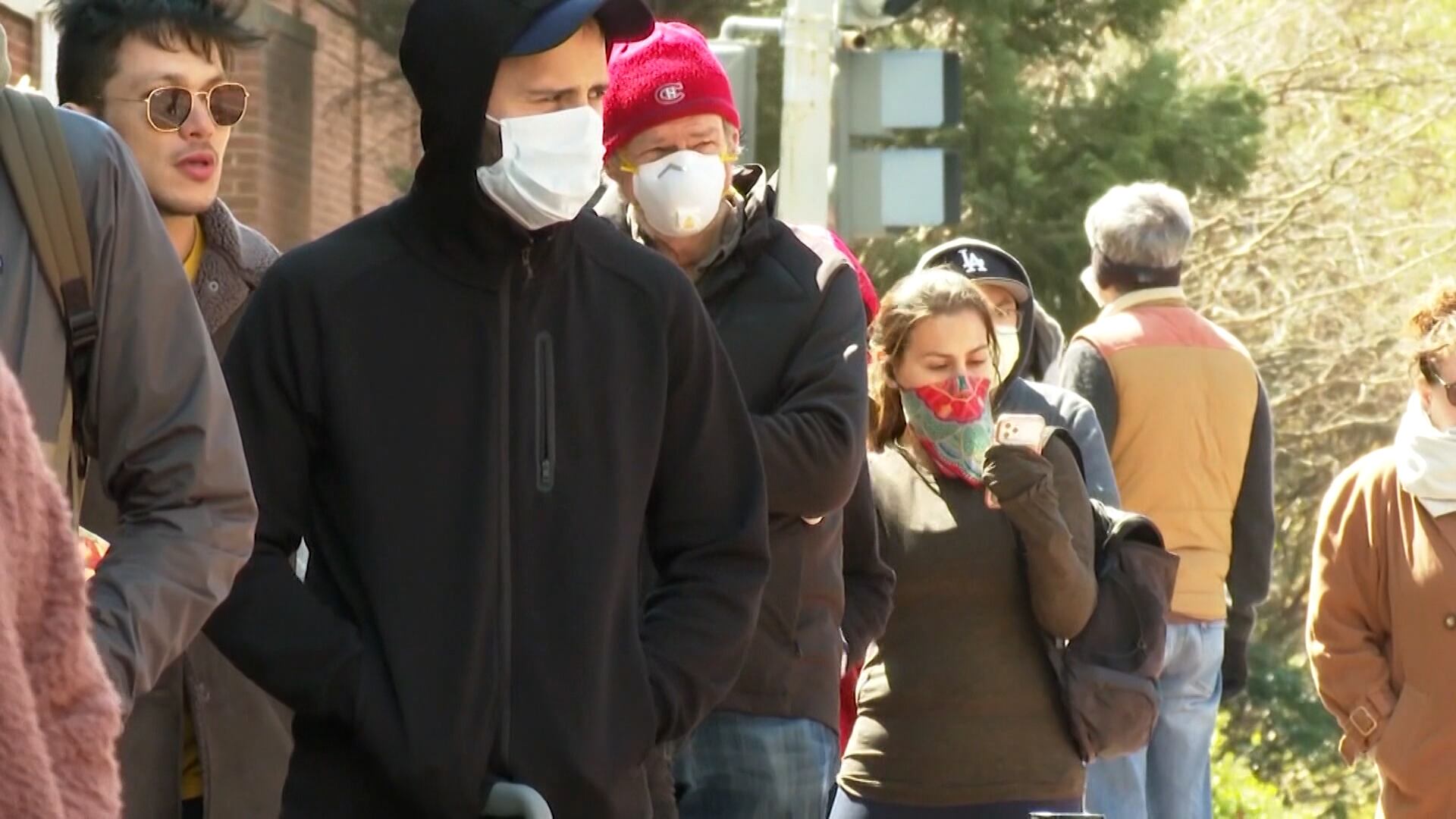
Patients receiving their vaccines on the first few days of operations didn't seem to mind the series of steps involved, including a mandatory and somewhat complicated reservation system, a wait in line, and registration.
Jennifer Weyburn, an educator, said her friends and colleagues walked her through the appropriate steps to register.
"I mean it wasn't intuitive, but you figured it out," she said.
Authorities hoped the reservation process would keep lines from forming or crowds from gathering. Still, wait times were hours long at facilities in Staten Island over the weekend, according to SILive. Patients at the Brooklyn site reported quick wait times by comparison.
Rebecca Wexler, a teacher, said the entire process took her about an hour and 15 minutes from start to finish.
"It was flawless for me. I'm surprised and happy to say," she said.
There was also a consistent flow of curious New Yorkers without appointments wandering up to inquire about the shot.
"It's by appointment. And we're trying to reiterate that, but of course, people are used to using our testing sites as walk-in only," said Dr. Jonathan Jimenez, medical director of community testing and vaccination sites with NYC Health + Hospitals.
Once inside, patients are escorted to one of 23 pods, where they will meet with a nurse practitioner to receive their injection. Brooklyn Army Terminal offers the Moderna vaccine, which, according to the CDC, is 94.1 percent effective in preventing COVID-19 illness. After they receive the shot, patients are herded toward a waiting area, where they are observed by medical professionals for any reaction to the drug. The CDC recommends 15 to 30 minutes of observation, depending on medical history.
After receiving her first dose of the Moderna vaccine, Weyburn said she was elated to receive the shot earlier than anticipated. But she wasn't ready to let her guard down yet.
"I guess the big thing is not to get over-elated and to keep on doing social distancing, and wearing masks," she said.
Especially as more New Yorkers become eligible for the coronavirus vaccine, facilities like the one at Brooklyn Army Terminal will play a crucial part in New York City's strategy to ramp up vaccinations. But Mayor Bill de Blasio said shortages of doses could impair those efforts. The city already canceled or rescheduled some 23,000 vaccine appointments due to inadequate supply, exacerbated by a delivery delay of the Moderna vaccine, the Associated Press reported.
New York Governor Andrew Cuomo said he expects doses across the state to run dry within days.
Close to 908,000 people across the state have received their first dose of the vaccine, and 136,500 have received their second dose, according to New York state's COVID-19 tracker. Even so, the pressure is on officials to continue the rollout uninterrupted as hospitalizations creep up to levels not seen since the early days of the pandemic.
This story was photographed and edited by Douglas C. Murray