This story was originally published on January 21, 2021

New York City has brought a number of new vaccine hubs and facilities online as it ramps up for mass vaccinations after a rocky early rollout of the process. But even robust infrastructure won't help the city if it runs out of doses of the scarce vaccine — which it is expected to as early as the end of the week.

A new 24/7 vaccine site opened last week alongside Brooklyn Army Terminal, a former military supply base that is now used as a commercial hub. One of the first such facilities in the city, it was originally constructed for COVID-19 testing but has been retrofitted to vaccinate up to 2,000 people per day when fully operational. Each borough will have a similar facility with an additional mega-site expected to open at Citi Field in Queens within the week.

Patients receiving their vaccines on the first few days of operations didn't seem to mind the series of steps involved, including a mandatory and somewhat complicated reservation system, a wait in line, and registration.

Jennifer Weyburn, an educator, said her friends and colleagues walked her through the appropriate steps to register.

"I mean it wasn't intuitive, but you figured it out," she said.

Authorities hoped the reservation process would keep lines from forming or crowds from gathering. Still, wait times were hours long at facilities in Staten Island over the weekend, according to SILive. Patients at the Brooklyn site reported quick wait times by comparison.

Rebecca Wexler, a teacher, said the entire process took her about an hour and 15 minutes from start to finish.

"It was flawless for me. I'm surprised and happy to say," she said.

There was also a consistent flow of curious New Yorkers without appointments wandering up to inquire about the shot.

"It's by appointment. And we're trying to reiterate that, but of course, people are used to using our testing sites as walk-in only," said Dr. Jonathan Jimenez, medical director of community testing and vaccination sites with NYC Health + Hospitals.

Once inside, patients are escorted to one of 23 pods, where they will meet with a nurse practitioner to receive their injection. Brooklyn Army Terminal offers the Moderna vaccine, which, according to the CDC, is 94.1 percent effective in preventing COVID-19 illness. After they receive the shot, patients are herded toward a waiting area, where they are observed by medical professionals for any reaction to the drug. The CDC recommends 15 to 30 minutes of observation, depending on medical history.

After receiving her first dose of the Moderna vaccine, Weyburn said she was elated to receive the shot earlier than anticipated. But she wasn't ready to let her guard down yet.

"I guess the big thing is not to get over-elated and to keep on doing social distancing, and wearing masks," she said.

Especially as more New Yorkers become eligible for the coronavirus vaccine, facilities like the one at Brooklyn Army Terminal will play a crucial part in New York City's strategy to ramp up vaccinations. But Mayor Bill de Blasio said shortages of doses could impair those efforts. The city already canceled or rescheduled some 23,000 vaccine appointments due to inadequate supply, exacerbated by a delivery delay of the Moderna vaccine, the Associated Press reported.

New York Governor Andrew Cuomo said he expects doses across the state to run dry within days.

Close to 908,000 people across the state have received their first dose of the vaccine, and 136,500 have received their second dose, according to New York state's COVID-19 tracker. Even so, the pressure is on officials to continue the rollout uninterrupted as hospitalizations creep up to levels not seen since the early days of the pandemic.

This story was photographed and edited by Douglas C. Murray
Share:
More In Politics
What is the Biden Agenda in 2022?
Gerren Keith Gaynor, managing editor of politics and Washington correspondent at The Grio, joins Cheddar Politics to discuss the progress President Biden made on his policy agenda in 2021, and what remains to be done in 2022.
Nike, AMEX Among Companies Sticking to Pledge to Not Fund January 6 Objectors
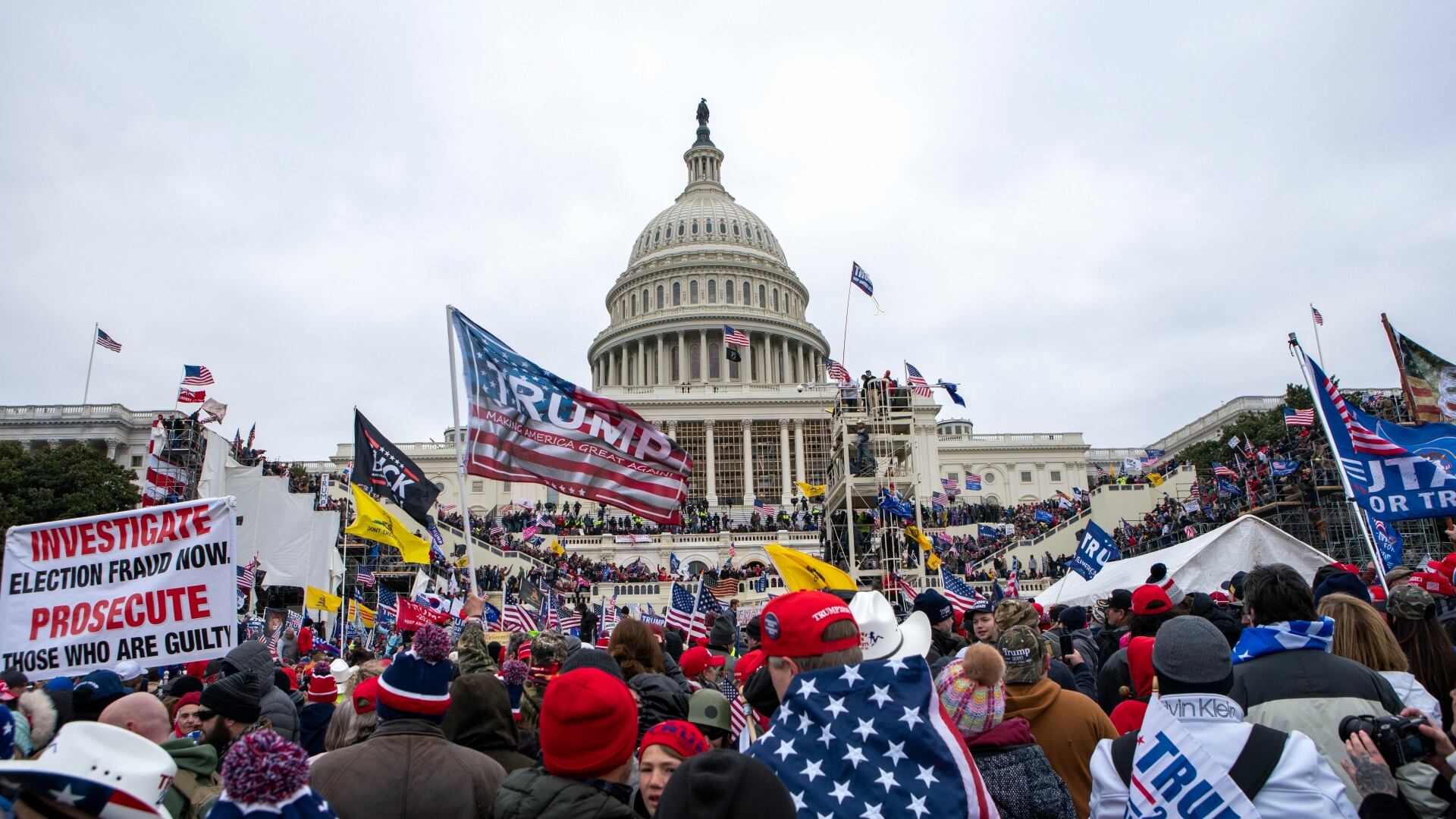
Following the attack on the Capitol last year, several major corporations promised to no longer pour funds into the campaigns of Republican lawmakers who supported the January 6 insurrection. But not all have stood firm on their word. Among those that did keep to their promise were Nike, American Express, and Walgreens.
N.H. Rep Reflects on 'Thousand Acts of Courage' That Saved Democracy on Jan. 6
Rep. Annie Kuster (D-N.H. 2nd District) joined Cheddar's "Between Bells" to reflect on the January 6 insurrection and her personal experience in the Capitol when rioters attempted to overtake the House chamber. "What I now understand to be true is that the mob of rioters had reached the third floor and was literally in the hallway running toward us as we ducked into the elevator," she told Cheddar. Kuster recalled the fear she felt, wondering what might have happened if the insurrectionists crossed paths with her group. Kuster noted that she has since received therapy to help cope with the traumatic event. "A thousand acts of courage saved our life and saved our democracy," she said.
How January 6 Insurrection Could Impact Midterm Elections, 2024 Presidential Race
Andy Kroll, Washington bureau chief at Rolling Stone, joined Cheddar's Baker Machado to discuss the anniversary of the January 6 insurrection and how it could impact upcoming elections. Kroll talked about whether or not Trump's influence will aid Republicans in the midterms and how it could be a setup for the former president to run in the 2024 presidential election. "This day has become really almost a kind of cause for Republican base voters," he said. "And you're going to see that fueling some turnout, you're going to see that fueling, even, candidates running for office in these midterm elections."
ProPublica/WSJ: New Report Reveals Facebook's Role In Jan. 6 Capitol Riot
According to a recent analysis from ProPublica and the Wall Street Journal an analysis of Facebook posts, internal company documents, and interviews reveal key evidence about the social media giant's role in January 6 insurrection. National Reporter at ProPublica Craig Silverman, joined Cheddar to discuss more.
AT&T, Verizon Agree to Delay 5G Rollout After Airlines Raise Safety Concerns
AT&T and Verizon have agreed to delay activating their 5G services for two weeks after Airlines for America, a lobbying group that represents American, Delta, and other airlines, filed a petition last week with the FCC to stop the deployment of 5G in the U.S. over concerns that the network can interfere with certain systems on airplanes. President Biden spoke out about it, saying it would avoid further delays and cancellations of flights. Light Reading 5G and Mobile Strategies Director Mike Dano joined Cheddar News' Closing Bell to discuss.
Stocks Close Lower as Investors Digest Fed Minutes
On a day where the Dow and Russell 2000 each closed more than 3% lower, Melissa Armo, founder and owner of The Stock Swoosh, says Wednesday's big sell-off could extend into after-hours trading. She joined Cheddar News' Closing Bell for more.
2022 Marks Crucial Year for Big Tech With Midterm Elections Looming
The new year has just gotten underway, but the clock is already ticking for the Democratic-led Congress to pass bills regulating big tech. Evan Greer, Director for Fight For the Future, joins Cheddar News to explain why Democratic lawmakers would want to push legislation now, and what a Republican takeover would mean for the industry.
Load More