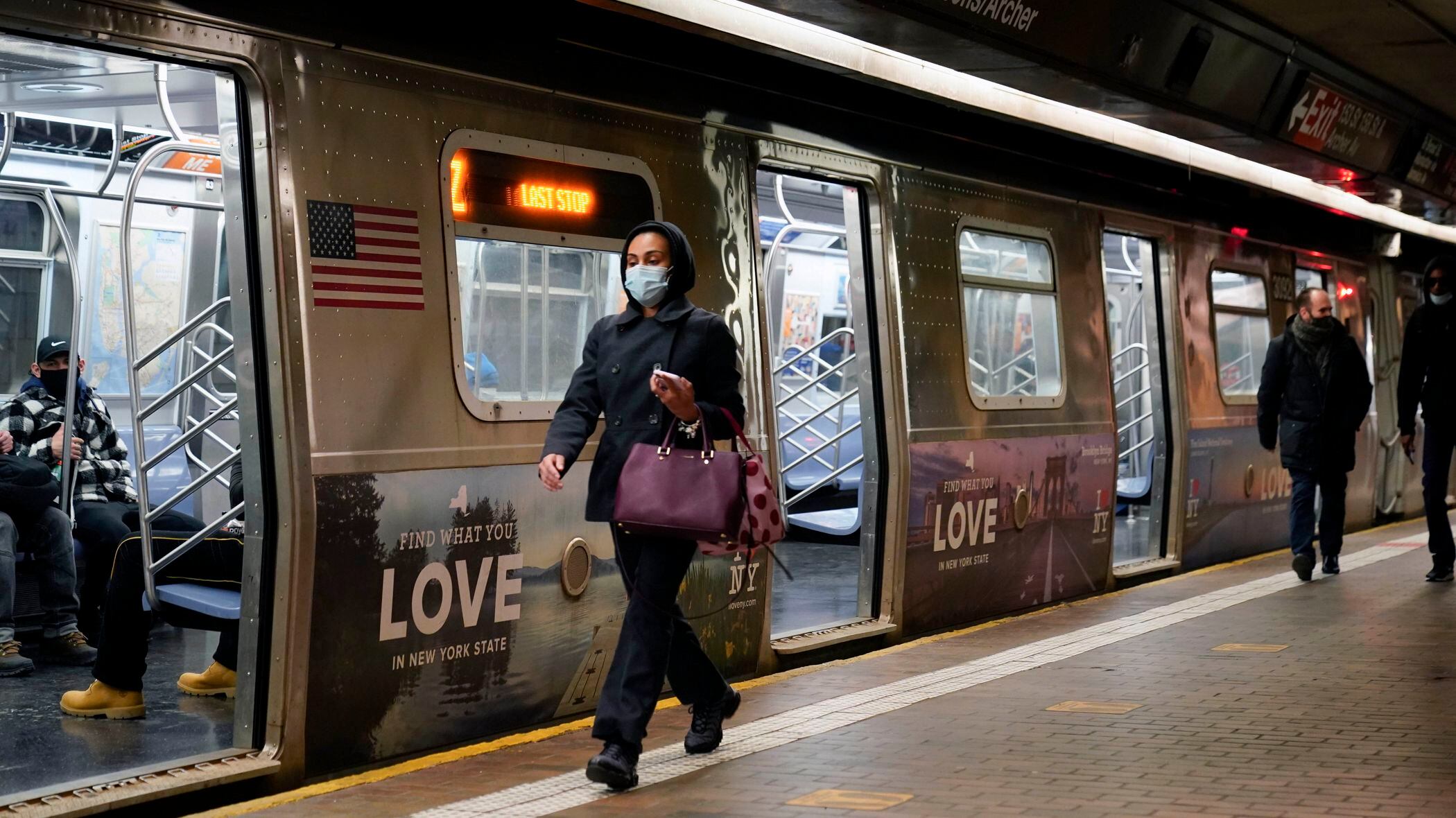
Patrons move through the Jamaica Center subway station Thursday, April 22, 2021, in the Queens borough of New York.
Hackers infiltrated computer systems for the Metropolitan Transportation Authority in New York, setting off a scramble to counter a potentially crippling cyberattack against North America’s largest transit system, MTA officials confirmed on Wednesday.
The officials said in a statement that that agency received an alert from the FBI and other federal agencies saying three of its 18 computer systems were put at risk.
The MTA insisted that it quickly shut down the attack. It said a follow-up forensic analysis also found that no sensitive information was stolen and that rail service for millions of riders each day and other operations were never compromised or disrupted.
“Importantly, the MTA’s existing multi-layered security systems worked as designed, preventing spread of the attack and we continue to strengthen these comprehensive systems and remain vigilant as cyberattacks are a growing global threat,” said Rafail Portnoy, the MTA’s chief technology officer.
The cyberattack was first reported on Wednesday by The New York Times, citing an internal document that was not made public. It was suspected that the breach had links to China, according to the Times.
A statement from the MTA did not mention China. There was no immediate response to requests for comment from the Department of Homeland Security, which is investigating the case.
The MTA systems appear to have been attacked on two days in the second week of April and continued at least until April 20, the Times reported. Hackers gained to systems used by New York City Transit — which oversees the subway and buses — and also the Long Island Rail Road and Metro-North Railroad, according to the MTA document, the newspaper said.
After the 2021 boom, IPO activity slowed down significantly, in part due to monetary policy – but things are getting moving again with tech-friendly companies like Iboutta and Rubrik making a public debut.
With an increasing demand for mental health services, one person wanted to change the therapy game. In 2017, CEO Alex Katz founded Two Chairs, a company that uses technology to match patients with the right therapist.
Not only is April Financial Literacy Month, it’s also the kickoff of the spring homebuying season. So now is the time to make sure you have a financial plan in place – and why it might not be wise for that to include buying your first home.
While the U.S. may slowly be on the path to lowering inflation (and therefore interest rates), Europe has thoroughly trounced America, putting it on the path to lower rates by this summer.
April's release of the monthly Housing Starts and Building Permits reports by the Census Bureau provides crucial insights into the construction activity in the housing market. These reports are an economic indicator, shedding light on the current state of the housing market and its broader economic impact.
Caitlin Clark is heading to the Indiana Fever, the number one draft pick and the highest-scoring college basketball player of all time. And while she may not be getting millions from the WNBA, there's a few ways she'll net compensation for her generational talents.
Author of 'Clean Meat,' Paul Shapiro joins Cheddar to discuss how the cellular agricultural revolution helps lower rates of foodborne illness and greatly improves environmental sustainability. Plus, how his company The Better Meat Co. is bringing healthier food options to the table.
Recent headlines might make it sound like World War III is imminent, but when it comes to your finances, it's not the time to panic. The market is coming off its longest winning streak since 2011.
You may have noticed fewer new venture capital-backed startups (like Airbnb or Uber) lately. The market slowed to a crawl after 2021, but things are expected to take off again in 2025.
Corporate earnings season is underway, that time when companies share their billions in sales or double-digit profits. But the data shows even companies are struggling with high inflation and interest rates.