Americans have been asked to make responsible decisions this year in order to stop the COVID-19 pandemic, but it can be difficult to make appropriate choices without meaningful information. That is why Tech:NYC has created COVID Alert NY, New York's official contact tracing app designed to help mitigate the spread of the virus.
More than 200,000 New Yorkers signed up within the first 24 hours of the app's launch, according to Julie Samuels, executive director at Tech:NYC.
So how exactly does this technology work?
Once participants download the app from Google Play or the App Store on iOS, they will receive a notification if they've been within six feet of an infected person for 10 minutes or longer and will then be prompted to take a test or advised to quarantine.
It is the responsibility of an infected person to report their status on the app for the most accurate results.
But as privacy concerns sit in the forefront of our minds, particularly with sensitive medical information, Samuels made assurances that a user's data is protected.
"This is why it's so important that Google and Apple are working with state governments," Samuels said. "It's an important distinction that the app uses bluetooth and not GPS, which means that no one knows where you were, just that you were near another phone at some point."
Samuels recommends not signing up for an app that has not partnered with state governments. Tech:NYC created the app in conjunction with the New York State Department of Health.
The COVID Alert NY app, according to Samuels, is another tool in our defense against the virus and should be used regularly in the same way that social distancing and mask wearing have become leading defenses in mitigating the spread.
"I don't think any of us are pretending that this app alone is going to eradicate COVID. However it is such an easy thing to do and it's going to help," she noted.
For the U.S. to get past the virus and resume some form of normal life, it likely will have to be a societal effort, not something the government will be able correct on its own.
"I think what we've seen from the White House, which is abundantly clear, is no one is coming to save us but ourselves, so this is one tool, among many, to do that," she said.
New research is suggesting that giving extra cash to low-income mothers can actually influence the brain development of their infants. These findings provide the first rigorous evidence of how payments and monetary support can affect children in the early years of life. Authors of the study, Nathan Fox, professor in the department of human development at the University of Maryland, and Sonya Troller-Renfree, postdoctoral research associate at Teachers College at Columbia University, join Cheddar News to discuss.
Communities of color are disproportionately affected by climate change and continuously feel the impacts. Mark Magaña, founding president and CEO of Green Latinos joined All Hands to discuss.
Neil Young has come up with an ultimatum for Spotify: his music or Joe Rogan’s podcast. This comes over concerns that the podcast is spreading COVID-19 vaccine misinformation to its listeners. "The Joe Rogan Experience," which is exclusive to Spotify, is currently the number one streamed podcast on the platform.
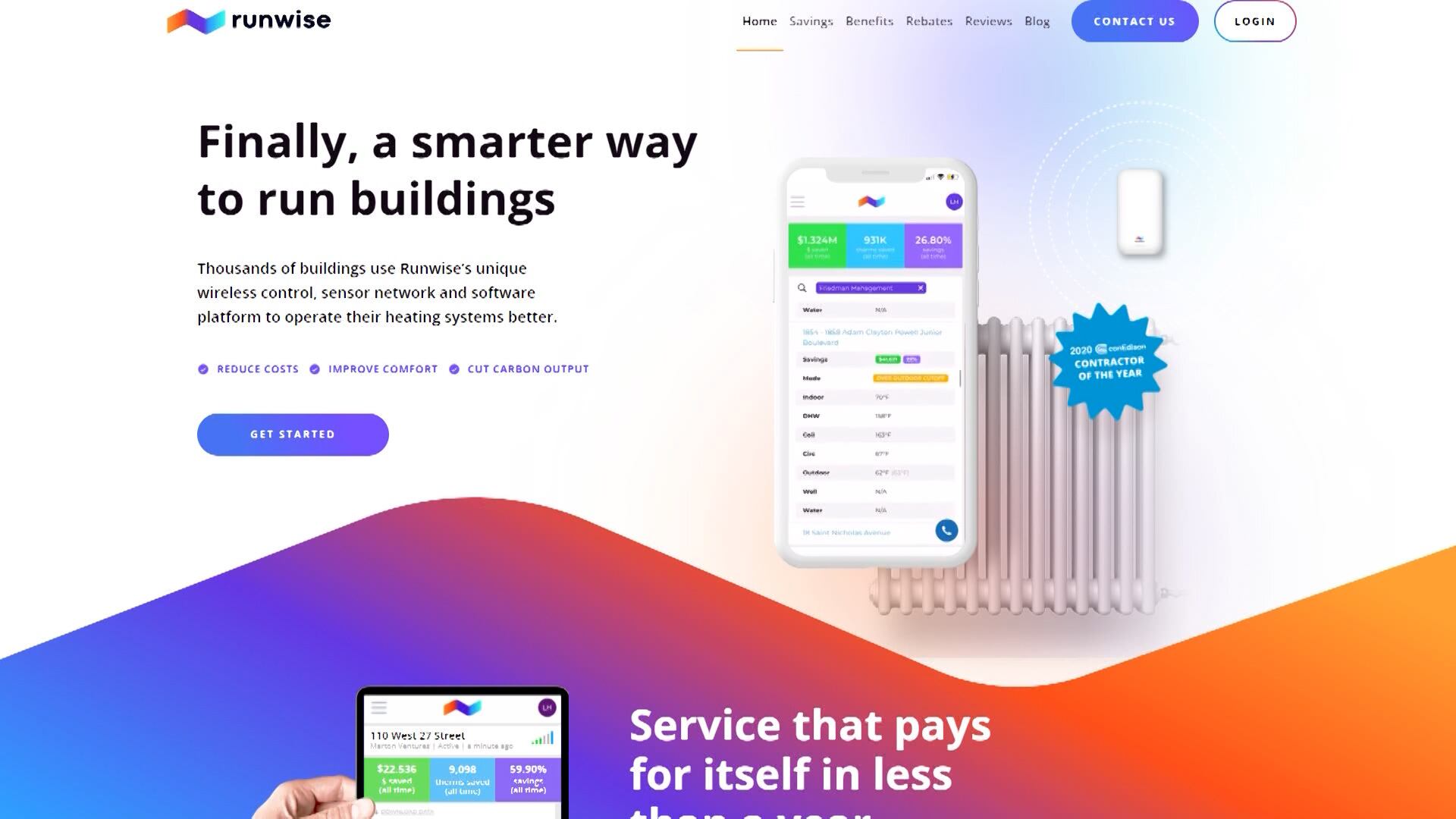
Commercial and residential buildings account for 13% of carbon emissions in the U.S., according to the EPA, and one company says it has a solution. Runwise says it has updated the boiler and heating systems of thousands of buildings, and that its technology not only lowers carbon output but also saves landlords money. Lee Hoffman, Co-Founder and COO of Runwise, joined Cheddar Climate to discuss.
Jo Ruxton, Founder of Ocean Generation, joins Cheddar Climate, where she explains the threat that plastic pollution poses to marine life, but elaborates on why we shouldn't be looking to ban plastic entirely. Ruxton also discusses her biggest takeaways while producing the film ‘A Plastic Ocean.'
President Joe Biden's Build Back Better deal seems all but finished after months of Democratic infighting and the Senate's deadlock over certain provisions. But Biden mentioned during a press conference marking his first year in office that 'chunks' of the bill could be passed. Is that enough motivation to force Democrats to rally around certain parts of the bill - especially those that focus on climate and green energy? Andrew Freedman, Energy and Climate Reporter at Axios, joins Cheddar Climate to discuss whether Senate Democrats will be able to rally around climate provisions, if the idea of passing Build Back Better in 'chunks' is doable, and more.
Anyone who remembers the 70s and 80s will probably remember acid rain. Industrial emissions acidified precipitation around the globe, which killed forests and crops, rendered lakes inhospitable, corroded buildings, and exacerbated human health problems.
But anyone who follows environmental news will be surprised to learn this: we solved it! Countries came together to limit acid rain-causing emissions, eliminating the problem altogether.
…kind of. Acidic precipitation may not be a thing of the past after all.
Natalie Ginsberg, Global Impact Officer, MAPS, joins Cheddar Reveals to discuss MAPS organization and its current initiatives and their work to get FDA approval for MDMA to treat PTSD.
Kelsey Ramsden, Co-Founder, President & CEO, Mind Cure Health, joins Cheddar Reveals to break down what 'psychedelic therapy' could look like once it's legalized and how Mind Cure Health is using AI to help treat everything from addiction to depression.