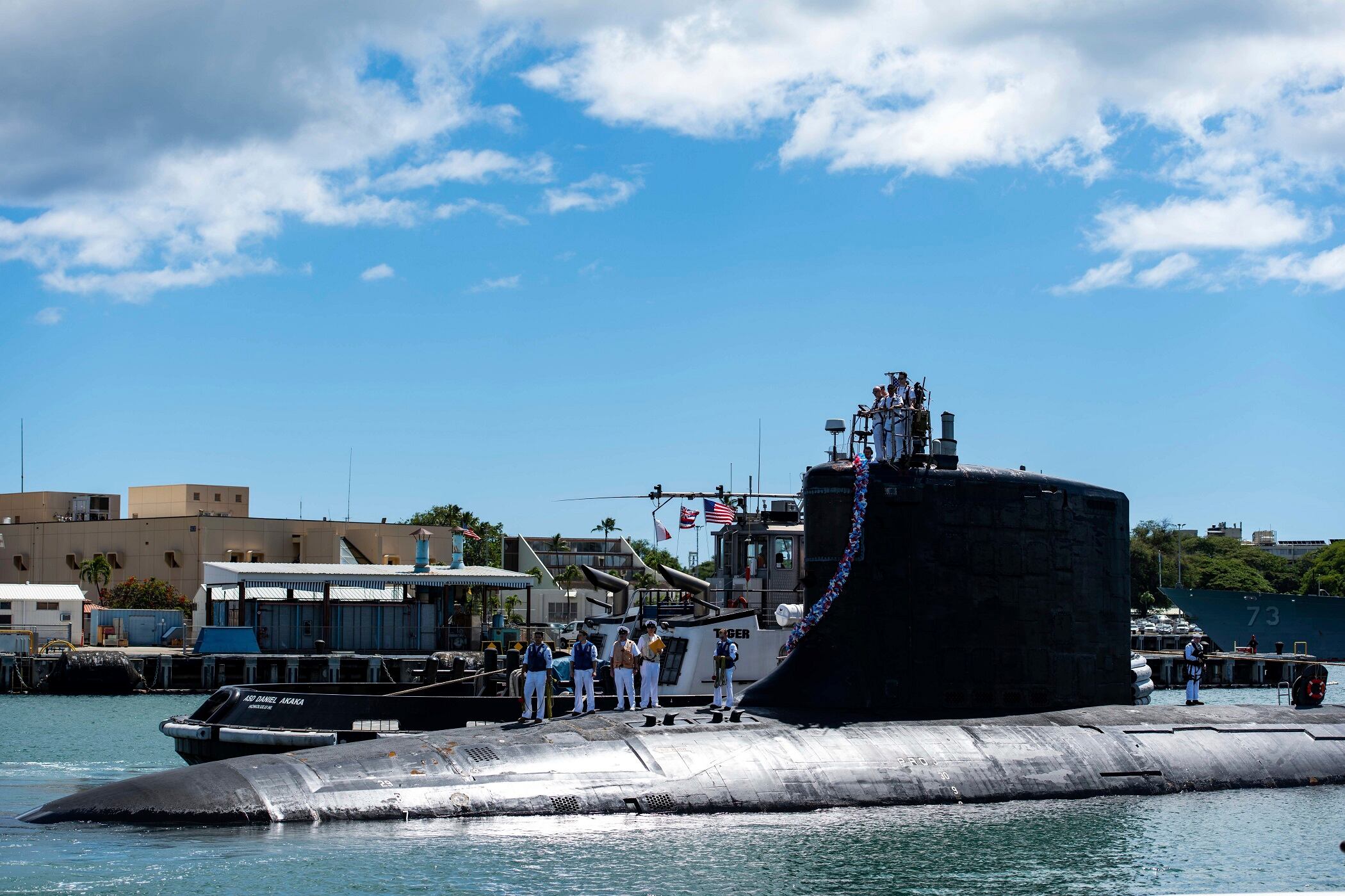
In this photo provided by U.S. Navy, the Virginia-class fast-attack submarine USS Illinois (SSN 786) returns home to Joint Base Pearl Harbor-Hickam from a deployment in the 7th Fleet area of responsibility on Sept. 13, 2021.Australia decided to invest in U.S. nuclear-powered submarines and dump its contract with France to build diesel-electric submarines because of a changed strategic environment, Prime Minister Scott Morrison said on Thursday, Sept. 16, 2021. (Mass Communication Specialist 1st Class Michael B. Zingaro/U.S. Navy via AP)
By Nick Perry
The U.S., Britain and Australia have announced they're forming a new security alliance that will help equip Australia with nuclear-powered submarines. The alliance will see a reshaping of relations in the Indo-Pacific region and beyond. Here's what it might mean for various players:
THE UNITED STATES
Ten years ago under President Barack Obama, the U.S. began discussing the need to focus more attention on the Indo-Pacific region while pivoting away from conflicts in the Middle East. Under President Joe Biden, the U.S. has now withdrawn its troops from Afghanistan while finding that tensions with China have only grown. In the Pacific, the U.S. and others have been concerned about China's aggressive actions in the South China Sea and its antipathy toward Japan, Taiwan and Australia. In announcing the deal, none of the three leaders mentioned China, although the alliance was seen as a provocative move by Beijing. The U.S. had previously only shared the nuclear propulsion technology with Britain. Biden said it was about ensuring peace and stability in the Indo-Pacific over the long term.
BRITAIN
Leaving the European Union under Brexit has left Britain seeking to reassert its global position. Part of that has been an increased focus — or tilt — toward the Indo-Pacific. British Prime Minister Boris Johnson said the new alliance would allow the three nations to sharpen their focus on an increasingly complicated part of the world. He said that perhaps most significantly, it would bond the three nations even more closely together.
AUSTRALIA
Under the arrangement, Australia will build at least eight nuclear-powered submarines using U.S. expertise, while dumping a contract with France for diesel-electric subs. Experts say the nuclear subs will allow Australia to conduct longer patrols and give the alliance a stronger military presence in the region.
Australian Prime Minister Scott Morrison said he had called the leaders of Japan and India to explain the new alliance. Japan, India, Australia and the U.S. already have a strategic dialogue known as “the Quad.” Biden is set to host fellow Quad leaders at the White House next week.
FRANCE
Australia told France it would end its contract with state majority-owned DCNS to build 12 of the world’s largest conventional submarines. The contract was worth tens of billions of dollars. France is furious, demanding explanations from all sides.
“It was really a stab in the back. We built a relationship of trust with Australia, and this trust was betrayed,” said French Foreign Minister Jean-Yves Le Drian on France-Info radio.
CHINA
China said the alliance would severely damage regional peace and stability, and jeopardize efforts to halt nuclear weapon proliferation. It said it was “highly irresponsible” for the U.S. and Britain to export the nuclear technology, and that Australia was to blame for a breakdown in bilateral relations.
“The most urgent task is for Australia to correctly recognize the reasons for the setbacks in the relations between the two countries, and think carefully whether to treat China as a partner or a threat," said Zhao Lijian, a spokesperson of China's Ministry of Foreign Affairs.
Beijing has been unhappy with the Biden administration calling it out over human rights abuses in the Xianjing region, the crackdown on democracy activists in Hong Kong, and cybersecurity breaches. Biden spoke by phone with China’s President Xi Jinping last week. After the call, the official Xinhua News Agency reported that Xi expressed concerns that U.S. government policy toward China has caused “serious difficulties” in relations.
NEW ZEALAND
Left out of the new alliance is Australia's neighbor New Zealand. It has a longstanding nuclear-free policy that includes a ban on nuclear-powered ships entering its ports. That stance has sometimes been a sticking point in otherwise close relations with the U.S. Prime Minister Jacinda Ardern said New Zealand wasn’t asked to be part of the alliance and wouldn’t have expected an invitation. Still, it leaves New Zealand out of a deal to share a range of information including artificial intelligence, cyber and underwater defense capabilities.
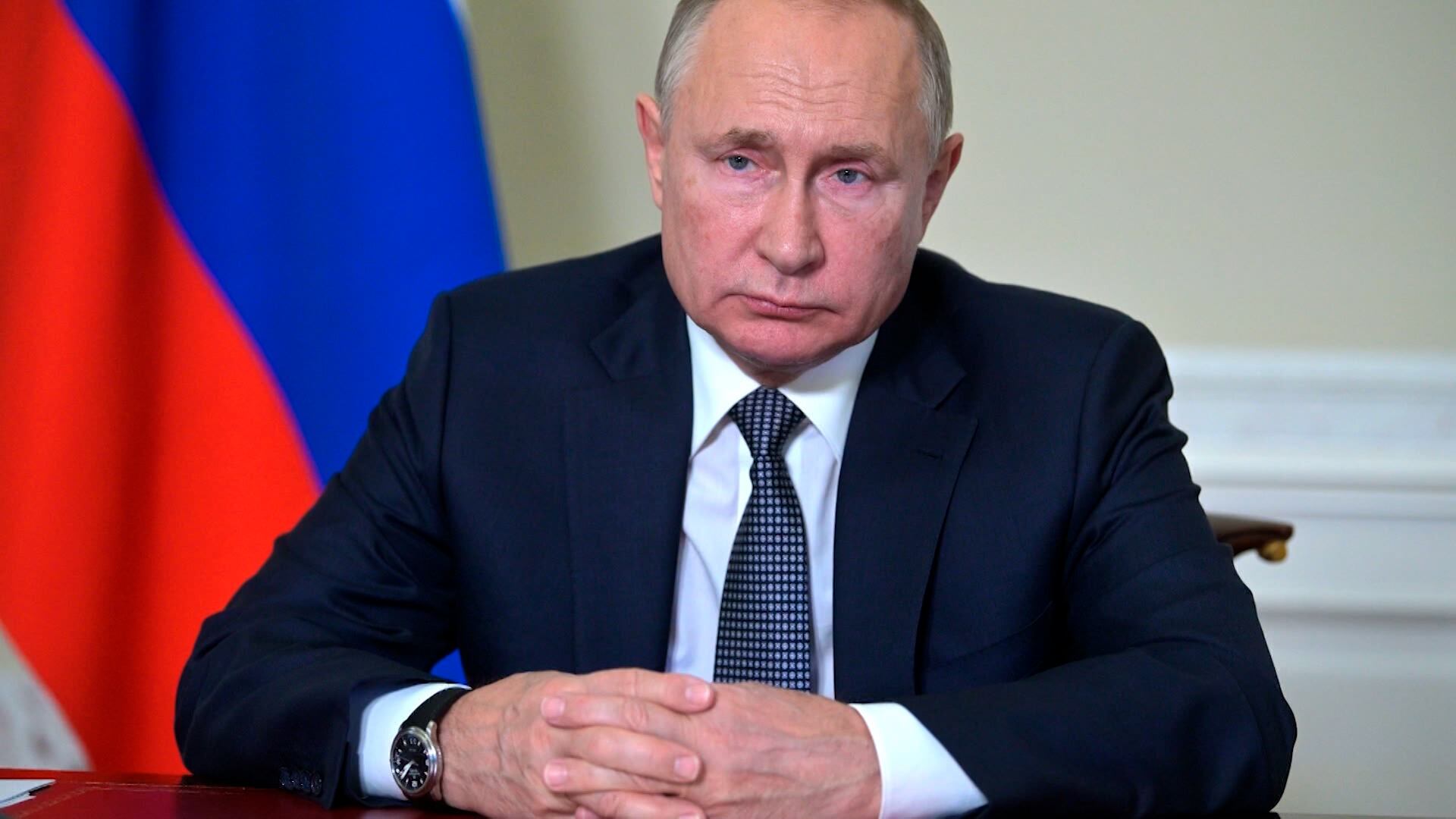
Terrell Jermaine Starr, senior fellow with the Atlantic Council and host of the Black Diplomats podcast joins Cheddar News to discuss Russia's attempt to invade Ukraine.
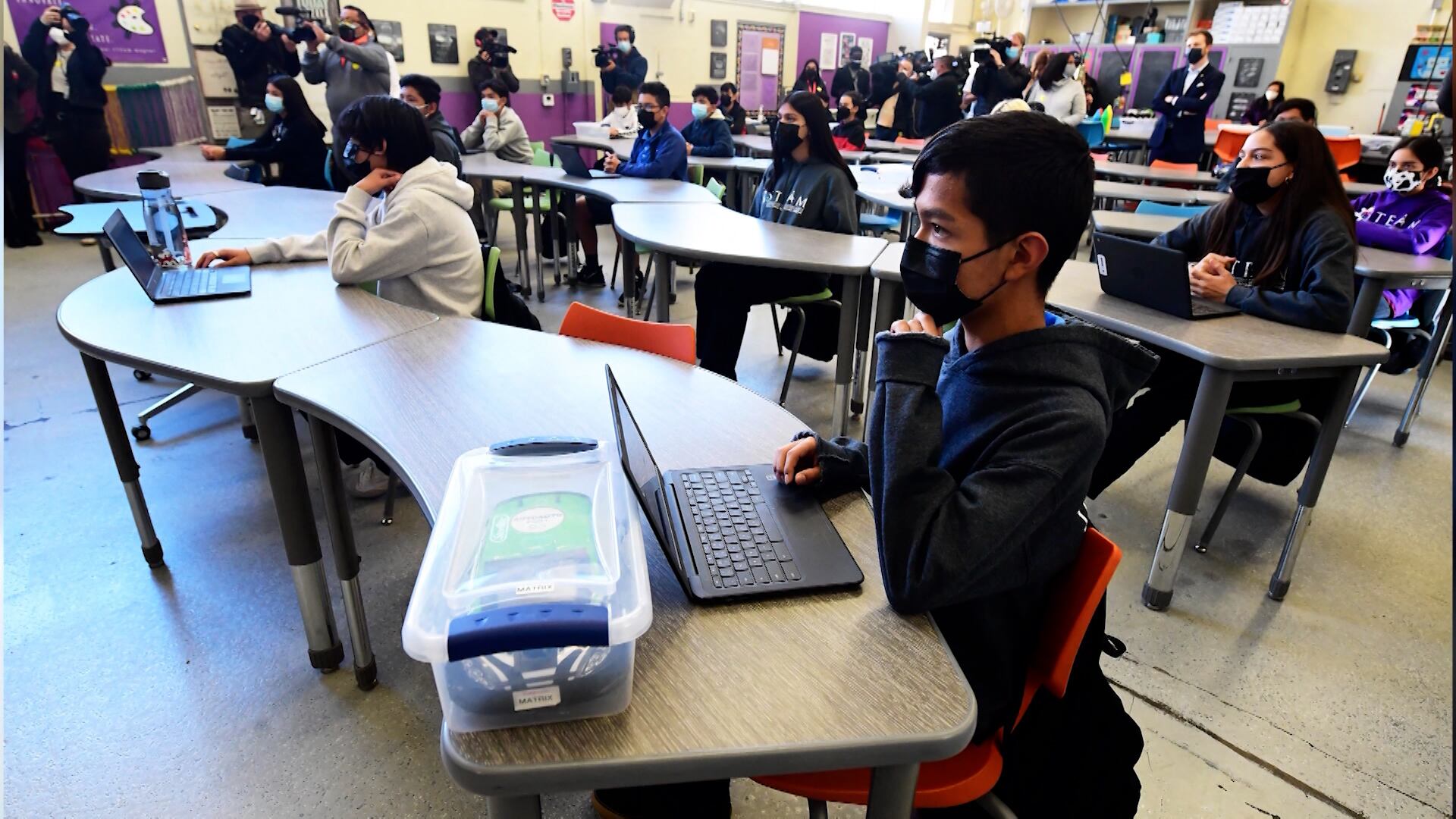
With an increasing number of teachers and staff calling out sick by the day, the state of Oklahoma is turning to an unusual solution. Republican Governor Kevin Stitt has issued an executive order that permits state employees to work as substitute teachers. Shaily Baranwal, founder and CEO of Elevate K-12, joins Cheddar News to discuss.
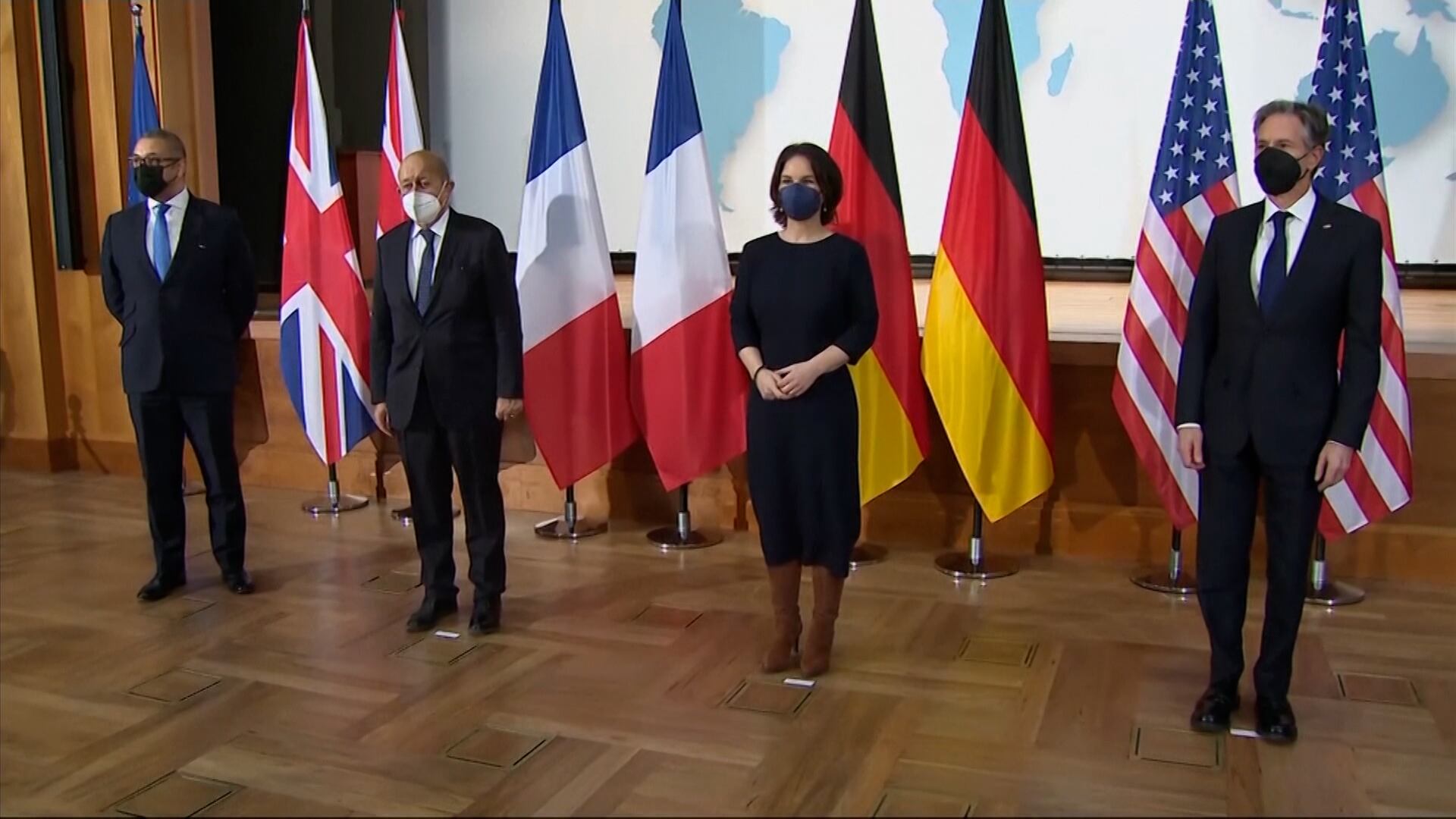
On Thursday, Secretary of State Antony Blinken addressed the stance of the U.S. and its allies should Russia make any forays into Ukraine, a seeming response to President Biden's remarks that should Putin engage in something short of a full invasion, there might be some indecision among allied nations regarding what to do. Ariel Cohen, a senior fellow at the think tank Atlantic Council, joined Cheddar to discuss the difficulty faced by Blinken wrangling unity as tensions run high in the region. "There'll be a smaller incursion, and the president implied, there'll be a weaker response because our European allies have created this horrible situation where they are dependent on Moscow for their gas supply," Cohen explained.
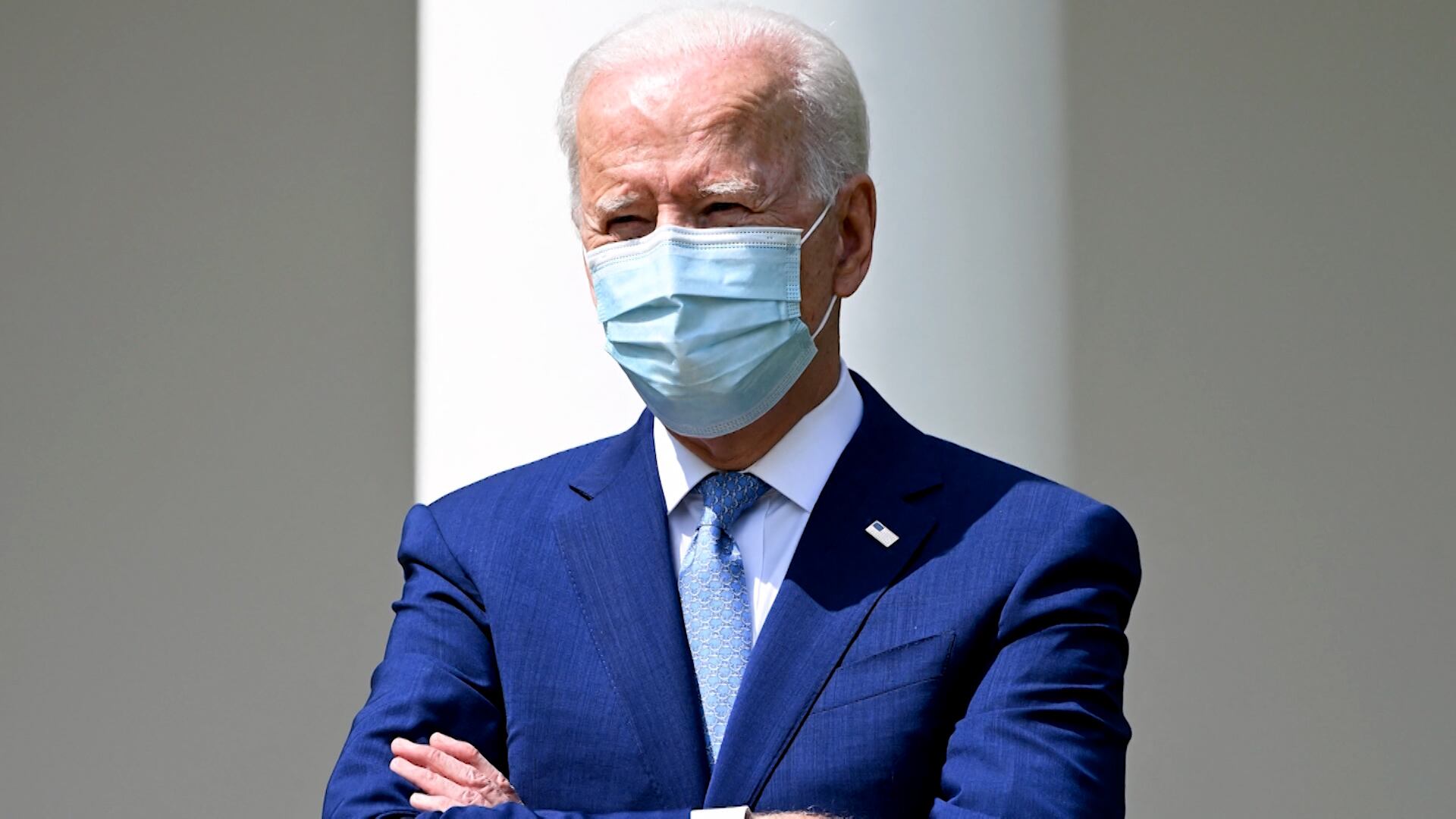
During a nearly two-hour press conference on Wednesday, President Biden spoke on his accomplishments and challenges from the first year of his presidency, and what his administration hopes to accomplish in the coming year. However, his approval ratings are underwater as COVID remains a big concern for voters — as does inflation, noted Tom Bevan, co-founder and president of polling aggregator RealClearPolitics. "The public thinks [inflation] is priority number one, and the administration is concerned about it, they talk about it, but they're not spending enough time on it as far as the public is concerned," said Bevan.
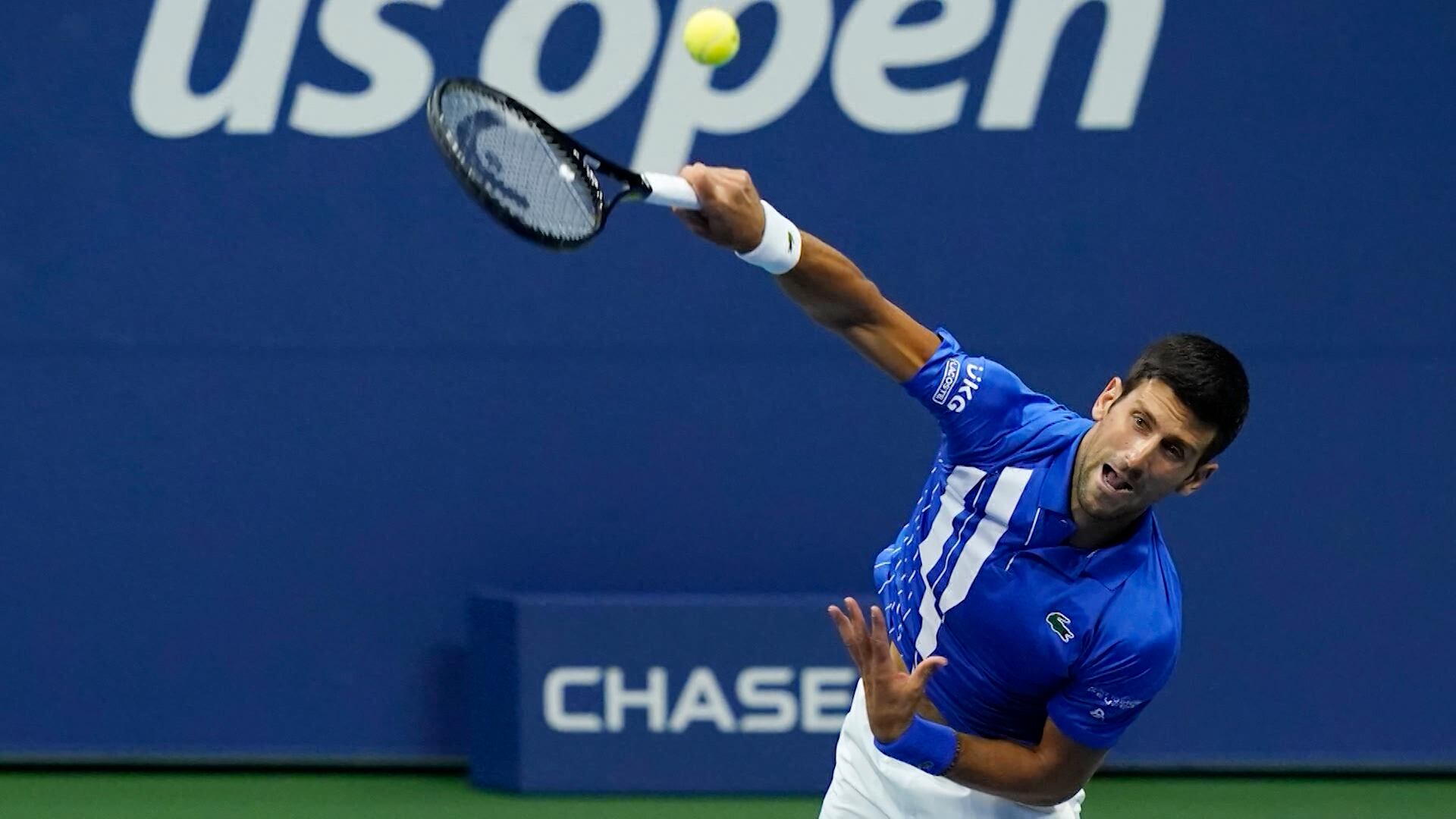
The drama surrounding tennis star Novak Djokovic continues after he was deported from Australia over the weekend due to the nation's COVID-19 vaccine requirements. Djokovic was forced to leave the country on the eve of what was to be his first match in defense of his Australian Open title after three judges ruled in favor of his removal and revealed their reasoning for doing so. Adding to his woes, a law recently passed in France is putting his chances of defending his French Open title in jeopardy. The director of Marist's Center for Sports Communication, Jane McManus, joined Cheddar to discuss the ongoing fallout.
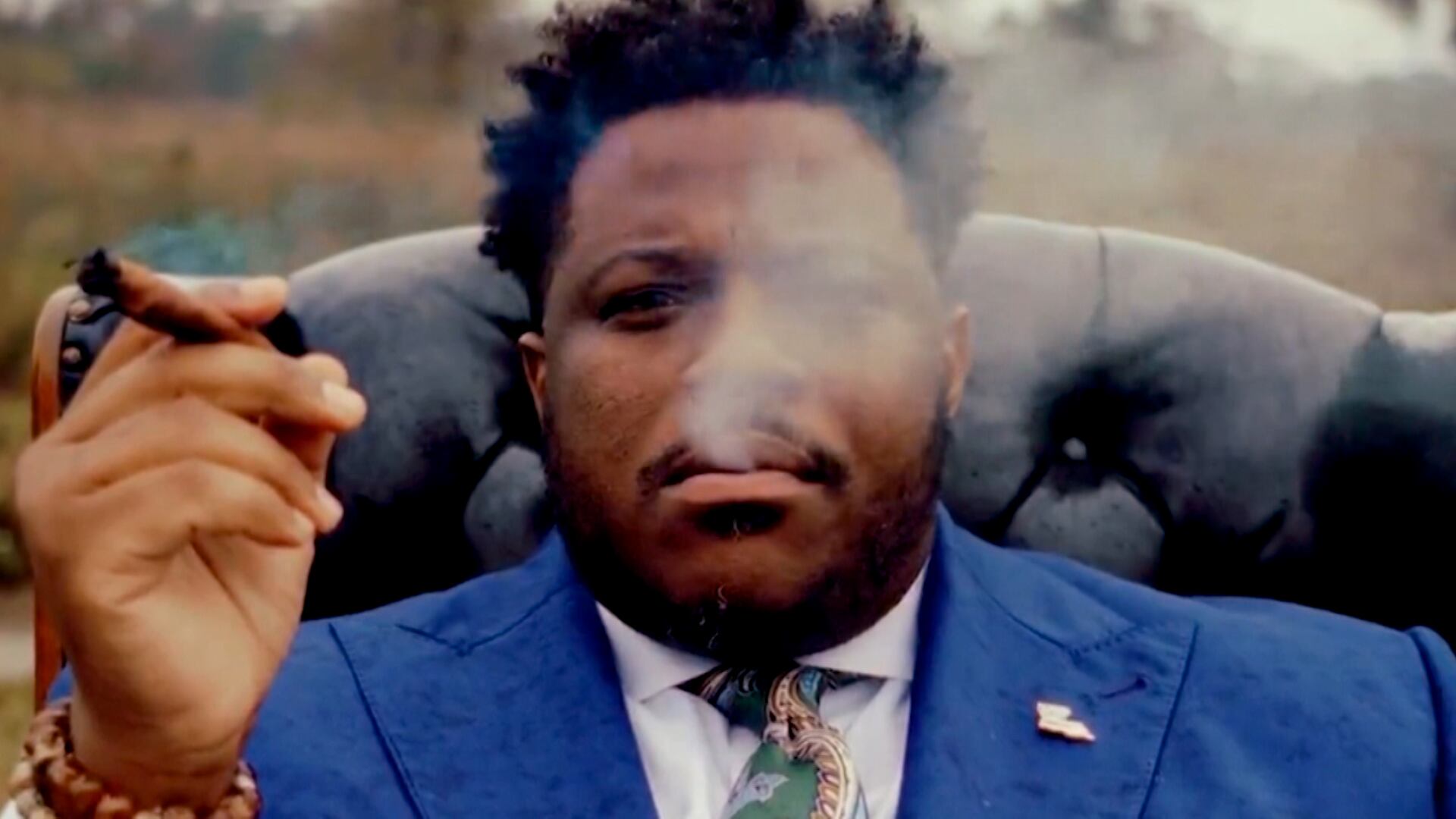
As the midterm elections get ever closer, candidates have been getting creative with their campaigns to stick out and to connect with voters. Gary Chambers, a Democratic candidate for the U.S. Senate from Louisiana, has definitely attracted attention with an advertisement featuring him smoking a blunt, making a point about the inequity of anti-cannabis laws. "We wanted to bring the seriousness of the moment," he said of the ad. "But we also wanted to make sure that people understand that there are 19 states that are legal right now but Black people and brown people are being over-incarcerated in mostly Southern and Midwestern states in America for cannabis possession."
If some members of Congress have their way, there might finally be a 'TLDR' on sites' terms of service, introduced by the terms-of-service labeling, design, and readability act – or TLDR for short. With this act, users will actually understand what they're agreeing to or the many ways in which their data is being used before pressing 'accept.' J.D. sat down with co-sponsor of the bill and Senator Bill Cassidy, to discuss.
President Joe Biden's first year in office is wrapping up. What has he achieved, and what else remains on the table while the Democrats have control of Washington? Amid an ongoing pandemic and rising inflation, Biden's approval rating is at an all-time low and his party is plagued by infighting. Will he be able to continue pushing key parts of his agenda? Paul Glastris, former Bill Clinton speechwriter & Editor-in-chief of 'Washington Monthly,' joins Cheddar News' Closing Bell to discuss the president's achievements in his first year, where he's fallen short, and what he must do in order to get more of his agenda signed into law.
Tech giants Meta, Amazon, Alphabet, and Apple are faced with a bipartisan antitrust legislation effort underway in the Senate Judiciary Committee. The companies stand accused of promoting their own goods and services over smaller competitors on their platforms, holding too much monopolistic power via their app stores and services. Adam Kovacevich, founder and CEO of Chamber of Progress, a technology industry trade group, joined Cheddar to argue that the bills that are being debated currently could end up hurting consumers, rather than helping.