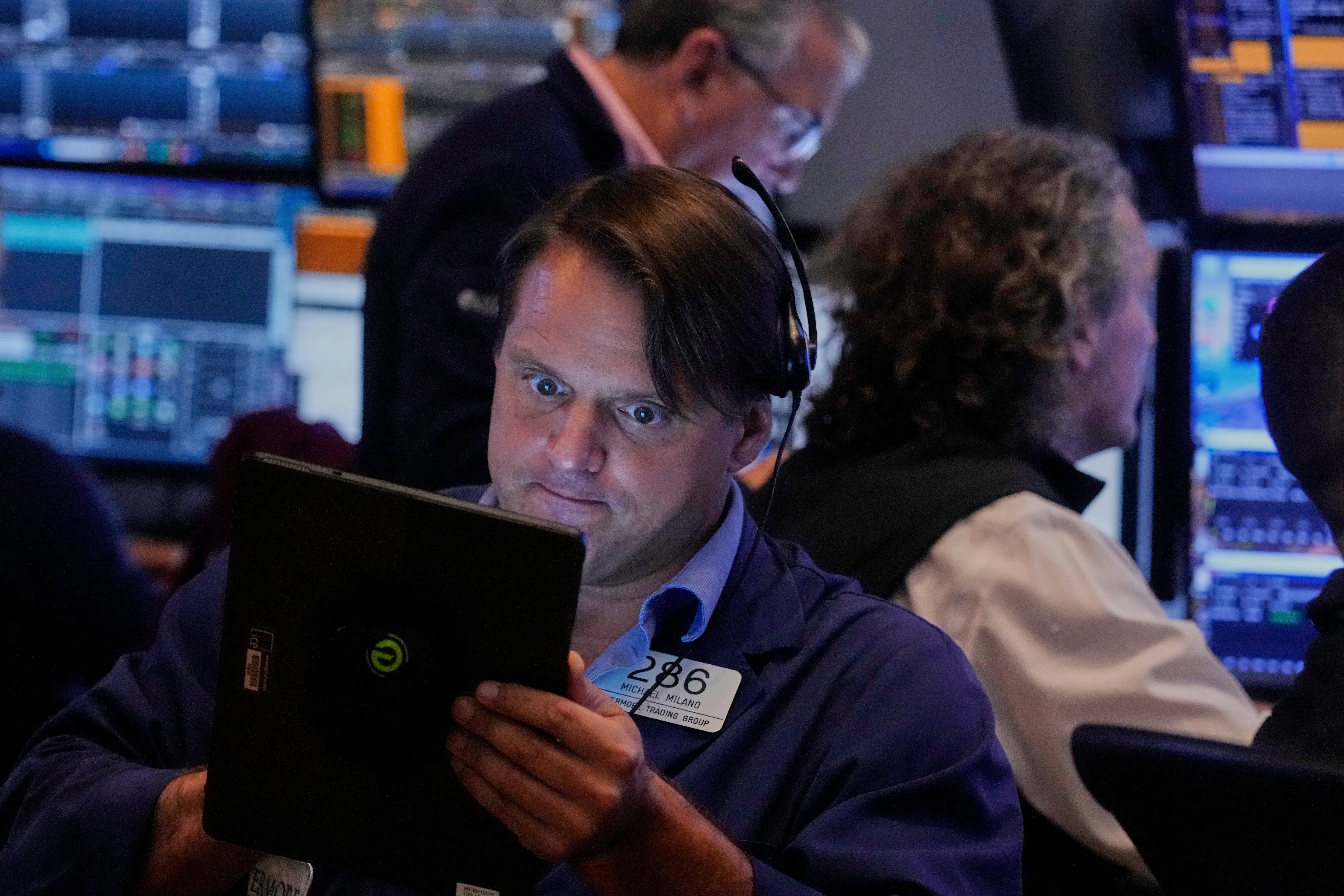
*By Carlo Versano* Reports that signal the death of the American shopping center have been greatly exaggerated ー if the latest statistics from the holiday shopping season are to be believed ー but the mall of tomorrow is increasingly becoming a new kind of innovation hub for brands, and offering an altogether different experience for shoppers. Holiday retail sales grew more than 5 percent over last year, according to the MasterCard SpendingPulse [survey](https://newsroom.mastercard.com/press-releases/mastercard-spendingpulse-u-s-retail-sales-grew-5-1-percent-this-holiday-season/#__prclt=3Bjtv6Vw). And it wasn't just the likes of Amazon ($AMZN) that reaped the benefit. Driven by cheap gas and fatter paychecks, in-store sales were up 3.3 percent over 2017 in the survey, a number confirmed by Refinitiv's own market data, which estimated a year-over-year increase of 3.2 percent for brick-and-mortar stores. That's slightly down from what analysts saw in the first half of the year, but any growth over 3 percent is "robust and shows the consumer is still engaged," said Jharonne Martis, director of consumer research at Refinitiv. Black Friday made news for the 24 percent increase in online spending it delivered, but brick-and-mortar retailers tend to fare better as the holiday season goes on, according to half a dozen retail analysts interviewed by Cheddar. A survey of shoppers on Super Saturday ー the somewhat frantic final Saturday before Christmas ー found that 85 percent planned to buy gifts in a physical store. Forty-one percent planned to shop in-store exclusively, according to the survey data from the International Council of Shopping Centers. But as the mall Santas vacate their posts, and the halo effect of a gangbusters holiday season fades, retailers are still left puzzling over a seemingly paradoxical reality: e-commerce growth continues to soar, outpacing brick-and-mortar sales ー and yet, a vast majority of shoppers still depend on stores and malls to do their shopping. That paradigm has prompted a rethinking of the store itself, according to Bridget Johns, the head of customer experience at the analytics firm RetailNext. The industry spent decades obsessed with year-over-year comps and sales per square foot, the most reliable metrics for the health of a particular store, Johns told Cheddar in an interview. "That has now completely shifted." "The role of the store in the shopping journey isn't just transactional," she said. "It's about exposure to products." "It is becoming less important whether someone is actually ringing the till." The trend is becoming apparent, both at legacy malls run by stalwarts like Simon ($SPG) and Brookfield ($GGP), as well as at upstarts like Showfields, Neighborhood Goods, and b8ta, which represent a new breed of retailer that bridges the gap between digitally-native brands and the old-fashioned department store experience. High-end malls have been increasingly "reframing" themselves as entertainment centers, Jones said, with better and more varied food options, activities like bowling, and a willingness to lease storefronts for short-term pop-ups. BrandBox, which is owned by mall operator Macerich ($MAC), is a manifestation of how malls now see themselves, she said. The concept helps young, digitally-native retailers open physical spaces and test the waters without having to worry about build outs, infrastructure, or point-of-sale software. They can essentially just unpack their merch and be in business. The first BrandBox is currently up and running at the Tysons Corner Center outside Washington, D.C. In New York, Showfields is testing a similar concept in the ritzy NoHo neighborhood with a focus on direct-to-consumer brands like Boll & Branch and Quip. And b8ta, which is currently open inside of the Macy's ($M) flagship store in midtown, bills itself as a "store-as-a-service," where customers can try out the latest gadgets and tech ー none of which are actually for sale on site. Brands pay "subscriptions" to show off their products and gain access to data collected at the store that reveals how people are interacting with merchandise. Call it a retail lab if you will, and the consumers are the guinea pigs. The millennial and Gen Z groups ー which have supposedly killed off everything from [canned tuna](https://www.cnbc.com/2018/12/03/millennials-are-killing-canned-tuna-but-the-industry-is-fighting-back.html) to [paper napkins](https://www.businessinsider.com/millennials-are-killing-list-2017-8) ーare "fans of the mall," Johns said. "Younger consumers still have this need to connect" with both people and brands "in physical spaces." That, combined with the caché from digital start-ups, has led to a wave of innovation among what is normally a fairly staid group of mall-anchoring department stores. "Millennials are motivating the old guard to do things differently," according to Johns, who pointed to Macy's investment in b8ta and Nordstrom's ($JWN) recent partnership with lingerie start-up Lively. Nordstrom also opened a gleaming, massive store in New York this year, its first location in the Big Apple and its first dedicated men's store, even as other mall anchors like JC Penney ($JCP) and Sears ($SHLD) ー which notably were slow to embrace technology ー closed stores or went bankrupt completely. Then there's the relatively new phenomenon that already has an industry acronym: BOPIS, or buy online, pick up in store. Those type of orders were up an astounding 46 percent this year, according to Adobe Analytics. A separate [survey](https://www.zebra.com/content/dam/zebra_new_ia/en-us/solutions-verticals/vertical-solutions/retail/vision-study/fulfillment-vision-study-report-en-us.pdf) found that 86 percent of retailers thought the "click-and-collect" method would become the default delivery method for goods. Target ($TGT), Walmart ($WMT), and Best Buy ($BBY) are among the big-box retailers showing strength in their BOPIS channels. It is particularly attractive to chains, which can cut down on their shipping overhead, and as many as two-third of those shoppers end up buying something else when they're in the store to collect their purchase, according to the ICSC. All of these tactics combined seem to be working. In a survey commissioned for Cheddar by the market research firm YouGov, the measure of whether consumers have a positive or negative impression of a particular brand has been moving up for a sector that includes mall heavyweights like Banana Republic ($GPS), Dillard's ($DDS), Gap, Kohl's ($KSS), and Old Navy. And nearly three-quarters of U.S. adults say they still like to "touch and feel" products before buying them, according to YouGov. The confidence is translating to bottom lines, too. Mall real-estate-investment-trusts, which is how many shopping center operators structure themselves, showed 2 to 3 percent year-over-year growth during Black Friday weekend, according to data from the research group Thasos. The Thasos Mall REIT Foot Traffic Index, which analyzes data from five leading mall REITs, showed growth of about one percentage point in the early days of the season pre-Thanksgiving, in which many sales were already in full swing. Of course, some of that strength comes down to the ancient truism about retail: it's all about location. Malls in high-density, affluent areas are showing strength, said Johns, the RetailNext analyst, but go to any city and you'll find an older, unloved mall that's still open ー and mostly empty. "As a country, we're still over-malled," she said.