President Donald Trump may have just lost an important battle in his fight to keep his tax documents under wraps.
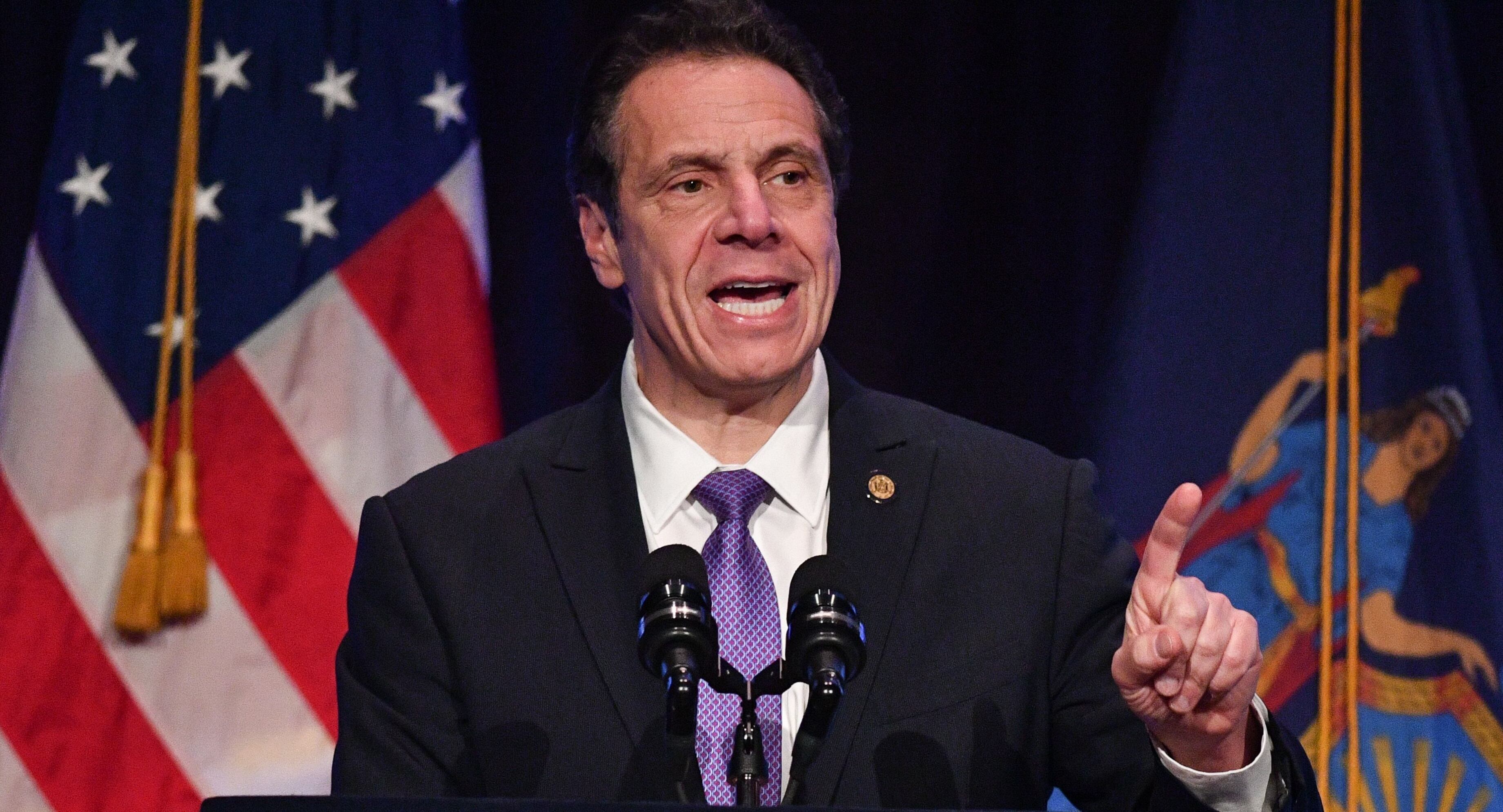
New York Gov. Andrew Cuomo signed a bill into law on Monday that will allow Democratic lawmakers in Washington access to the president's highly sought after state tax returns.
The law — titled the TRUST Act — requires New York's commissioner of taxation to cooperate with investigations into elected officials by Congressional tax writing committees, which include the House Ways and Means Committee, the Senate Finance Committee, and the Joint Committee on Taxation.
"Tax secrecy is paramount — the exception being for bonafide investigative and law enforcement purposes," Cuomo said in a statement. "This bill gives Congress the ability to fulfill its Constitutional responsibilities, strengthen our democratic system and ensure that no one is above the law."
Under the law, New York will only be able to fulfill requests from Congress for Trump's state filings, which would, nonetheless, provide federal lawmakers and the public with significant insight into the New York real estate developer's financial holdings.
The bill was passed by the New York State Senate and Assembly in May.
"This is a momentous step in upholding the principle that top elected officials have a responsibility to be more transparent and accountable," State Assemblyman David Buchwald, who co-sponsored the legislation, said on Twitter. "It's a great day for transparency in government."
Breaking with a long standing norm, Trump first refused to release his taxes during the 2016 election, claiming he was under audit and then alleging that his taxes were not of concern to the American people. The White House has since bucked several attempts from congressional Democrats and activist organizations to obtain the president's taxes and examine possible foreign entanglements and fraud.
"For far too long, the Trump administration has attempted to hide Donald Trump's deeply concerning conflicts of interest by illegally blocking the release of his tax returns," Ryan Thomas, the spokesperson for the progressive advocacy group Stand Up America, said. "But now, New York has provided Congress a new route for getting answers on behalf of the American people—and all they have to do is ask."
Thomas urged Rep. Richard Neal (D-Mass.), who chairs the Ways and Means Committee, to immediately request the New York tax returns, adding that any "delay is an injustice to the American people who deserve transparency about Trump's foreign entanglements and massive conflicts of interest."
Meanwhile the New York Republican party claimed that the TRUST Act is a "brazen overreach" and is "a violation of the privacy rights" for all Americans, which would set a concerning precedent. "Assembly Democrats can warm to this illegal bill of attainder all they want but it will be met with a lawsuit," the Republican state committee added in a tweet in May.
The bill had been amended multiple times since its introduction to broaden its scope over elected official and policial party leaders, as well as to limit its application to average citizens.
The six-week delay from when the bill passed the state legislature to Monday’s signing was due to an extensive review of the legislation conducted by the governor’s office, Dani Lever, Cuomo’s communications director, said in a statement to Cheddar.
"Any responsible government would thoroughly review this bill … especially after this process and given how high the stakes are of this particular legislation," Lever said.