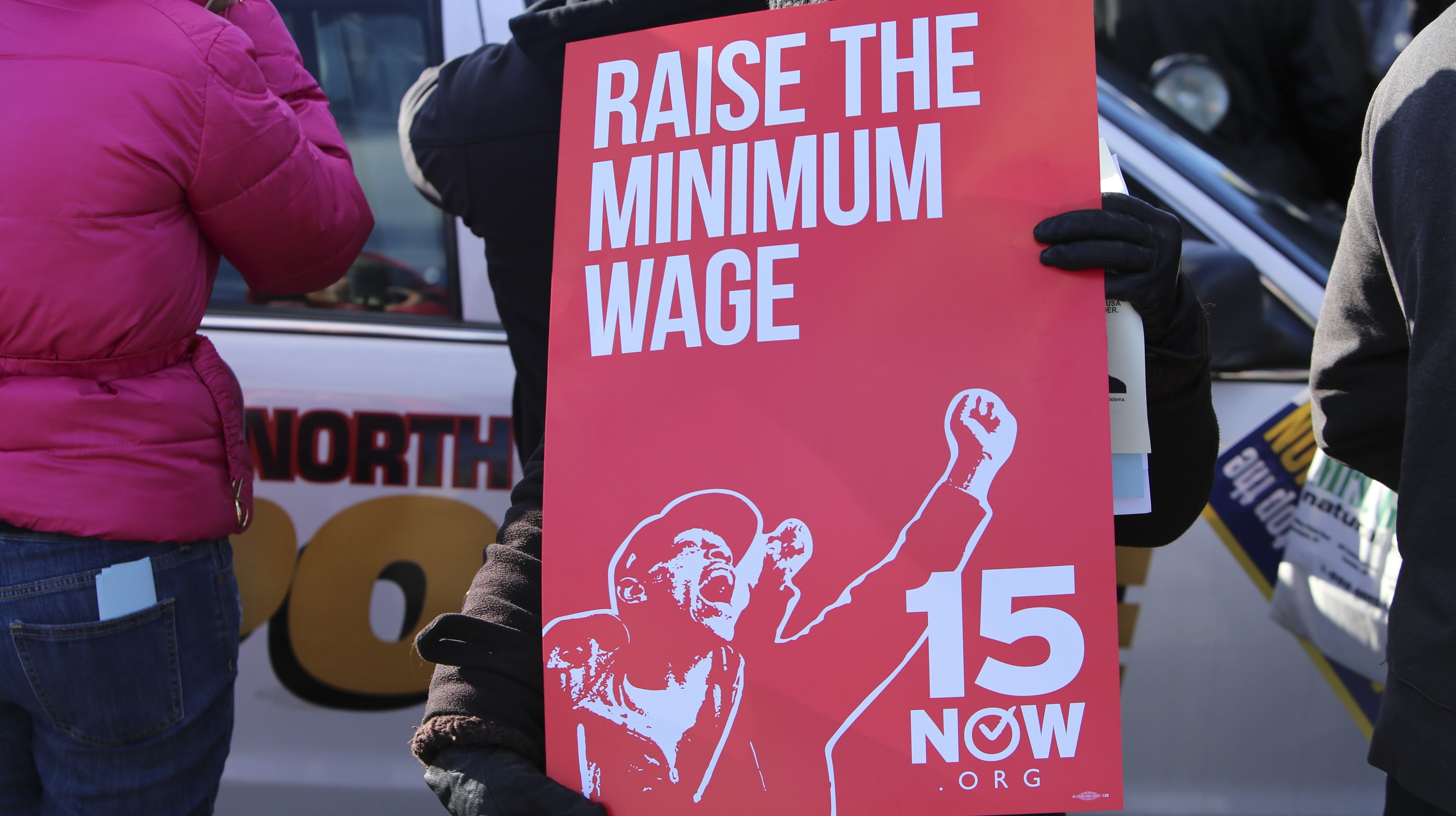
Minimum wage is on the rise in New Jersey. The Garden State enacted the increase — from $8.85 to $10 — on Monday, the first in a series of pay hikes meant to bring the state to a $15 minimum wage by 2024.
Governor Phil Murphy signed the increase into law in February, and it's expected to impact more than one million New Jersey residents.
Both of the state's senators, Bob Menedez and Cory Booker, supported the legislation.
Seven states have passed similar “Fight for 15” laws, and this year, 18 states have raised their minimum wage ー though not necessarily to $15-an-hour -- according to the National Conference of State Legislators.
Still, on the federal level, the campaign for a $15 minimum wage has not seen success.
The Raise the Wage Act, which would increase that benchmark by 2024, is stalled in the legislature without Republican support.
Today, more than 80 million Americans are paid by the hour, according to the Bureau of Labor Statistics.
Meanwhile, more than half a million Americans make the current federal minimum wage, which has hovered at just above $7 an hour since 2009.
The incoming Fed decision will likely be good news for consumers with high-yield saving options, but bad news for borrowers (like anyone with high credit debt).
Empower your financial future with 'Investing Is Your Superpower' by Shinobu Hindert. Learn how to take control of your finances. No economics degree required
Inflation is still high, and economic activity is starting to slow down. But before you start to panic about stagflation, wait to see this week’s jobs report.
With buildings responsible for over 40% of emissions worldwide, the CEO of Kelvin breaks down how its technology can be used to retrofit traditional radiators.
After battling inflation for years, now U.S. consumers have to prepare for stagflation, and, unfortunately, it could be more complicated to fix than a typical