
A drop happened in Times Square this afternoon, and it wasn't the New Year's ball.
New York City-based artist and creative director Jonathan Rosen debuted his first collection of non-fungible tokens (NFT) on the Nasdaq stock exchange's seven-story-tall, curved digital tower.
The auction for the collection began at 1 p.m. ET on Tuesday, June 15 and will last 24 hours on OpenSea.io. The top five bidders will get to have their names, faces, or crypto wallet addresses displayed on the massive midtown Manhattan Nasdaq display.
Rosen, who specializes in what he calls "time-based visual sculpture," told Cheddar that the collection is his attempt to make a mark on the burgeoning NFT space.
"It took a while for me to get my head around the idea that what I'm making in the traditional art world could actually become exciting and unique pieces in the NFT space," he said. "I don't think I would have jumped into the NFT space if I couldn't think of a way to push my art."
NFTs, which are one-of-kind digital assets that exist on the blockchain, exploded onto the art scene earlier this year with multiple headline-grabbing purchases. In the art world, the largest of these was the $69 million sale of Beeple's digital collage Everydays: The First 5000 Days.
Since then, NFTs have spread into a seemingly endless number of digital spaces, from virtual real estate in online video games to sports trading cards and memorable tweets.
The sheer speed and breadth of this expansion has left some wondering about the long-term sustainability of the NFT model.
"Right now, the NFT world is in this really fragile state, and it's important to find artists and IP owners and creatives that approach the space in an authentic manner, that don't just want to do one drop and actually want to advance the ecosystem," said Tyler Mulvihill, co-founder of Treum, the blockchain platform handling the back-end technology behind Rosen's project.
He explained that right now much of the internet is being "tokenized" for the first time. He sees this as a necessary process, not to mention a lucrative one, but that going forward it could hurt public perception of NFTs — especially in the art world, where reputation is everything.
"The perception of NFTs right now is that you put a jpeg on the internet and it sells for a lot of money to people with a lot of money," he said. "I think that's the wrong perception to be driving."
To combat this perception, he's calling for more projects that are "thought-through" and for artists that are committed to growing the space, rather than "a single-drop and a cash-grab."
'Chance-Based Minting'
The particular nature of Rosen's artistic approach will support this goal, he added.
In addition to the five main works, buyers will have a chance to purchase a randomly generated art work using what Mulvihill calls "chance-based minting."
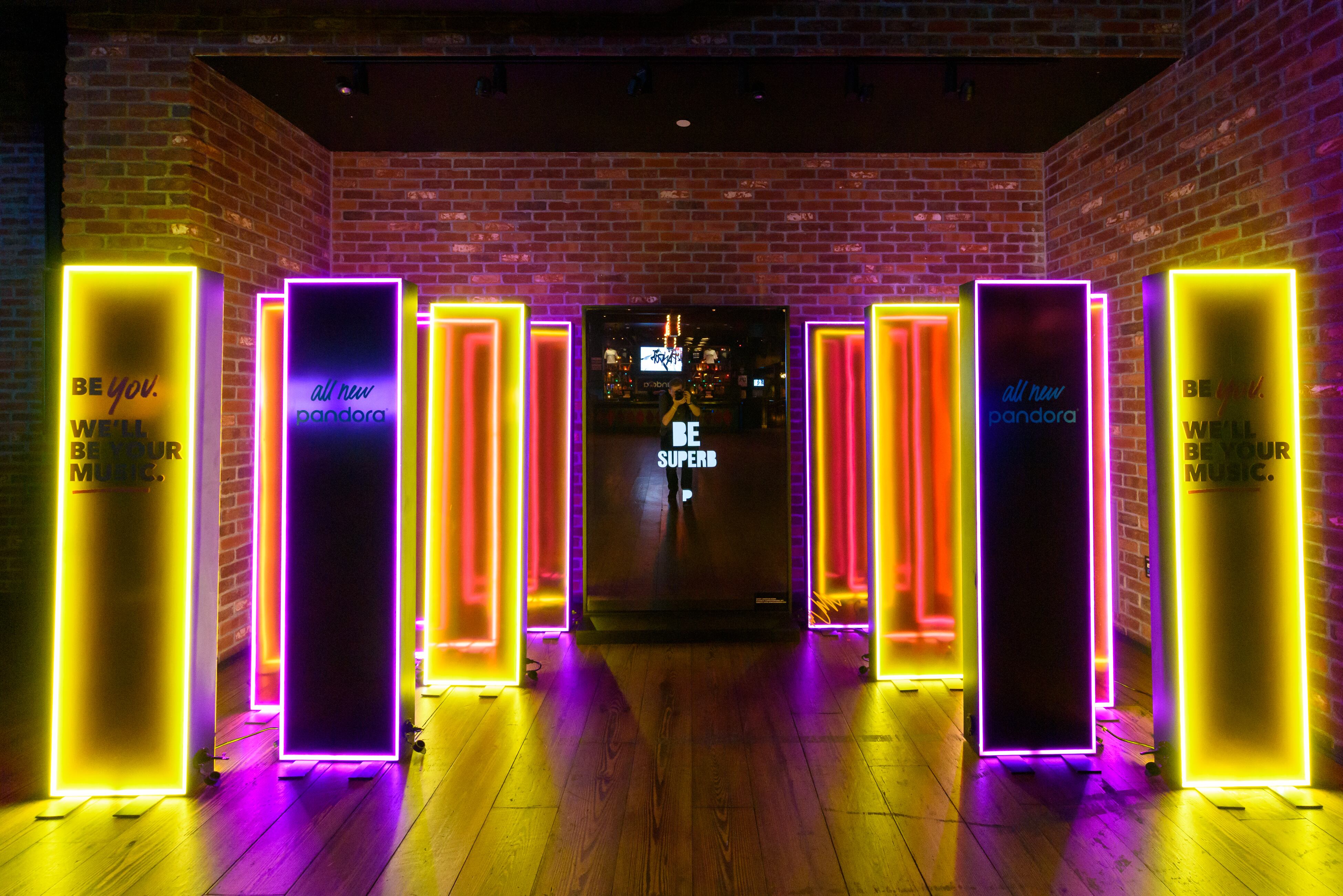
Rosen has experimented with this idea before. His project "Dream Machines" used two-way mirrors to generate random text above the reflection, which people instinctively photographed.
"It's sort of a Magic 8 Ball or tarot card-reading type of experience," he said.
His latest project, titled The Biggest Drop in Times Square Since New Years Eve, will also use his trademark flashing phrase mechanism but now on a much larger canvas.
Mulvihill said the boldness of placing the pieces in Times Square — as well as on a three-story LED facade in the heart of London’s Oxford Street at the same time — is a growing imperative in the NFT to space to show rather than tell.
"There's a massive amount of flexing happening in the digital world, and how that's been manifesting is buying NFT and then changing your profile picture to that NFT," he said. "For all intents and purposes, that's the extent of it," whereas Rosen is offering buyers the chance to flash their face in the middle of Manhattan.
The goal is for this kind of real-world incentive to draw more people into NFTs.
"Hopefully this will translate into a hundred extra, a thousand extra, a million extra people who look at this and say 'maybe NFTs can do more than just live on your computer," he said.




