In Vermont, the governor just signed a law allowing people to consume marijuana recreationally. The newly inaugurated governor of New Jersey has made it clear that he wants weed legalized.
But in neighboring New York, Gov. Andrew Cuomo -- an outspoken opponent of legalized marijuana -- has, well, appointed a task force to study the issue.
State Senator Gustavo Rivera, however, thinks that what is happening in the other states will inevitably lead New York to liberalize its laws.
"When something is legal in one state and not legal in another, you will have people crossing the border to go and get it," Senator Rivera said in an interview Tuesday on Cheddar's weekly "Cannabiz" show. "You see that with firecrackers; they're legal in many states but illegal in others. So certainly it can have an impact on what happens in one state, when people of that state go to another to acquire it, which is why, yes, there is pressure now."
Governor Cuomo has long argued that marijuana was a "gateway drug" that could lead to the use of other, more dangerous drugs. As recently as a year ago, he said, "I am unconvinced on recreational marijuana." His creation of a task force to study the legalization issues suggests that his views have softened, at least somewhat.
But Senator Rivera, a Democrat who represents portions of the Bronx, says the issue is pretty clear-cut. "Many of us are saying let's make sure that we do the right thing in the state of New York, that we push for recreational marijuana to exist in New York. It would be the right thing to do."
For full segment [click here](https://cheddar.com/videos/when-will-new-york-legalize-marijuana).
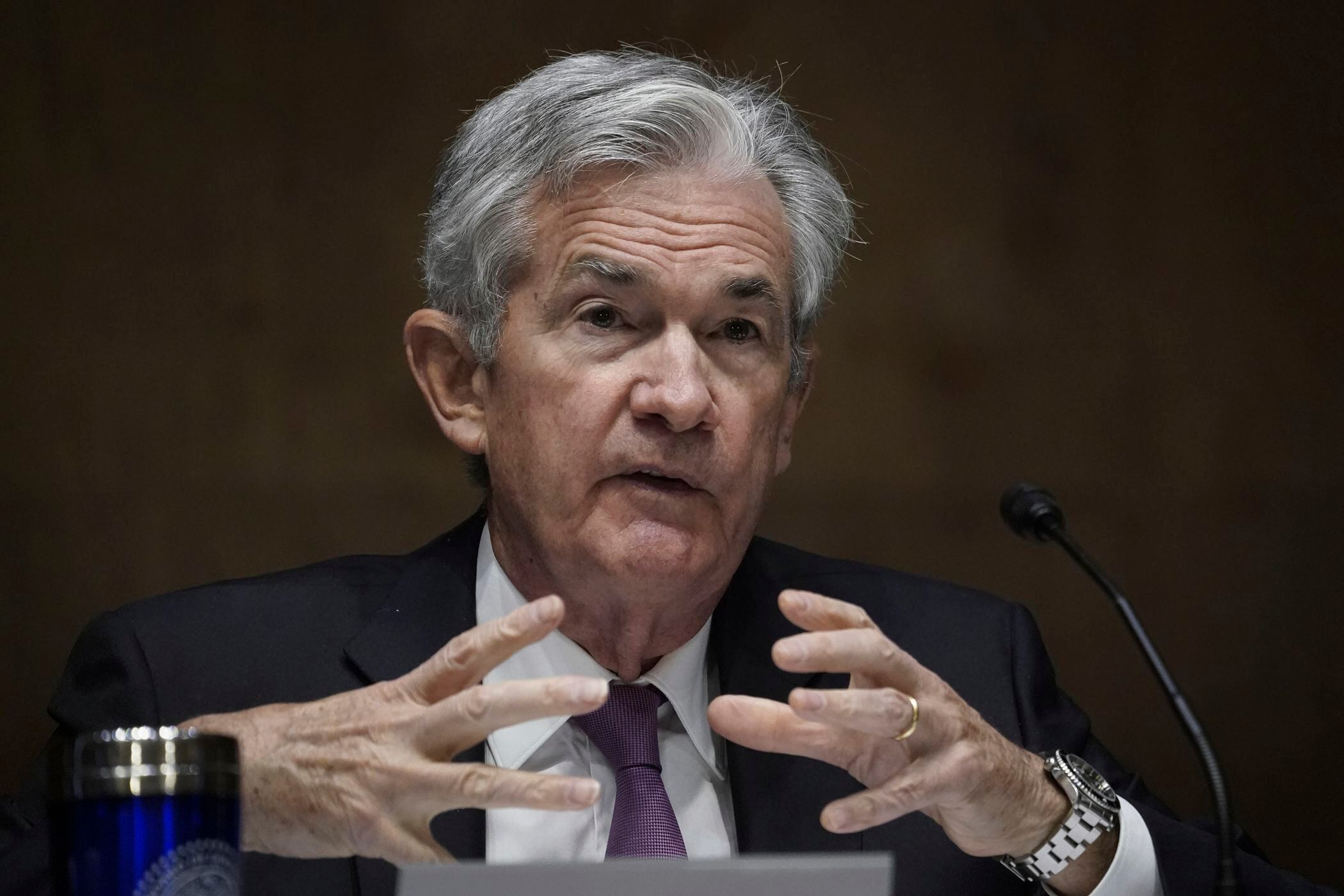
Federal Reserve Chair Jerome Powell warned Tuesday that a tentative recovery from the pandemic recession could falter unless the federal government supplies additional economic support.
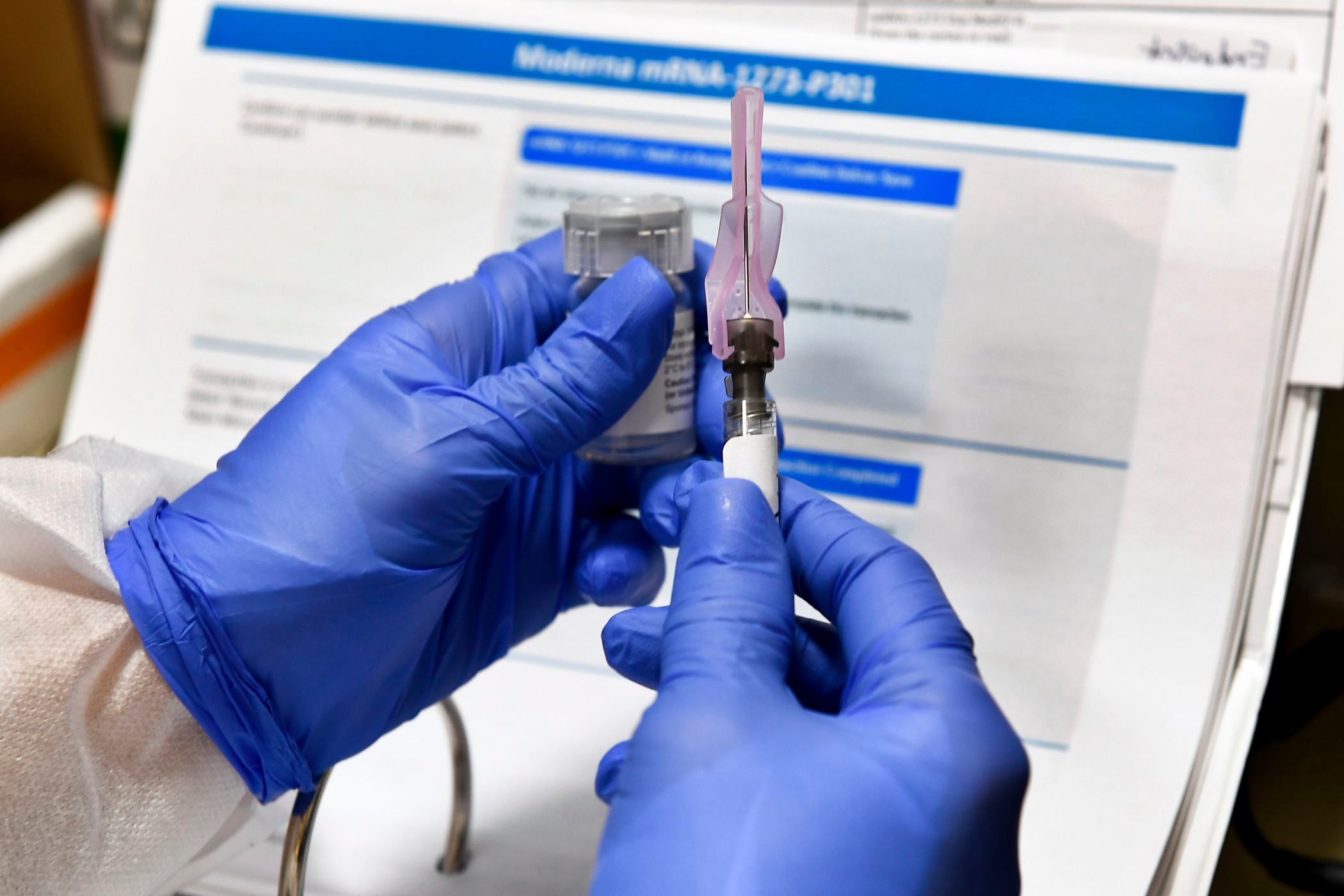
The Food and Drug Administration has laid out its safety standards for developers of COVID-19 vaccines after the White House blocked their formal release.
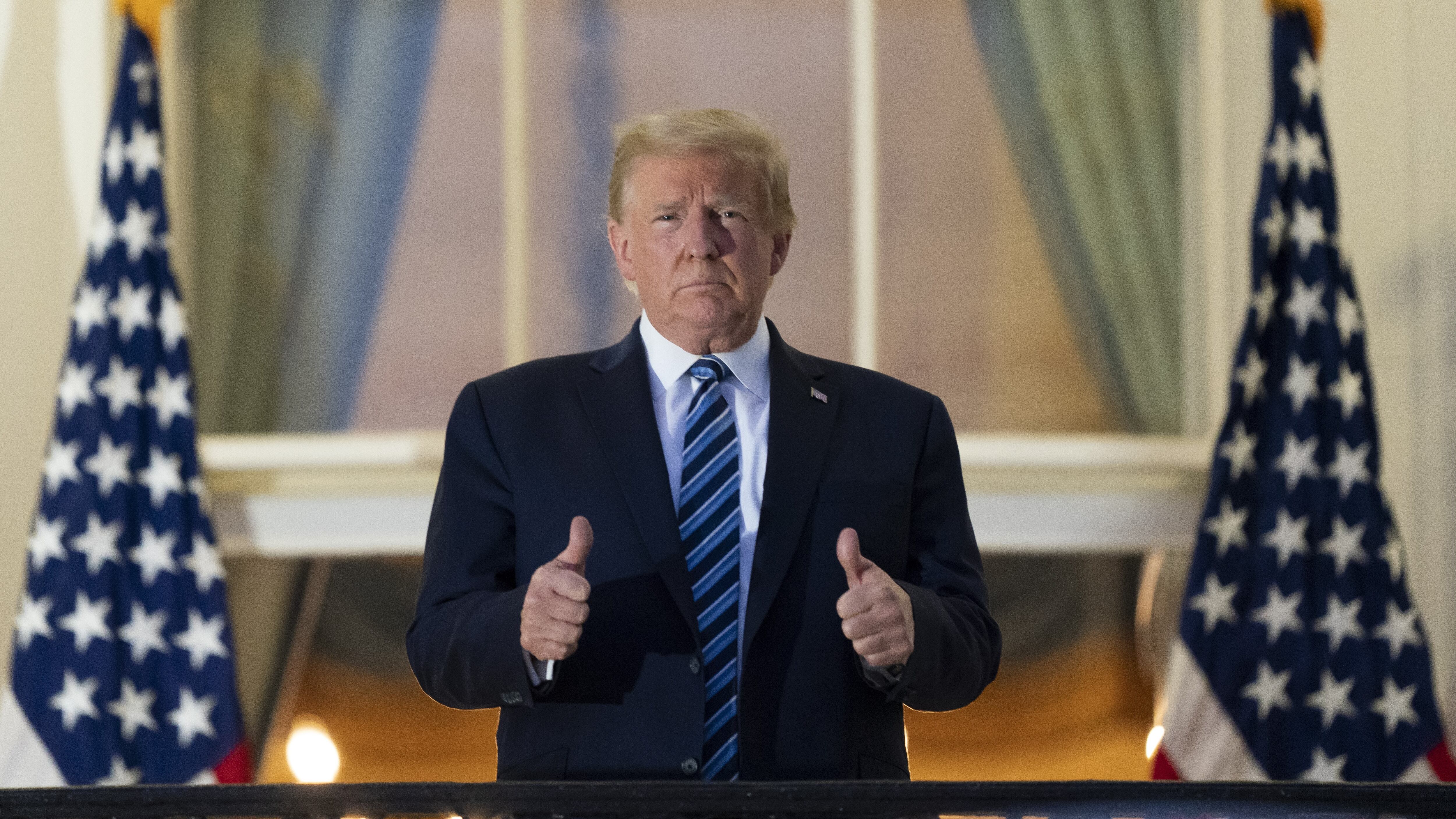
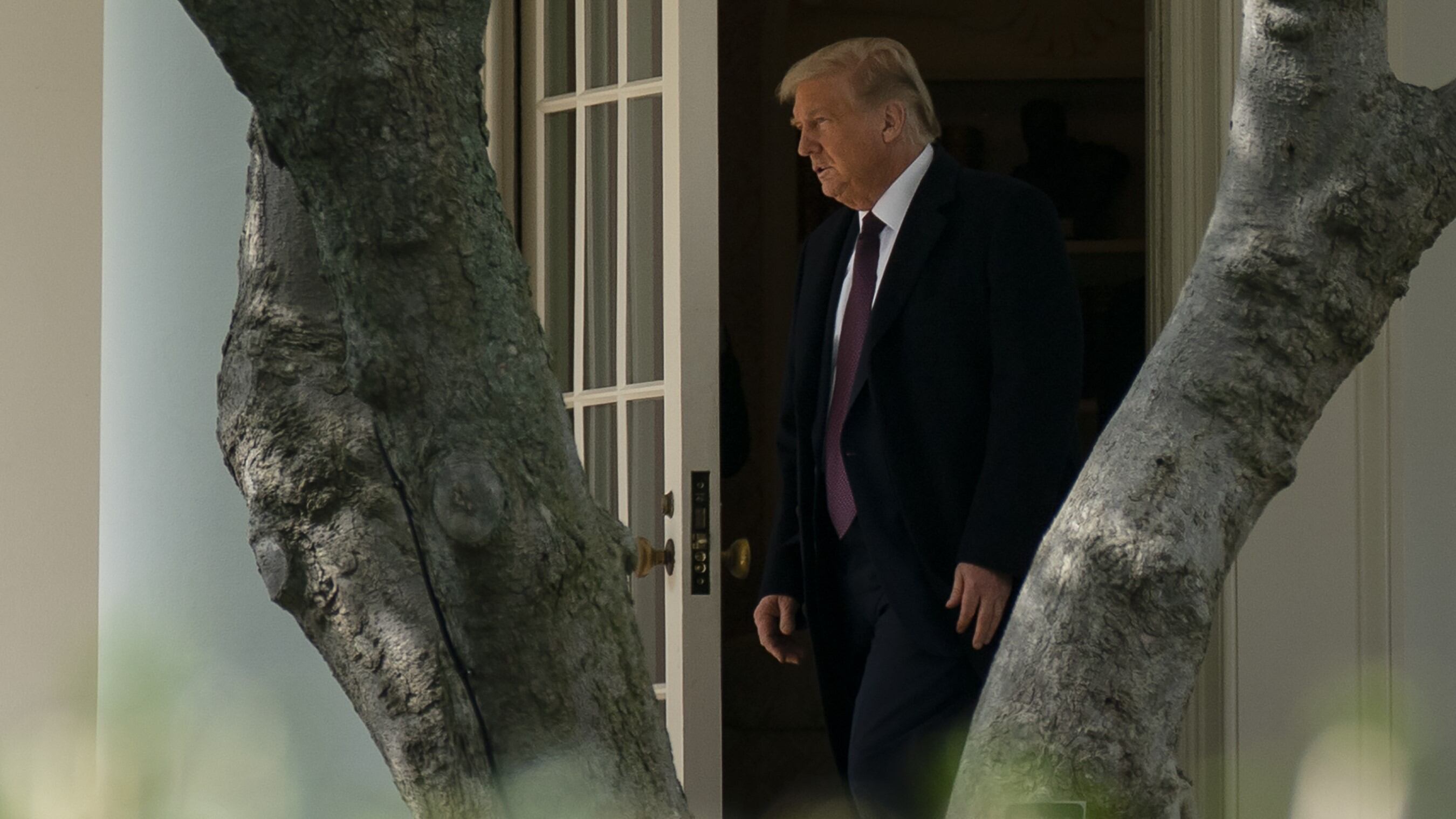
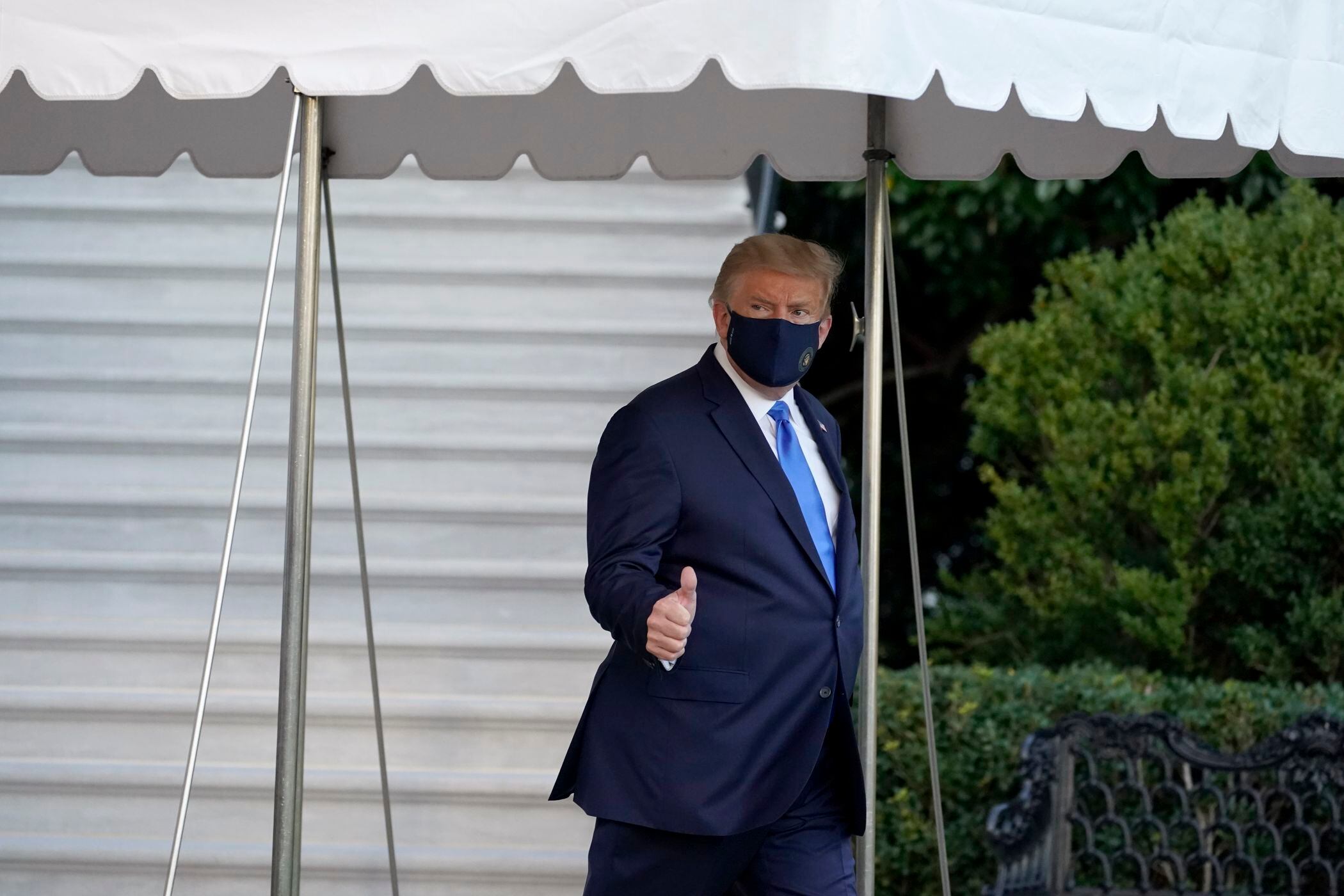
President Donald Trump is back at the White House after staging a dramatic return from the military hospital where he has been receiving an unprecedented level of care for COVID-19.
President Donald Trump says he will leave the military hospital and return to the White House Monday evening.
Former Obama officials say that the protocols in place are up to the task of preserving the continuity of the U.S. government in the event President Trump may be incapacitated.
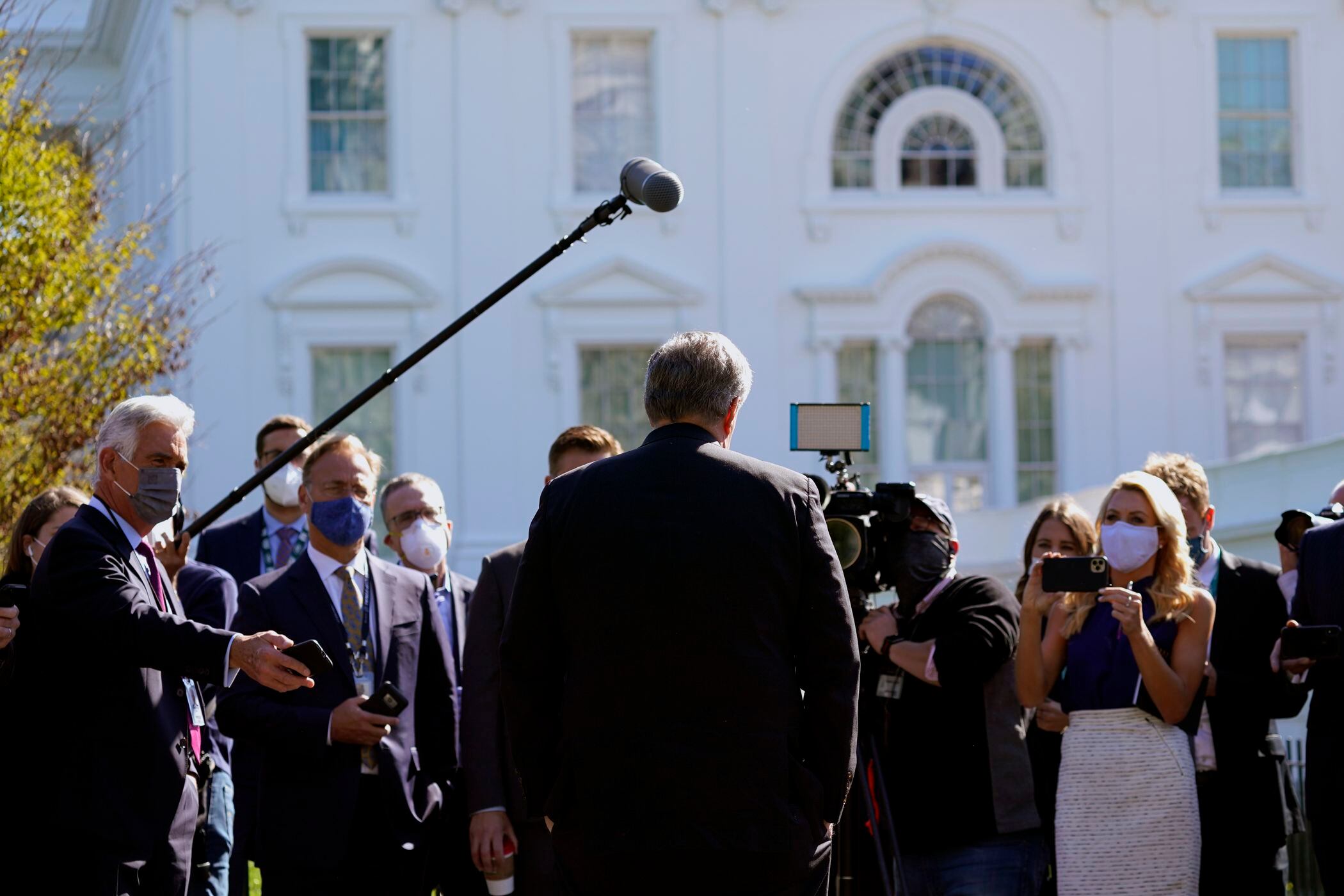
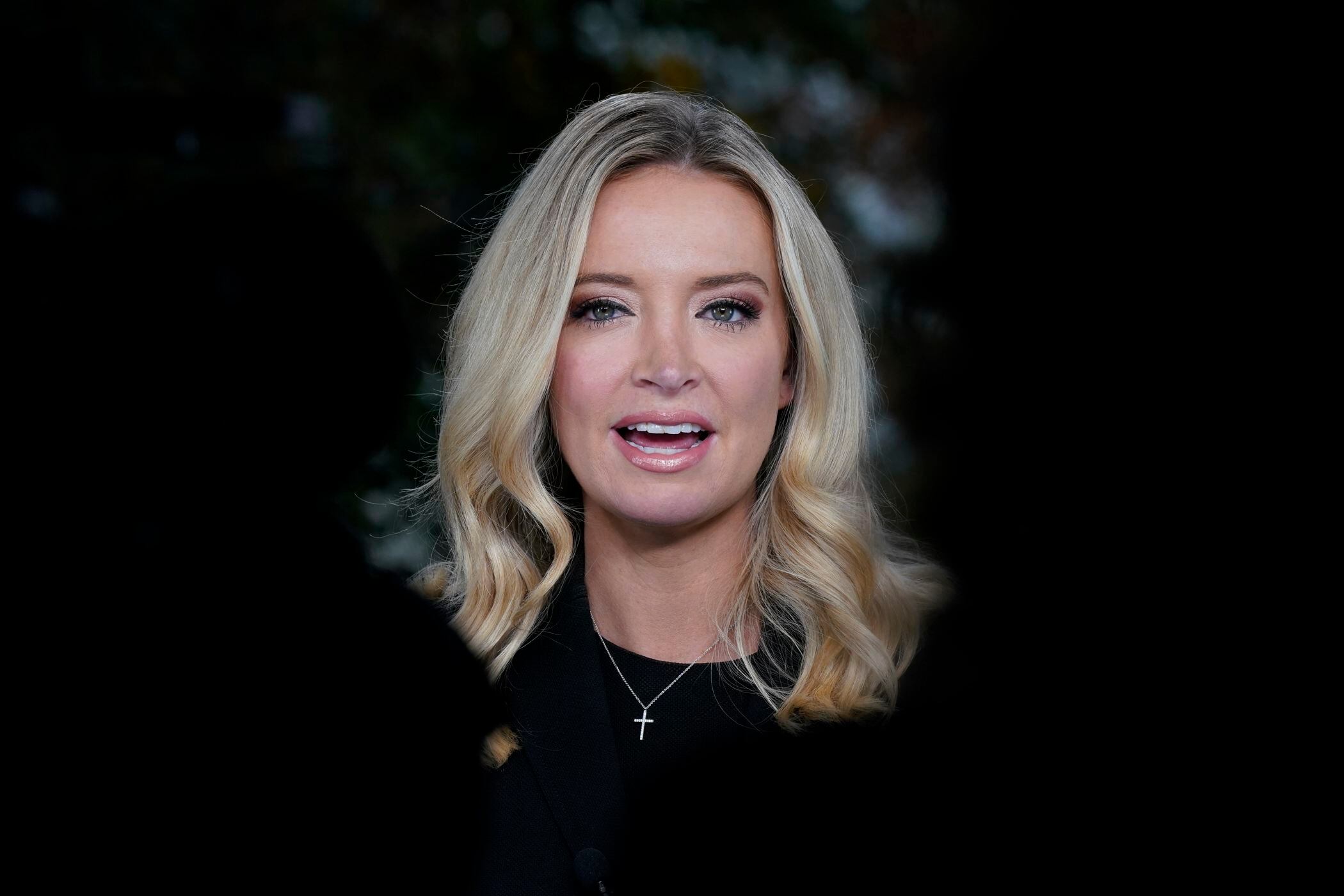
White House press secretary Kayleigh McEnany says she has tested positive for COVID 19 days after President Trump's diagnosis.
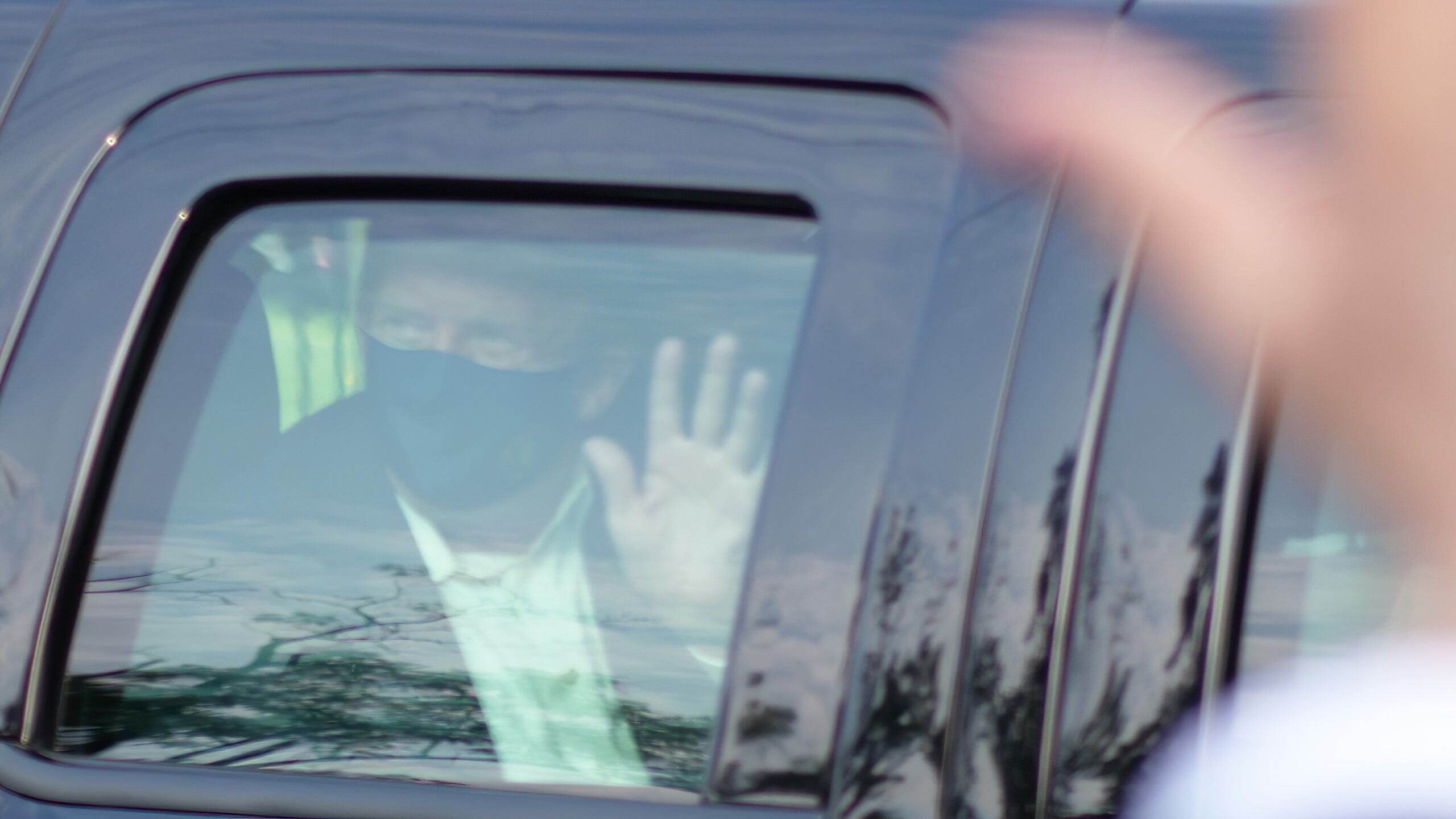
Two days after being hospitalized with COVID-19, President Donald Trump declared, “I get it,” in a message to the nation Sunday before briefly leaving the hospital to salute supporters from his motorcade.
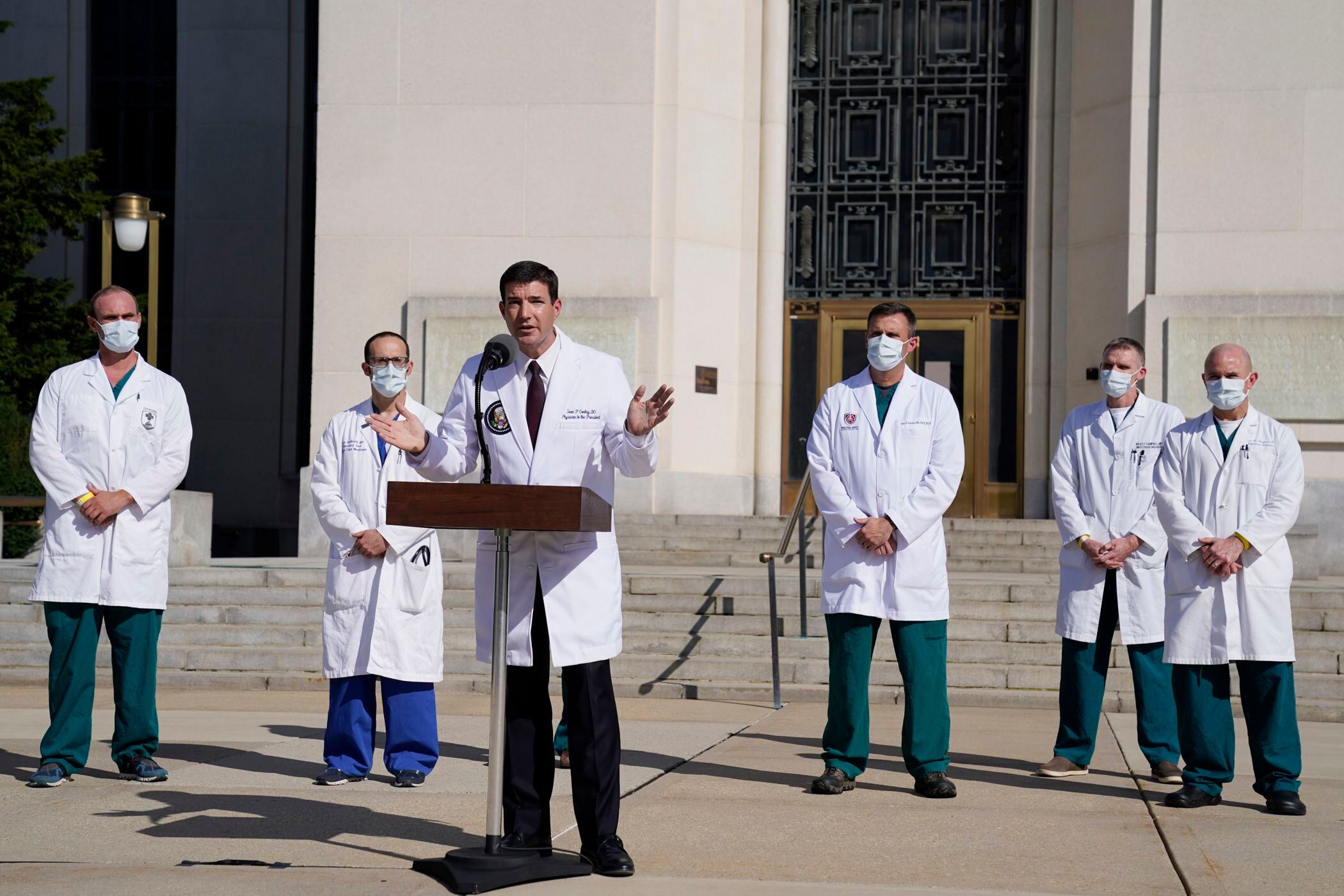
President Donald Trump faces “critical” coming days after a “very concerning” period in his fight against COVID-19 at a military hospital, his chief of staff said Saturday — in contrast to a rosier assessment moments earlier by Trump doctors, who took pains not to reveal the president had received supplemental oxygen at the White House before his hospital admission.
President Donald Trump went through a “very concerning” period Friday and faces a “critical” next two days in his fight against COVID-19 at a military hospital, his chief of staff said Saturday — in contrast to a rosier assessment moments earlier by Trump doctors, who took pains not to reveal the president had received supplemental oxygen at the White House before his hospital admission.
President Donald Trump appeared in public Friday evening for first time since testing positive for COVID-19 as he boarded Marine One for what was expected to be a stay of a “few days” at a military hospital.