By Marina Villenueve
Gov. Andrew Cuomo announced his resignation Tuesday over a barrage of sexual harassment allegations in a fall from grace a year after he was widely hailed nationally for his detailed daily briefings and leadership during some of the darkest days of the COVID-19 pandemic.
By turns defiant and chastened, the 63-year-old Democrat emphatically denied intentionally mistreating women and called the pressure for his ouster politically motivated. But he said that fighting back in this “too hot” political climate would subject the state to months of turmoil.
“The best way I can help now is if I step aside and let government get back to governing,” Cuomo said in a televised address.
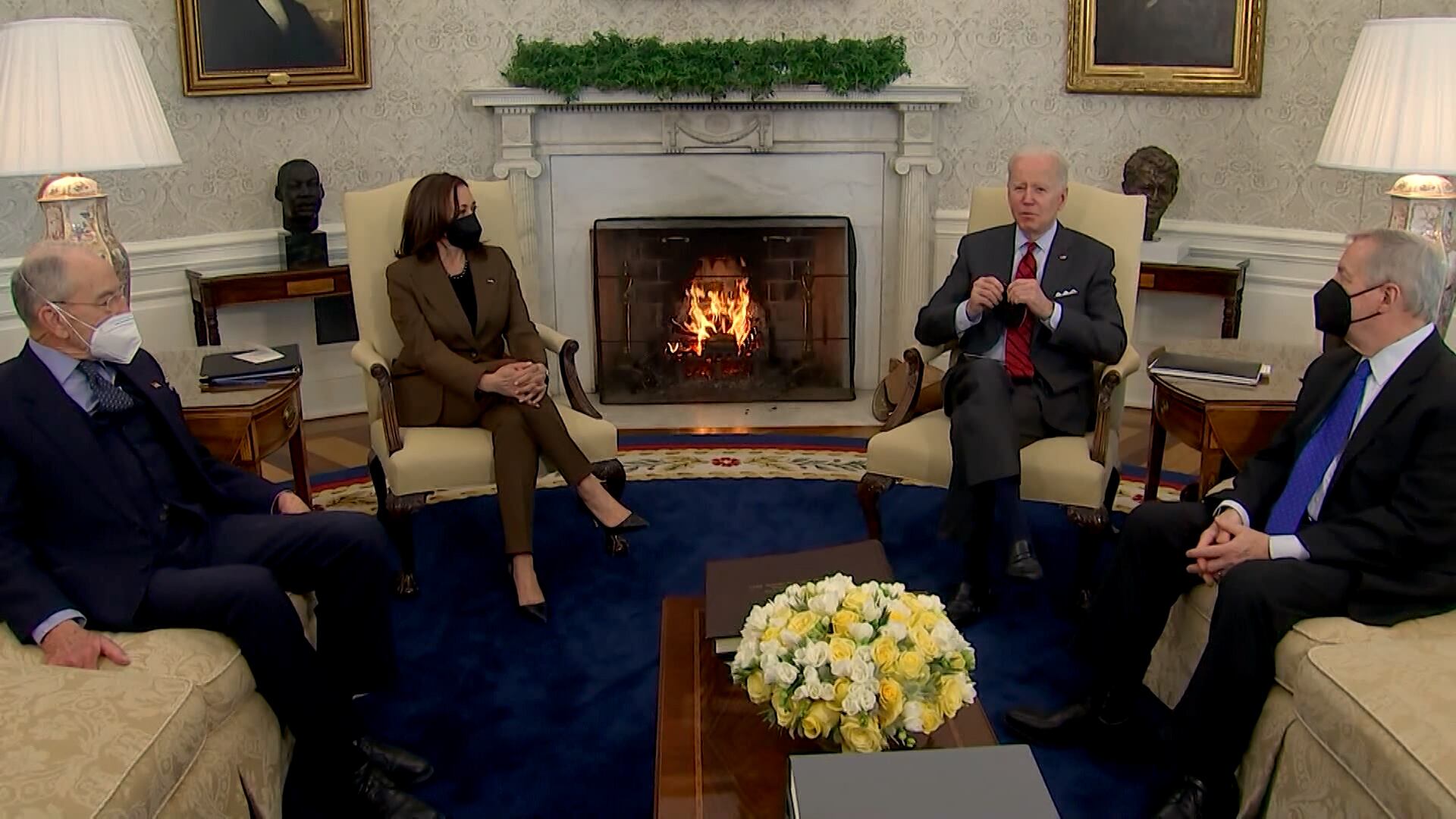
The third-term governor's resignation, which will take effect in two weeks, was announced as momentum built in the Legislature to remove him by impeachment and after nearly the entire Democratic establishment had turned against him, with President Joe Biden joining those calling on him to resign.
The decision came a week after New York’s attorney general released the results of an investigation that found Cuomo sexually harassed at least 11 women.
Investigators said he subjected women to unwanted kisses; groped their breasts or buttocks or otherwise touched them inappropriately; made insinuating remarks about their looks and their sex lives; and created a work environment “rife with fear and intimidation.”
At the same time, Cuomo was under fire over the discovery that his administration had concealed thousands of COVID-19 deaths among nursing home patients.
Lt. Gov. Kathy Hochul, a 62-year-old Democrat and former member of Congress from the Buffalo area, will become the state’s 57th governor and the first woman to hold the post. She said Cuomo's resignation was "the right thing to do and in the best interest of New Yorkers."
The #MeToo-era scandal cut short not just a career but a dynasty: Cuomo’s father, Mario Cuomo, was governor in the 1980s and ’90s, and the younger Cuomo was often mentioned as a potential presidential candidate. Even as the scandal mushroomed, he was planning to run for reelection in 2022.
Republicans exulted in Cuomo's departure but still urged impeachment, which could prevent him from running for office again. “This resignation is simply an attempt to avoid real accountability,” state GOP chair Nick Langworthy said.
At the White House, Biden said: “I respect the governor’s decision.” At the same time, he said Cuomo had “done a helluva job” on infrastructure and voting rights, and “that’s why it’s so sad.”
"From the beginning, I simply asked that the governor stop his abusive behavior,” Lindsey Boylan, the first woman to accuse Cuomo publicly of harassment, tweeted Tuesday. “It became abundantly clear he was unable to do that, instead attacking and blaming victims until the end.”
Cuomo still faces the possibility of criminal charges, with a number of prosecutors around the state continuing to investigate him. At least one of his accusers has filed a criminal complaint.
The governor prefaced his resignation with a 45-minute defense from his lawyer and his own insistence that his behavior — while sometimes insensitive, off-putting or “too familiar” — had been used against him as a weapon in a political environment where “rashness has replaced reasonableness."
“I am a fighter, and my instinct is to fight through this controversy because I truly believe it is politically motivated. I believe it is unfair and it is untruthful,” he said, but added that he didn't want “distractions” to consume the state government as it grapples with the pandemic and other problems.
The string of accusations began in news reports last December and went on for months. Cuomo called some of the allegations fabricated and denied he touched anyone inappropriately. But he acknowledged making some aides uncomfortable with comments he said he intended as playful, and he apologized for some of his behavior.
He portrayed some encounters as misunderstandings attributable to “generational or cultural” differences, invoking his upbringing in an affectionate Italian American family.
The attorney general's investigation backed up the women’s accounts and added lurid new ones, turning up the pressure on Cuomo. Investigators also said that the governor’s staff retaliated against Boylan by leaking confidential personnel files about her.
As governor, Cuomo proclaimed himself a “progressive Democrat” who gets things done: Since taking office in 2011, he helped push through legislation that legalized gay marriage, began lifting the minimum wage to $15 and expanded paid family leave benefits. He also backed big infrastructure projects, including a new Hudson River bridge that he named after his father.
At the same time he was engaging in the behavior that got him into trouble, he was publicly championing the #MeToo movement and surrounding himself with women’s rights activists. He signed into law sweeping new protections against sexual harassment and lengthened the statute of limitations in rape cases.
His resignation is “a testament to the growing power of women’s voices since the beginning of the #MeToo movement," said Debra Katz, a lawyer for one of his accusers, Charlotte Bennett.
Cuomo's national popularity soared during the harrowing spring of 2020, when New York was the lethal epicenter of the nation’s coronavirus outbreak and he became President Donald Trump's chief antagonist in the minds of many Americans.
Cuomo's tough-minded but compassionate rhetoric made for riveting television well beyond New York, as he sternly warned people to stay home and wear masks while Trump often brushed off the virus. Cuomo's briefings won an international Emmy Award, and he went on to write a book on leadership in a crisis.
But those accomplishments were soon tainted when it emerged that the state’s official count of nursing home deaths had excluded many victims who had been transferred to hospitals before they succumbed. A Cuomo aide acknowledged the administration feared the true numbers would be “used against us” by the Trump White House.
Also, Cuomo’s administration was fiercely criticized for forcing nursing homes to accept patients recovering from the virus.
The U.S. Justice Department is investigating the state’s handling of data on nursing home deaths. In addition, the state attorney general is looking into whether Cuomo broke the law in using members of his staff to help write and promote his book, from which he stood to make more than $5 million.
The governor also faced increasing criticism over his rough and sometimes vindictive treatment of fellow politicians and his own staff, with former aides telling stories of a brutal work environment.
Cuomo has been divorced since 2005 from author and activist Kerry Kennedy, a member of the Kennedy family, and was romantically involved up until 2019 with TV lifestyle personality Sandra Lee. He has three adult daughters and appealed to them as he stepped down.
“I want them to know, from the bottom of my heart: I never did, and I never would, intentionally disrespect a woman or treat any woman differently than I would want them treated," he said. "Your dad made mistakes. And he apologized. And he learned from it. And that’s what life is all about.”
Cuomo got his start in politics as his father’s hard-nosed and often ruthless campaign manager, then was New York attorney general and U.S. housing secretary under President Bill Clinton before getting elected governor in 2010.
New York has seen a string of high-level politicians brought down in disgrace in recent years.
Gov. Eliot Spitzer resigned in 2008 in a prostitution scandal. Rep. Anthony Weiner went to prison for sexting with a 15-year-old girl. Attorney General Eric Schneiderman stepped down in 2018 after four women accused him of abuse. And the Legislature's top two leaders were convicted of corruption.
___
Villeneuve reported from Albany, New York. Associated Press writers Jennifer Peltz in New York and Josh Boak in Washington contributed.
Updated on August 10, 2021, at 5:05 p.m. ET with edits.