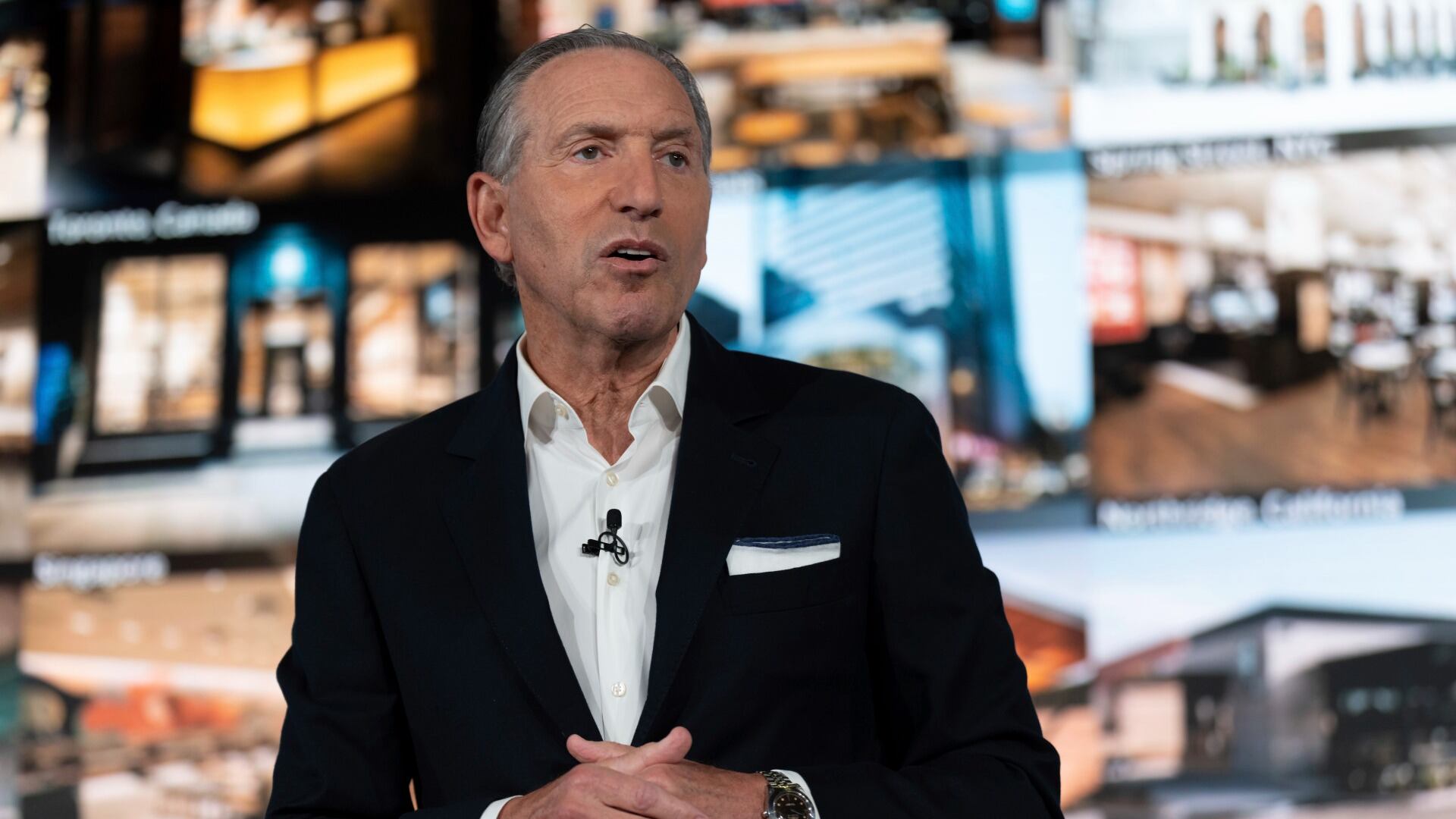
Interim CEO Howard Schultz speaks during Starbucks Investor Day 2022, Tuesday, Sept. 13, 2022, in Seattle. (AP Photo/Stephen Brashear, File)
Two weeks earlier than expected, Howard Schultz stepped down as chief executive officer of Starbucks, and Laxman Narasimhan is taking over the global coffee chain.
This ends Schultz' third stint leading the company. He returned in April of last year to help get Starbucks' stock on firmer footing amid widespread labor unrest and was expected to step down on April 4.
“The board wants to express our sincerest thanks to our founder, Howard Schultz, for selflessly picking up the leadership mantle when asked—forgoing compensation and putting aside his own pursuits—for the love of our company and its partners,” said Mellody Hobson, independent Starbucks board of directors chair, in a press release.
Narasimhan assumed the role of incoming CEO in October of 2022 and has spent the last few months learning the ins and outs of the business. Over the period, he met with employees at over 30 stores and traveled to manufacturing plants and support centers around the world.
“Laxman’s intensive immersion into the business coupled with his extensive experience as a proven brand builder, innovator and operator have uniquely prepared him to lead Starbucks into its next phase of growth,” said Hobson. “This immersion has deepened Laxman’s understanding of Starbucks culture and values. In this time of learning and listening, he has already won the hearts and minds of our partners around the world.”
Schultz is still expected to testify before the Senate on March 29 regarding allegations of Starbucks' union-busting efforts.
Narasimhan will lead the company's investor day for the first time on Thursday.
Retailers face tariffs and cost challenges this holiday season. Wells Fargo's Lauren Murphy shares insights on pricing, promotions, and shopping trends.
Dateability, founded by sisters Jacqueline and Alexa Child, is the only dating app for disabled and chronically ill communities, fostering love without limits.
Some small grocery stores and neighborhood convenience stores are eager for the U.S. government shutdown to end and for their customers to start receiving federal food aid again. Late last month, the Trump administration froze funding for the SNAP benefits that about 42 million Americans use to buy groceries. The U.S. Department of Agriculture says about 74% of the assistance was spent last year at superstores like Walmart and supermarkets like Kroger. Around 14% went to smaller stores that are more accessible to SNAP beneficiaries. A former director of the United Nations World Food Program says SNAP is not only a social safety net for families but a local economic engine that supports neighborhood businesses.
Andy Baehr, Head of Product at CoinDesk Indices, breaks down crypto’s Black Friday crash, Bitcoin dipping under $100K, and what’s driving the market rout.
Billionaire Warren Buffett warned shareholders Monday that many companies will fare better than his Berkshire Hathaway in the decades ahead as Father Time catches up
Chris Marquette of POLITICO breaks down how the FAA is cutting flights and facing a critical shortage of air‑traffic controllers amid the government shutdown.