New Social App Wants You to Hang Out With Strangers
*By Madison Alworth*
Dolo could be your new favorite social platform. The location-based app encourages people to meet in real life ー and do something.
"We wanted to go back a little bit to the basics of what it means to actually connect with people we don't know," said Raja Haddad, the CEO and co-founder of Dolo.
Those basics, according to Haddad, begin wherever the user is.
"We picked location as that context of relevance, because we all share a sense of experience in location," Haddad said in an interview Thursday with Cheddar. "And we figured that technology hasn't figured out a good way yet to connect us and give us a platform to chat with people around us."
On Dolo, users can find someone to play pick-up basketball or ask where to find the best nearby happy hour deals. Users can go by their real name or a pseudonym, and they can mask their picture with a cartoon that is removed for someone who is designated as a friend. Users' accounts are verified by a phone number.
Unlike other social platforms like Facebook, Snapchat, or Instagram that connect users with real-life friends, Dolo wants to connect users with other people online they may not already know, but who are nearby and willing to meet in real life.
Haddad and Ben Vigier, Co-founder and CPO of Dolo, started the business after initially meeting at Apple in 2010. The pair first collaborated on the Apple Store App before Haddad moved onto Apple Watch and Vigier to Apple Pay. Now, their project is Dolo.
Haddad and co-founder Ben Vigier, first met in 2010 when they worked at Apple. With Dolo, they aim to build real-life connections ー a goal shared by a number of social platforms, like Facebook. But the Dolo co-founders said they are trying to learn from Facebook's mistakes.
"Research has shown that in a very connected world, we are feeling very lonely and isolation these days," said Haddad. "It's an opportunity right now, and especially at this time, to sort of build something from scratch, build it with the users in mind, with the respect of what they want and what they don't want, build it with the idea of positive connections, and sort of see where that goes."
For the full interview, [click here](https://cheddar.com/videos/new-social-platform-wants-you-to-connect-with-strangers).
Miami wants to be the crypto capital of the world. Mayor Francis Suarez has gone all in on the blockchain, even accepting one of his first paychecks in Bitcoin, hosting one of the world's largest digital cryptocurrency conferences, and marketing Miami as a great place for tech experts to work. Maja Vujinovic, managing director of OGroupLLC, joined Cheddar's Fast Forward to discuss Miami's enthusiasm toward crypto, some of the potential risks that entails, and where the city might be heading when it comes to the crypto takeover.
Hinge users who have children can opt-in to a $100 stipend up to $25,000 for childcare. Logan Ury, the director of relationship science for the online dating platform, noted the issue as an obstacle for single parents who want to go out on dates. "We have heard that singles with children have a hard time going on dates for one of the reasons being that it's just hard to find childcare and it's hard to be able to afford it," she said. Ury also said that the hot topic among Hinge's users is mental health and the prioritizing of mental health.
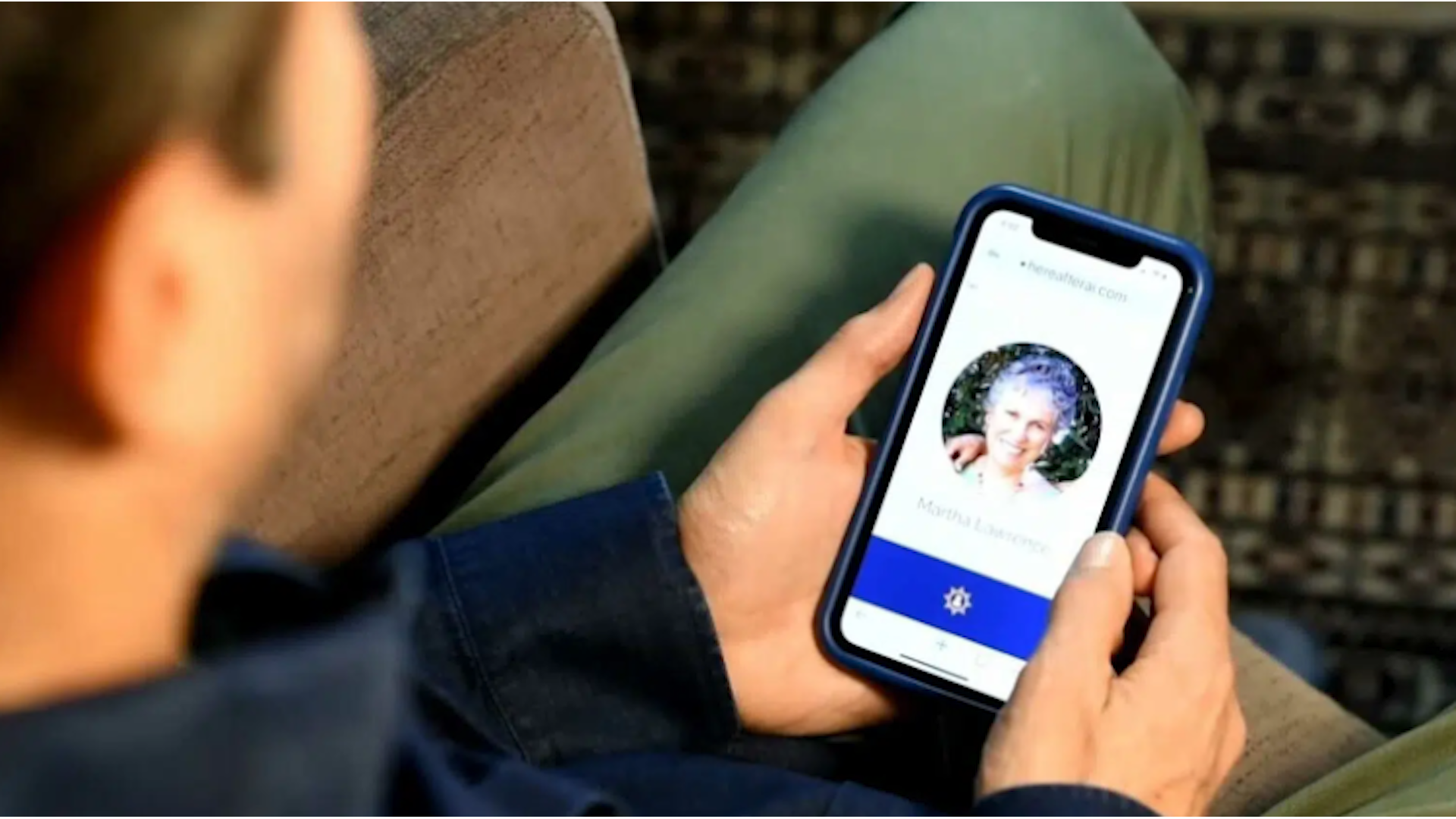
On this episode of Cheddar Innovates: CEO of HereAfter AI discusses how artificial intelligence can be used to preserve family history and stories, and allow you to 'talk' to loved ones that have passed; Creator of the board game 'Travel Explore Discover' explains how she came up with the idea for this informative and educational board game, and how she's using the proceeds to give back to her community; Cheddar gets a look at Curiosity Stream's 'The Humboldt Current.'
James Vlahos, Co-Founder and CEO of HereAfter AI, joins Cheddar Innovates to discuss how artificial intelligence can be used to preserve family history and stories, and allow you to 'talk' to loved ones that have passed.
Facebook parent Meta’s miss on Q4 earnings raised alarm bells amongst investors. The tech giant lost users for the first time as it invests a lot into the metaverse, its virtual realm, in the hopes that consumers will move their social media consumption there. The stock dropped around 25 percent on the report, and CEO Mark Zuckerberg chalked it up to people flocking toward apps like TikTok, even as his own platform attempts to make a big pivot to the metaverse future. "It's gonna take a long time to develop and it's gonna take a long time to bring to fruition," Rebecca Walser, president of Walser Wealth Management told Cheddar. "In the meantime, the world is moving on. We have a very short attention span, especially on social media, and we want the short little videos. And Tiktok has just taken off."
Just this week, Facebook's parent company Meta released an update for its 3D avatar creation on Facebook and messenger. This update is encouraging users of Instagram to create their virtual selves, and it is an early step towards making the metaverse vision a reality. David Ewalt, editor-in-chief at Gizmodo joins Cheddar News to discuss.