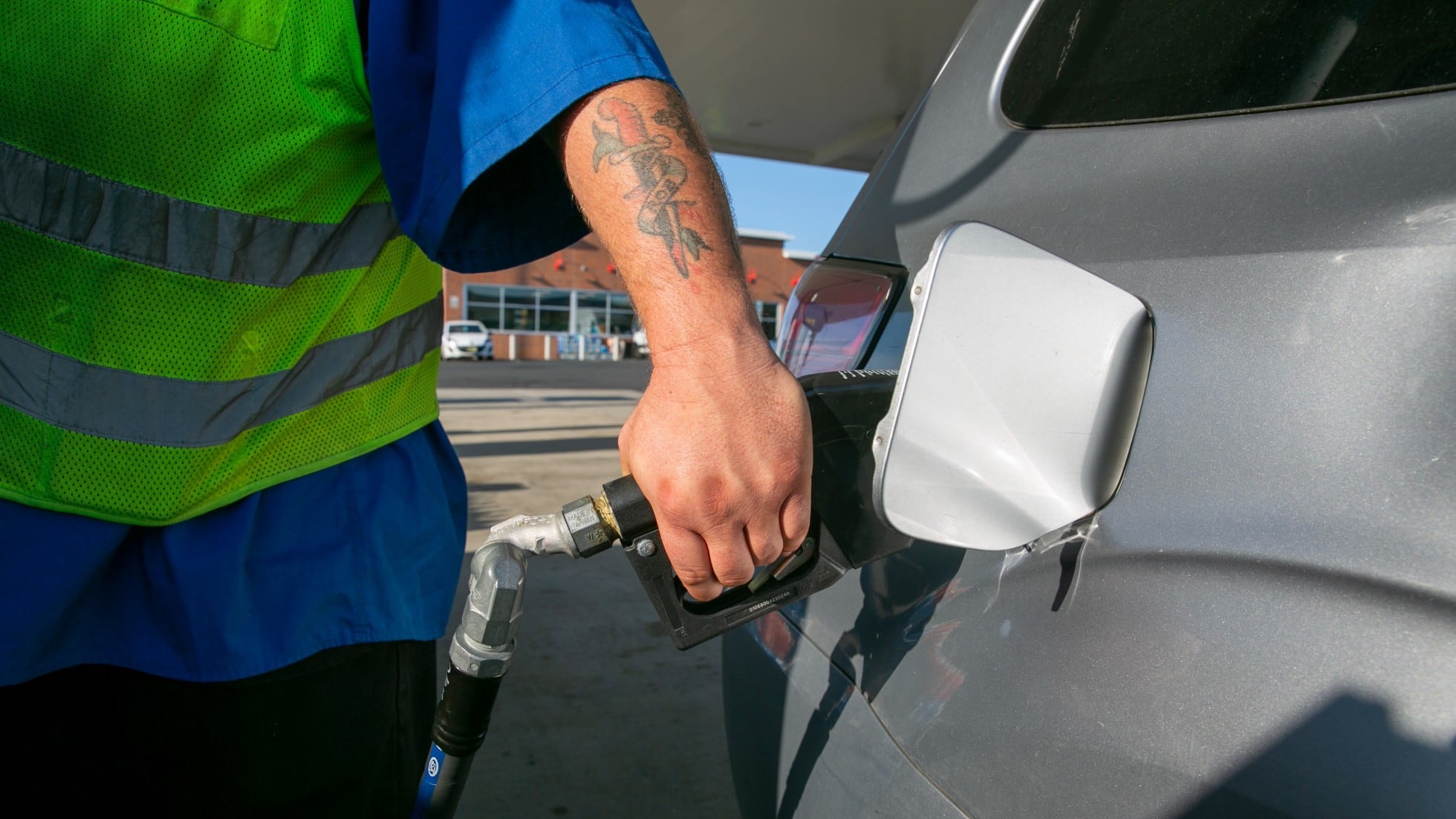
A gas station employee pumps gas into a vehicle at a Sunoco station in Wall Township, New Jersey, on the Garden State Parkway on Friday, July 22, 2022. (AP Photo/Ted Shaffrey)
By Wayne Parry
New Jersey will prohibit the sale of new gasoline-powered vehicles by 2035 as part of an effort to improve air quality and reduce planet-warming pollutants, officials announced Tuesday.
A rule that will take effect Jan. 1 commits the state to an eventual move toward zero-emission vehicles, the state Department of Environmental Protection said in a news release.
It is one of a growing number of states to do so, including California, Vermont, New York, Washington, Oregon, Massachusetts, Virginia, Rhode Island, Maryland and Connecticut, according to Coltura, a Seattle-based nonprofit advocating for an end to gasoline vehicle use.
New Jersey will start limiting the amount of new gasoline-powered cars that can be sold in the state starting in 2027, eventually reaching zero in 2035.
The move does not prohibit ownership or use of gasoline-powered cars, not does it force consumers to buy electric vehicles, the DEP said. It will not prohibit the sale of used cars powered by gasoline, and consumers would still be free to purchase gas-fueled cars elsewhere and bring them into New Jersey, as long as they met certain emissions standards.
“The steps we take today to lower emissions will improve air quality and mitigate climate impacts for generations to come, all while increasing access to cleaner car choices,” said Phil Murphy, the state's Democratic governor.
"Cleaner cars and trucks mean cleaner air for our children and families, because the tailpipes of our own vehicles are a leading cause of poor local air quality,” said Shawn LaTourette, the state's environmental protection commissioner. “As New Jersey transitions to a zero-emission vehicle future, we will improve our quality of life and public health. At the same time, we will reduce climate pollutants from the transportation sector, the greatest source of planet-warming pollution in New Jersey and the nation.”
The rule has been hotly opposed by business groups since word that the state was moving to implement it started circulating earlier this year.
Ray Cantor, an official with the New Jersey Business and Industry Association, said over 100 business, labor and other groups have sent nearly 10,000 letters to state legislators “asking them to step in to stop a proposed DEP rule that will ultimately mandate what type of car residents can drive, and in some cases, if they can afford to drive.”
“This ban of the sale of new gas-powered cars in such an expedited time does not take costs or feasibility into account," he said. “It does not take the lack of local and highway infrastructure into account. It does not take grid capacity into account. It ignores consumer choice. It doesn’t take New Jersey residents into account, especially low- and moderate-income families.”
Environmental groups hailed the decision.
"This is a huge win not only for the environment, but for public health and the communities who suffer every day from the pollution from congested roadways,” said Anjuli Ramos-Busot, director of the New Jersey Sierra Club.
“The electric vehicle revolution is upon us, and the benefits are far-reaching — even for those who never plan to get behind the wheel of an EV," added Kathy Harris, an official with the Natural Resources Defense Council.
Carlo and Baker cover the latest developments with the Omicron variant, and break down what we know and what we still don't. Plus, a relatively tame Black Friday, and more.
Dr. Amesh Adalja, an infectious disease specialist and senior scholar at Johns Hopkins Center for Health Security, joined Cheddar to discuss the nations joining in on a travel ban against several African nations after South Africa reported the emergence of the omicron variant of COVID-19 currently worrying health experts. Adalja also added his own voice to the World Health Organization's objection to the travel ban at this time. "When you do a travel ban, you basically waste a lot of resources implementing the travel ban, you give people a false sense of security when the virus is likely already outside of the area of the travel ban, and then you punish countries like South Africa." He noted that South Africa should be praised for its transparency and not punished with restrictions, an act he thinks will lead to a chilling effect among other nations sharing data freely.
Blue Origin is gearing up for its next launch, set to blast off on December 9th. Michael Strahan is one of the six crew members who will snag a seat on the the New Shepard rocket. Jim Cantrell, CEO and co-founder at Phantom Space, joins Cheddar News to discuss.
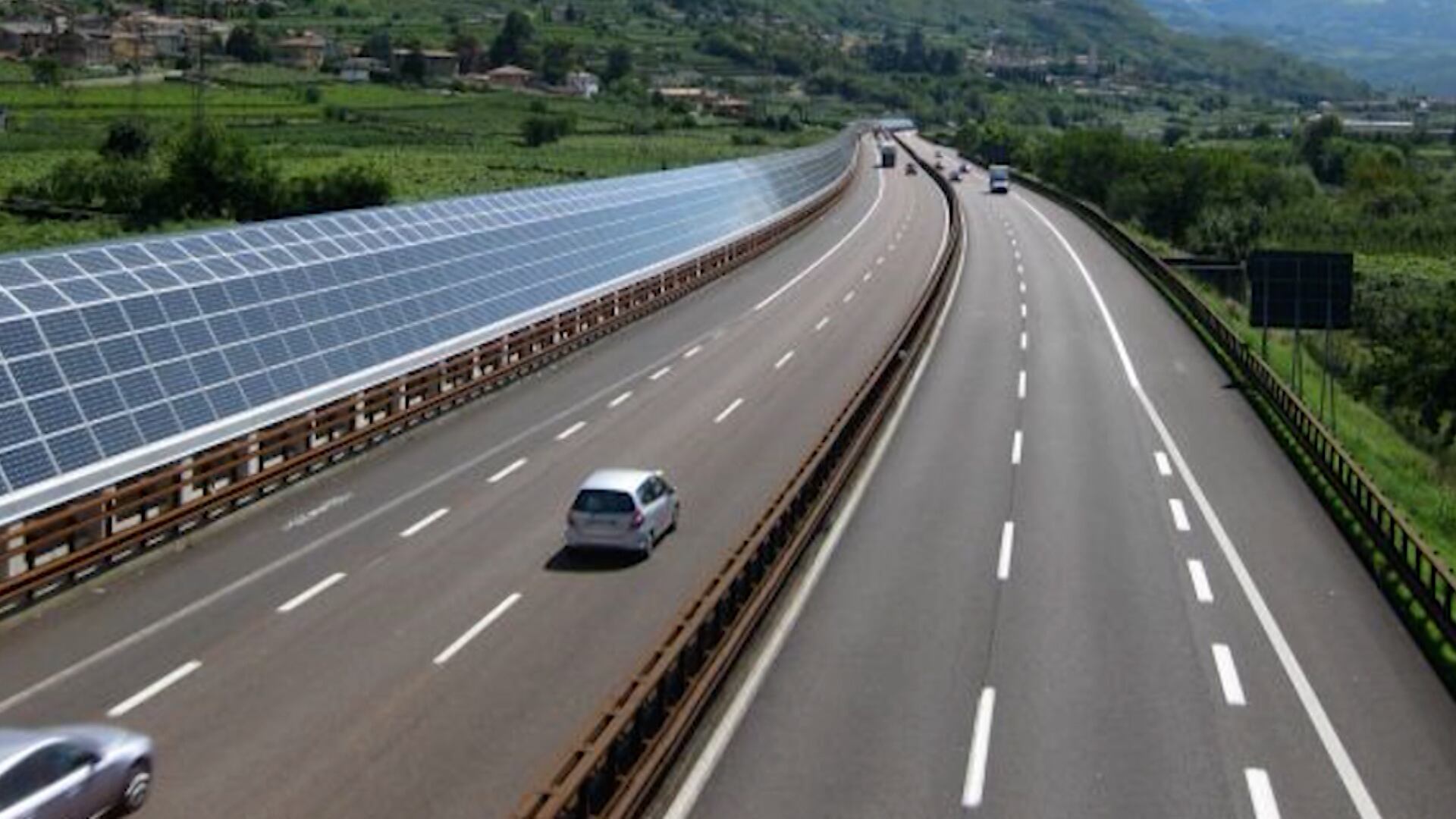
Donald Pettey, Program Manager for Strategic Initiatives for MassDOT, and Mohammed Siddiqui, Vice President of Public Relations at Ko-Solar, join Cheddar Climate, where they discuss their plan to test highway barriers that absorb sound and solar energy, with construction expected to begin in the first half of 2022.
Over 100 world leaders signed on to a pledge at the United Nations COP26 climate meeting with the aim of ending and reversing deforestation by 2030. Leaders agreed to conserve forests and ecosystems, support developing countries on deforestation prevention, and more. Rod Taylor, Global Forests Director at the World Resources Institute, joins Cheddar Climate to discuss the pledge, whether it will have a significant impact, whether 2030 is a suitable deadline, and how we can verify if forests are actually being protected.
President Joe Biden's "Build Back Better" bill could mean cheaper electric bicycles and scooters as the nation attempts to shift away from gas-powered cars. Noa Banayan, the director of federal affairs at PeopleForBikes, joined Cheddar's "Closing Bell" to provide some background on the E-Bike Act included in Biden's reconciliation bill that would provide tax credits for qualified purchases. "We want to make sure, from the bike industry's perspective, that this is a technology and a product that is available to the majority of Americans who want to lower their carbon footprint and get around town faster and do everything that they would normally do in a short car trip but by bike, because it's healthier, it's fast, it's efficient, you're not in traffic," she said.
It's being called the next big trend in crypto. A decentralized autonomous organization, or DAO, is an internet community of different types of groups and businesses. The purpose is to allow people to commit funds to a specific cause in a safe way. Now, one social platform is creating a do-it-yourself kit for those who want to step into the space. Upstream Collective just launched the beta mode of its platform with the goal of putting all facets of running a DAO in one place. Alex Taub, co-founder and CEO of Upstream, joins Cheddar News to discuss.
A NASA spacecraft that will deliberately crash into an asteroid is preparing to launch this week. The goal of the DART mission, or the Double Asteroid Redirection Test, is to hit the smaller of the two asteroids, Dimorphos, with the spacecraft at about 15,000 miles per hour and see how the impact changes the asteroid’s trajectory. Joey Roulette, space reporter at The New York Times, joins Cheddar News to talk more about it.
NFL Hall of Famer and "Good Morning America" host Michael Strahan will be able to add space travel to his list of accomplishments as he prepares to launch into orbit with the next Blue Origin mission.