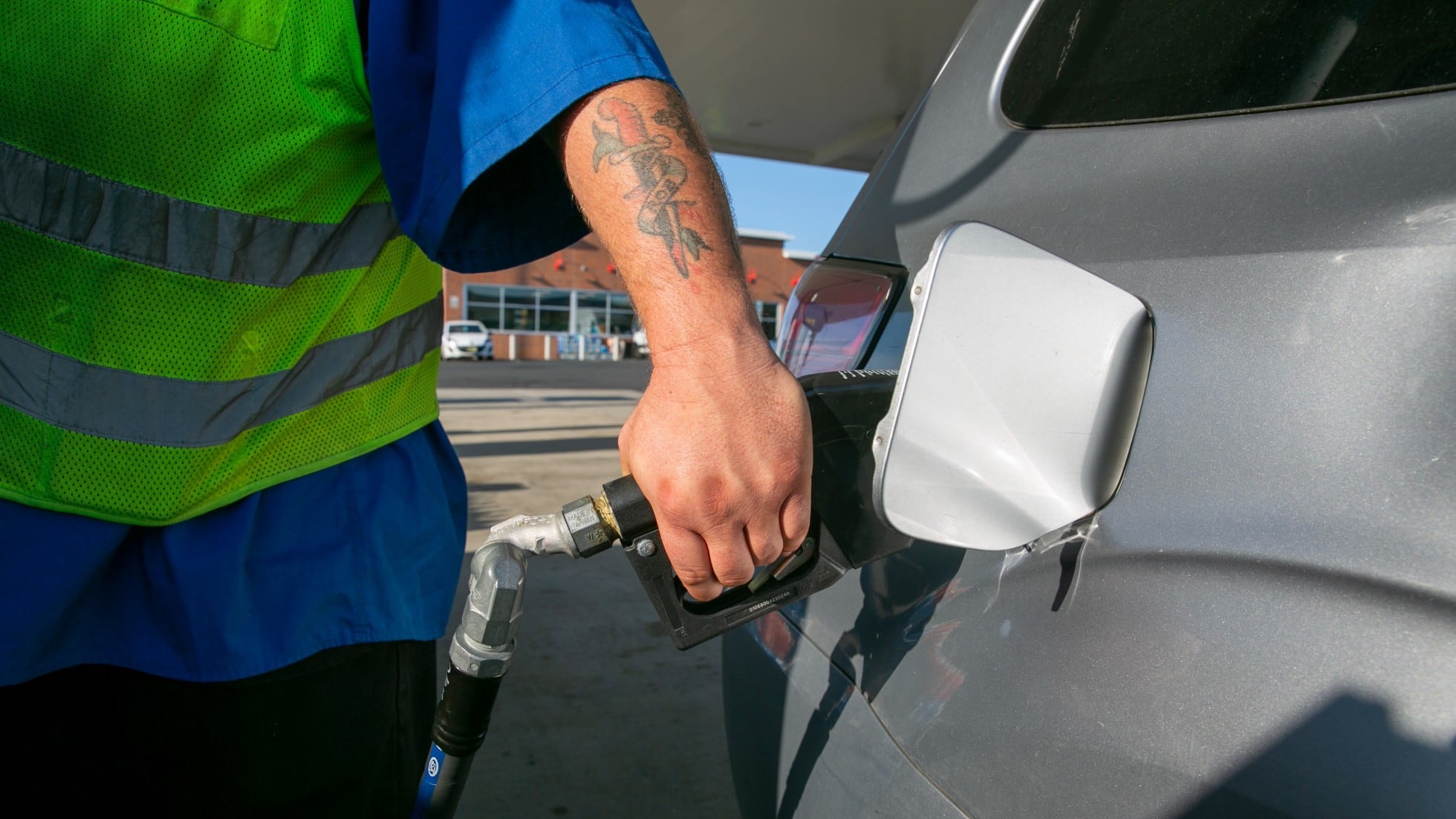
A gas station employee pumps gas into a vehicle at a Sunoco station in Wall Township, New Jersey, on the Garden State Parkway on Friday, July 22, 2022. (AP Photo/Ted Shaffrey)
By Wayne Parry
New Jersey will prohibit the sale of new gasoline-powered vehicles by 2035 as part of an effort to improve air quality and reduce planet-warming pollutants, officials announced Tuesday.
A rule that will take effect Jan. 1 commits the state to an eventual move toward zero-emission vehicles, the state Department of Environmental Protection said in a news release.
It is one of a growing number of states to do so, including California, Vermont, New York, Washington, Oregon, Massachusetts, Virginia, Rhode Island, Maryland and Connecticut, according to Coltura, a Seattle-based nonprofit advocating for an end to gasoline vehicle use.
New Jersey will start limiting the amount of new gasoline-powered cars that can be sold in the state starting in 2027, eventually reaching zero in 2035.
The move does not prohibit ownership or use of gasoline-powered cars, not does it force consumers to buy electric vehicles, the DEP said. It will not prohibit the sale of used cars powered by gasoline, and consumers would still be free to purchase gas-fueled cars elsewhere and bring them into New Jersey, as long as they met certain emissions standards.
“The steps we take today to lower emissions will improve air quality and mitigate climate impacts for generations to come, all while increasing access to cleaner car choices,” said Phil Murphy, the state's Democratic governor.
"Cleaner cars and trucks mean cleaner air for our children and families, because the tailpipes of our own vehicles are a leading cause of poor local air quality,” said Shawn LaTourette, the state's environmental protection commissioner. “As New Jersey transitions to a zero-emission vehicle future, we will improve our quality of life and public health. At the same time, we will reduce climate pollutants from the transportation sector, the greatest source of planet-warming pollution in New Jersey and the nation.”
The rule has been hotly opposed by business groups since word that the state was moving to implement it started circulating earlier this year.
Ray Cantor, an official with the New Jersey Business and Industry Association, said over 100 business, labor and other groups have sent nearly 10,000 letters to state legislators “asking them to step in to stop a proposed DEP rule that will ultimately mandate what type of car residents can drive, and in some cases, if they can afford to drive.”
“This ban of the sale of new gas-powered cars in such an expedited time does not take costs or feasibility into account," he said. “It does not take the lack of local and highway infrastructure into account. It does not take grid capacity into account. It ignores consumer choice. It doesn’t take New Jersey residents into account, especially low- and moderate-income families.”
Environmental groups hailed the decision.
"This is a huge win not only for the environment, but for public health and the communities who suffer every day from the pollution from congested roadways,” said Anjuli Ramos-Busot, director of the New Jersey Sierra Club.
“The electric vehicle revolution is upon us, and the benefits are far-reaching — even for those who never plan to get behind the wheel of an EV," added Kathy Harris, an official with the Natural Resources Defense Council.
Carlo and Baker cover the latest data showing the Omicron wave has likely started, Pfizer's Covid pill, Jan. 6 and a box office rescue attempt courtesy of Spider-Man.
Upward Farms is an indoor vertical farming company on a mission to heal our broken food system and reconnect consumers with organic locally-grown food. The Brooklyn-based company uses its controlled environment farms to grow organic leafy greens, which are sold at whole foods markets in New York City. Upward Farms co-founder and CEO Jason Green joined Cheddar Climate to discuss.
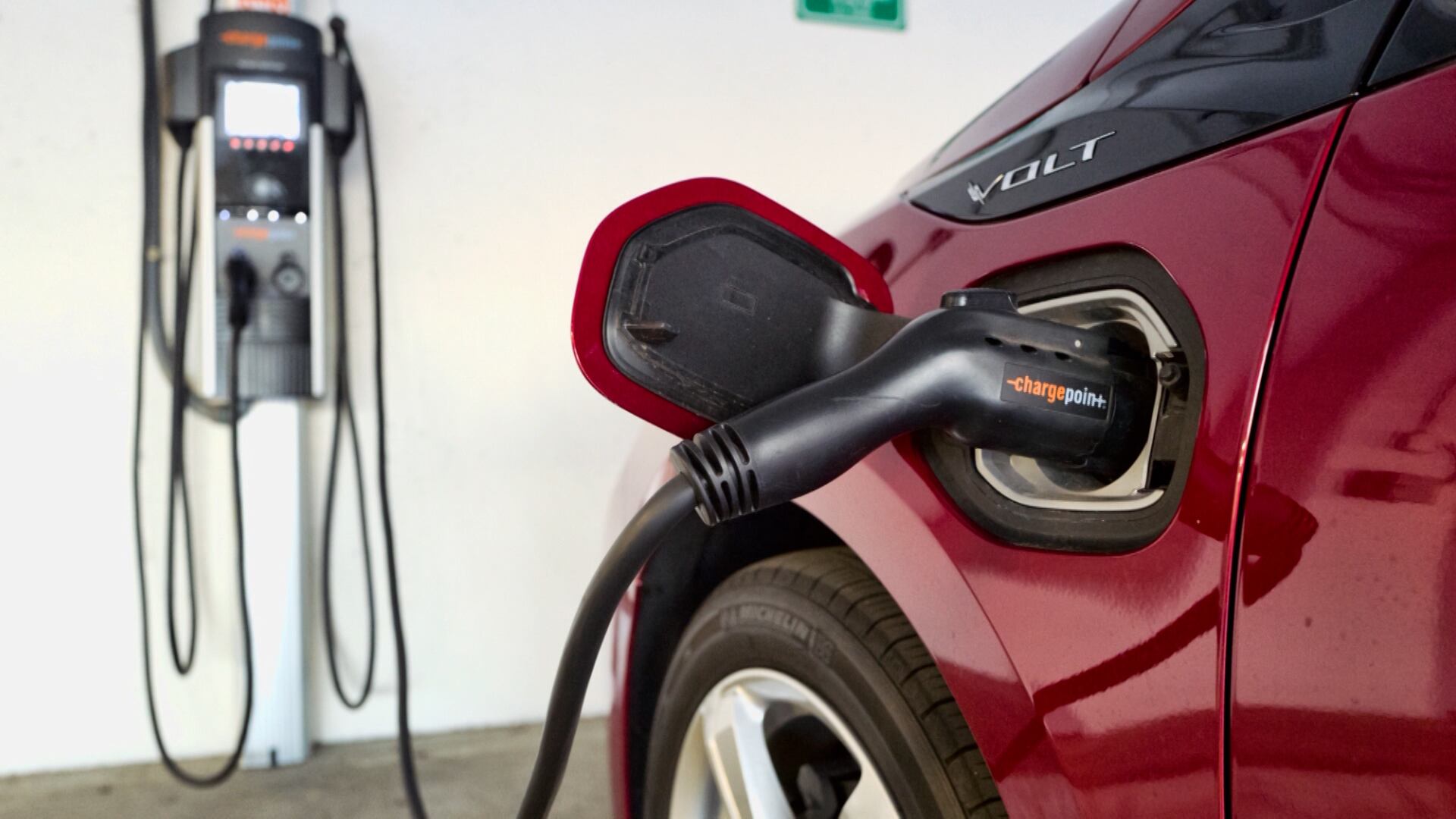
One of the biggest hurdles when it comes to widespread electric vehicle adoption is consumer hesitation about their ability to keep their EV charged if they take a longer trip outside of their locality. Now, electric companies nationwide are teaming up as part of a coalition to build out a network of EV charging stations spanning major U.S. travel corridors. Kellen Schefter, director of electric transportation at the Edison Electric Institute, joins Cheddar Climate to discuss the coalition's plans, how drivers can compare fueling up with gas to recharging an EV on a long trip, how the charging network will be funded, and more.
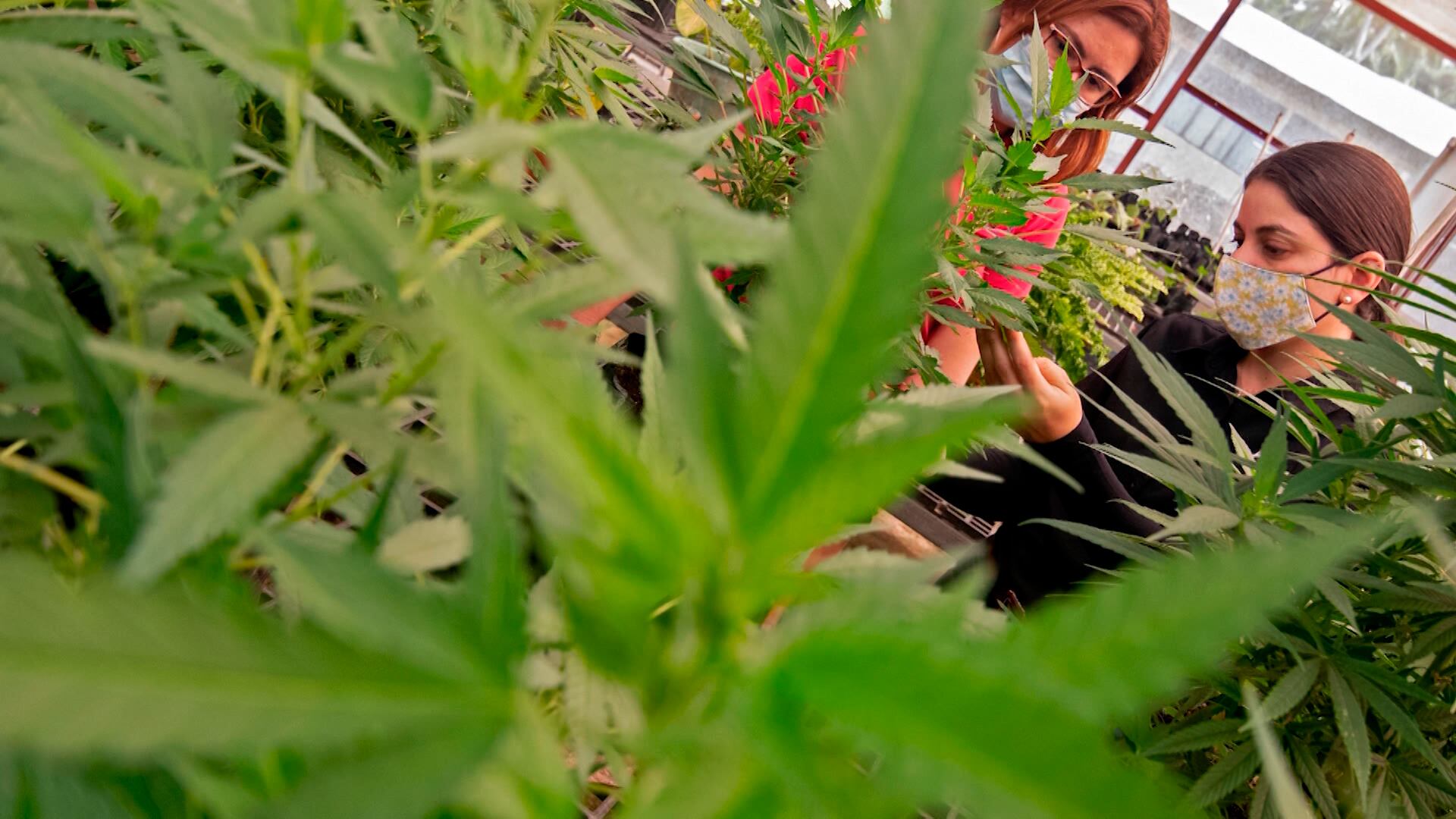
As more states begin to legalize recreational marijuana, there's a growing interest in legalizing cannabis cultivation. As the rise in cannabis farms expands across the U.S., more research is being done to examine its impact on the planet. Michael Katz, executive director at Mendocino Cannabis Alliance, joins Cheddar News to talk about the carbon footprint of cannabis farms.
Blue Origin launched its third manned mission over the weekend with 'Good Morning America' host Michael Strahan and Laura Shepard Churchley, daughter of astronaut Alan Shepard on board, alongside several Blue Origin investors.
This comes after the spaceflight firm launched two successful missions to the edge of space earlier this year. How will these missions set up Blue Origin for success as it competes with SpaceX and other companies for space tourism domination and more? Joey Roulette, space reporter at The New York Times, joins Cheddar News' Closing Bell to discuss.
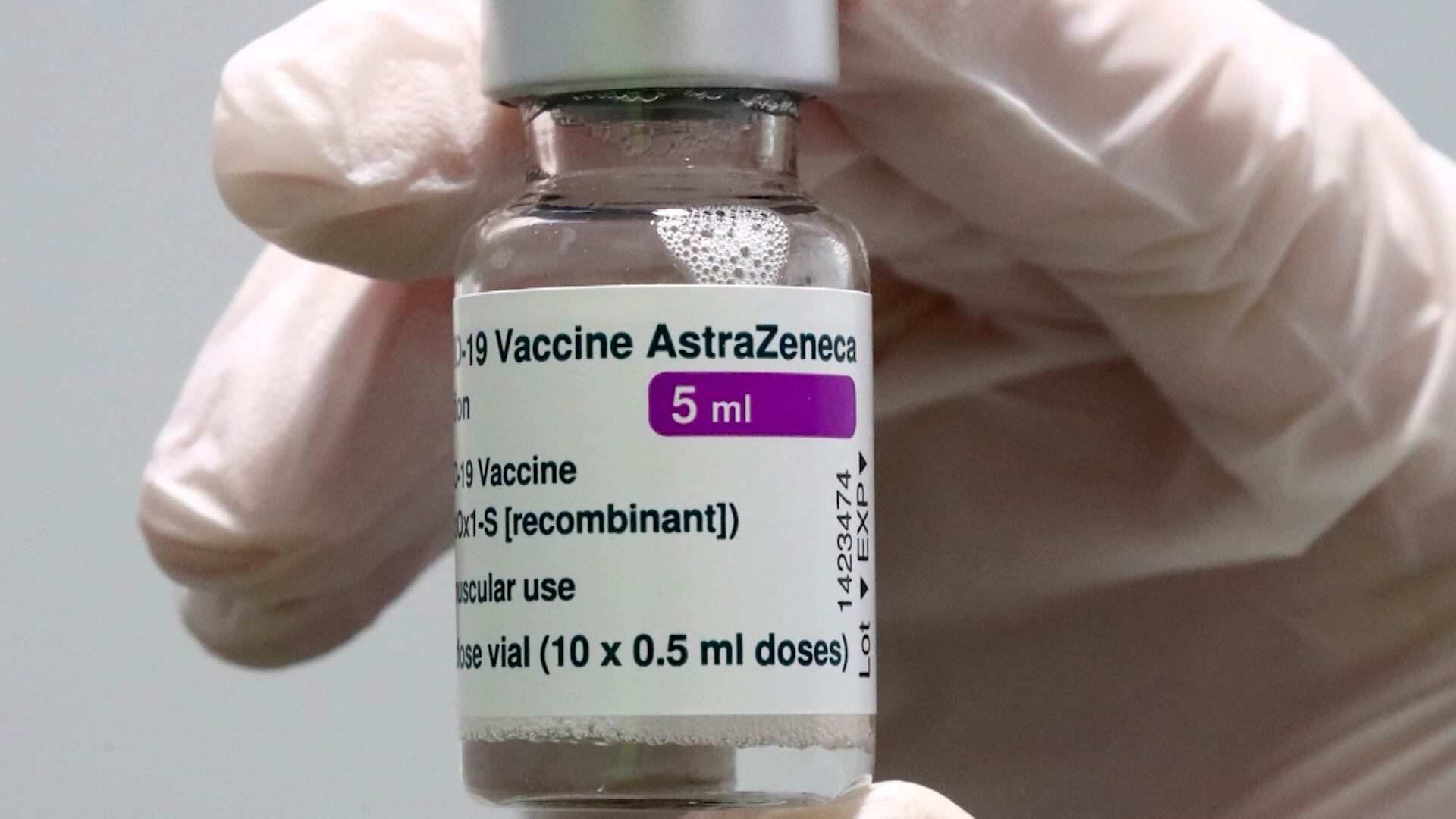
Mina Makar, senior vice president of respiratory and immunology, Astrazeneca, joined Cheddar to discuss the FDA's decision to give emergency use authorization to the pharma giant's COVID-19 antibody treatment called Evusheld for immunocompromised patients For about 2 percent of the U.S. Makar noted that the injection is supposed to provide antibody protection for those who can't generate their own adequate immune response via the vaccines for a minimum of six months, though long-term trials are underway.
The pandemic has forced corporate America to reshape itself to adapt, including onboarding doctors as chief medical officers to help maintain the health and safety of staff. Dr. Geeta Nayyar, chief medical officer at Salesforce, joined Cheddar to break down her role and how it has become relevant and necessary in the evolving workplace. "Every business today is now in the business of healthcare," she said. "It is a priority to empower employees to then serve your customers."
Jonathan Adler, Law Professor at Case Western Reserve University, joined Wake Up With Cheddar to discuss Tuesday's ruling and provide legal context to recent battles over vaccine mandates.
Carlo and Baker wrap up the week talking about the Biden economic boom that no one seems to notice, a verdict in the Jussie Smollett case, the first Starbucks union in America and the pleasures of the "dude nod."