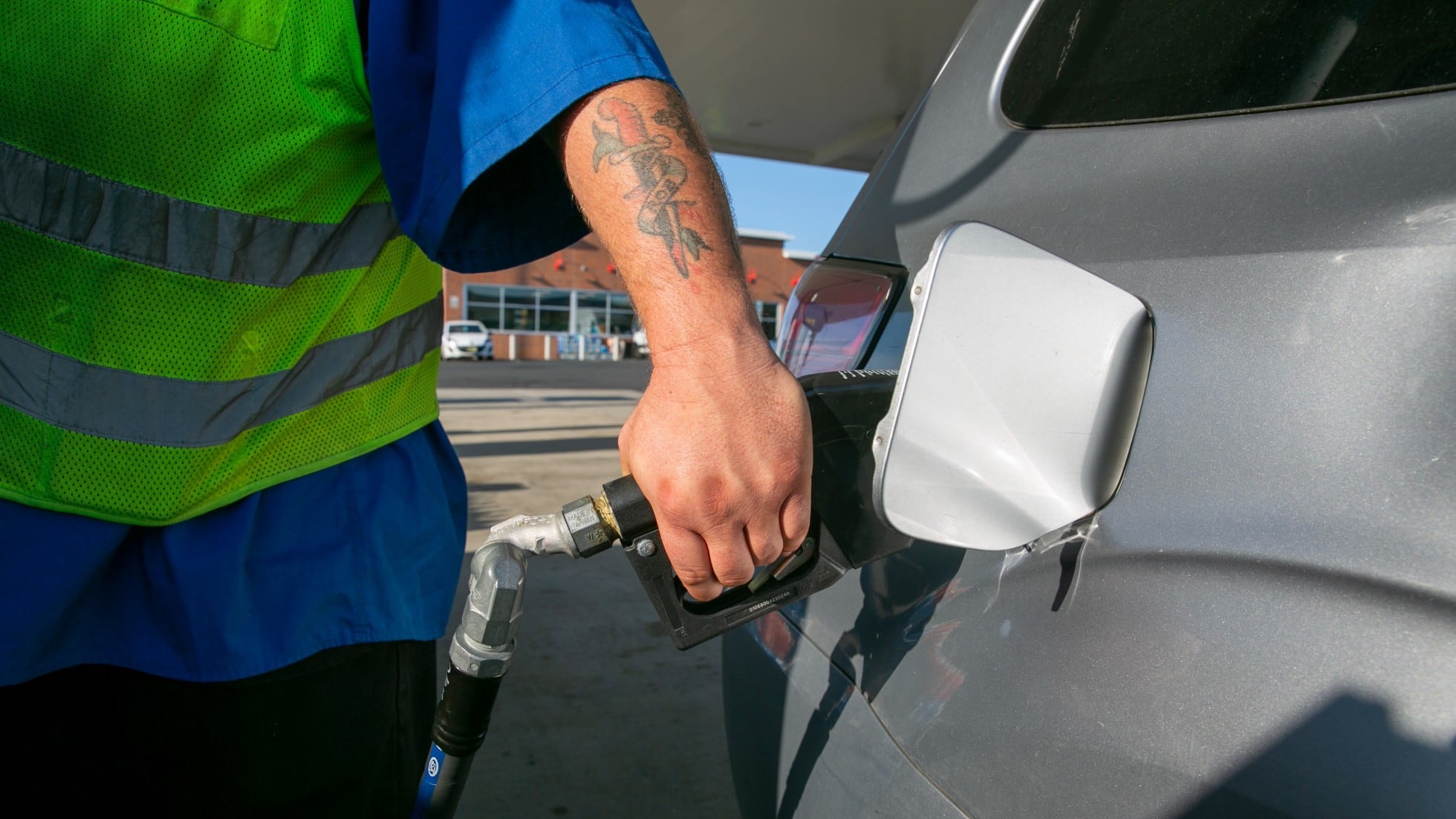
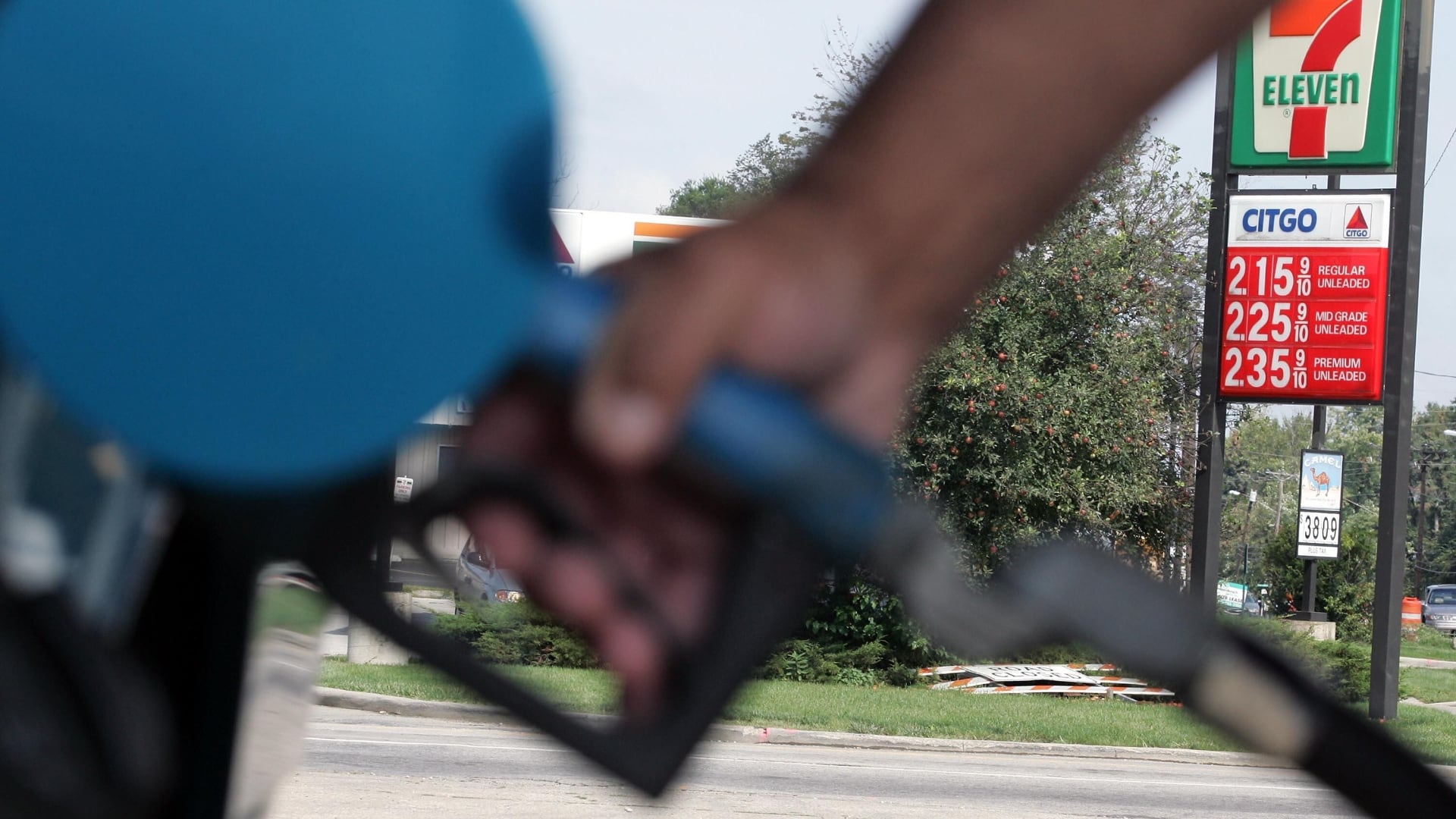
A gas station employee pumps gas into a vehicle at a Sunoco station in Wall Township, New Jersey, on the Garden State Parkway on Friday, July 22, 2022. (AP Photo/Ted Shaffrey)
By Wayne Parry
New Jersey will prohibit the sale of new gasoline-powered vehicles by 2035 as part of an effort to improve air quality and reduce planet-warming pollutants, officials announced Tuesday.
A rule that will take effect Jan. 1 commits the state to an eventual move toward zero-emission vehicles, the state Department of Environmental Protection said in a news release.
It is one of a growing number of states to do so, including California, Vermont, New York, Washington, Oregon, Massachusetts, Virginia, Rhode Island, Maryland and Connecticut, according to Coltura, a Seattle-based nonprofit advocating for an end to gasoline vehicle use.
New Jersey will start limiting the amount of new gasoline-powered cars that can be sold in the state starting in 2027, eventually reaching zero in 2035.
The move does not prohibit ownership or use of gasoline-powered cars, not does it force consumers to buy electric vehicles, the DEP said. It will not prohibit the sale of used cars powered by gasoline, and consumers would still be free to purchase gas-fueled cars elsewhere and bring them into New Jersey, as long as they met certain emissions standards.
“The steps we take today to lower emissions will improve air quality and mitigate climate impacts for generations to come, all while increasing access to cleaner car choices,” said Phil Murphy, the state's Democratic governor.
"Cleaner cars and trucks mean cleaner air for our children and families, because the tailpipes of our own vehicles are a leading cause of poor local air quality,” said Shawn LaTourette, the state's environmental protection commissioner. “As New Jersey transitions to a zero-emission vehicle future, we will improve our quality of life and public health. At the same time, we will reduce climate pollutants from the transportation sector, the greatest source of planet-warming pollution in New Jersey and the nation.”
The rule has been hotly opposed by business groups since word that the state was moving to implement it started circulating earlier this year.
Ray Cantor, an official with the New Jersey Business and Industry Association, said over 100 business, labor and other groups have sent nearly 10,000 letters to state legislators “asking them to step in to stop a proposed DEP rule that will ultimately mandate what type of car residents can drive, and in some cases, if they can afford to drive.”
“This ban of the sale of new gas-powered cars in such an expedited time does not take costs or feasibility into account," he said. “It does not take the lack of local and highway infrastructure into account. It does not take grid capacity into account. It ignores consumer choice. It doesn’t take New Jersey residents into account, especially low- and moderate-income families.”
Environmental groups hailed the decision.
"This is a huge win not only for the environment, but for public health and the communities who suffer every day from the pollution from congested roadways,” said Anjuli Ramos-Busot, director of the New Jersey Sierra Club.
“The electric vehicle revolution is upon us, and the benefits are far-reaching — even for those who never plan to get behind the wheel of an EV," added Kathy Harris, an official with the Natural Resources Defense Council.
Energy Vault, the company developing sustainable, grid-scale energy storage solutions, is now trading on the New York Stock Exchange following the completion of its business combination with Novus Capital Corporation II. Energy Vault develops sustainable, grid-scale energy storage solutions designed to advance the transition to a carbon free, resilient power grid. Robert Piconi, co-founder and CEO of Energy Vault, joins Cheddar News' Closing Bell to disucss.
In an effort to fight climate change several corporations have vowed to work to fight climate change by 2030. They say the goal is to reduce carbon emissions by 40% or even close to 100%. However, according to a new study, many of these companies are not actually practicing what they preach. Tom Egger, senior lecturer at Emeritus at the University of Wisconsin, joins Cheddar News to discuss more.
At-home medical labs company Getlabs raised $20 million in a Series A round, led by Emerson Collective and the Minderoo Foundation. Getlabs aims to be the boots-on-the-ground partner to telehealth. The company says more than 70% of medical decisions still require collecting diagnostic tests in person, and that it fills that void by delivering health care directly to their patients' homes. Founder & CEO of Getlabs Kyle Michelson joined Cheddar News' Closing Bell to discuss.
Kalle Marsal, Chief Operating Officer at PetDx, joins Cheddar Innovates to discuss how next-generation sequencing technology is being used to detect cancer in pets early.
On this episode of Cheddar Innovates: WALDO CEO breaks down why now is a good time to make eyecare a priority, and how they are democratizing access to eyecare for all; COO at PetDx explains how next-generation sequencing technology is being used to detect cancer in pets early; Cheddar gets a look at Curiosity Stream's 'Inside The Mind of a Con Artist.'
Shares of Canadian cannabis giant Canopy Growth surged after the company reported Q3 earnings Wednesday morning, with shares up more than 15 percent at the close of the day's trading session. Despite net revenue declining year-over-year, Canopy beat analyst expectations and has ramped up efforts to develop a "THC ecosystem' in the U.S. Canopy Growth's CEO, David Klein, joined Cheddar News' Closing Bell to discuss the report. He noted that its brands Storz & Bickel vaporizers and BioSteel beverages showed record growth.
The Central Park Conservancy announced last month it has partnered with the Yale School of the Environment and the New York City-based Natural Areas Conservancy to study the on-the-ground impacts of climate change on urban parks. Salmaan Khan, Director of Research and Special Projects at the Central Park Conservancy joins Cheddar Climate to explain what factors put this initiative into motion and what data his team will be looking to uncover.
Energy Impact Partners is a VC firm committed to helping the world move toward a more sustainable future. The tech-focused fund aims to reach $350 million for its Deep Decarbonization Frontier Fund,' which aims to support early-stage companies working on innovative solutions. Energy Impact Partners' Managing Director Andy Lubershane joined Cheddar Climate to discuss.
Mukul Bakhshi, Chief of Strategy and Government Affairs for CGFNS International, joins Cheddar News to discuss strained U.S. hospitals seeking foreign nurses.
The Democratic governors of New Jersey, Connecticut, Delaware, and Oregon say they will lift mask requirements for schools in the coming weeks, reflecting a nationwide shift away from restrictions. Cheddar News speaks with internist Dr. Vivek Cherian whether it's safe to relax the regulation.