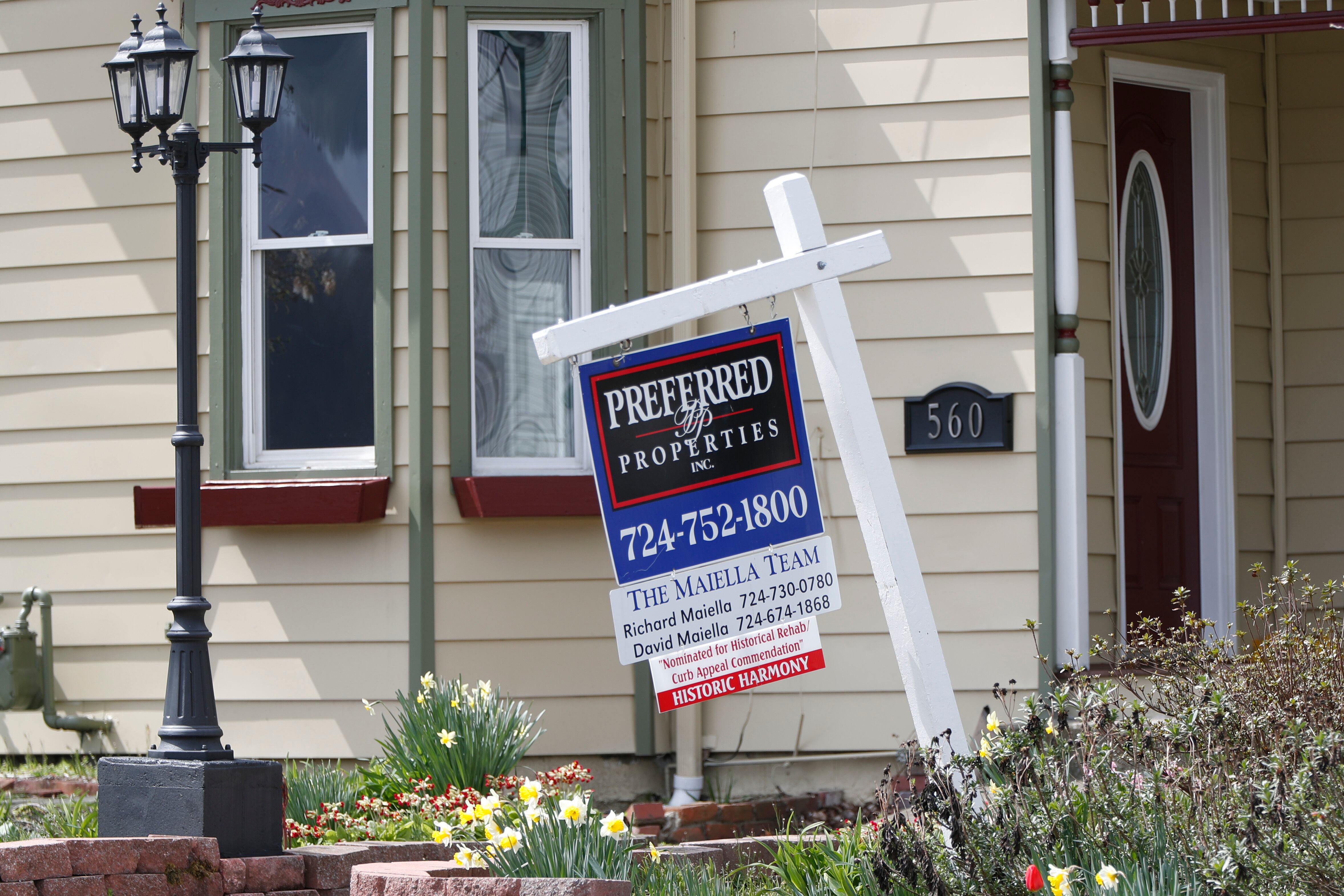
This April 16, 2020 photo shows a real estate company sign that marks a home for sale in Harmony, Pa. U.S. new home sales plunged 15.4% in March as the lockdowns that began in the middle of the month began to rattle the housing market. The Commerce Department reported Thursday, April 23, that sales of new single-family homes dropped to a seasonally ajdjusted annual rate of 627,000 last month after sales had fallen 4.6% in February. (AP Photo/Keith Srakocic)
By Martin Crutsinger
Updated 12:04 pm ET
Sales of new homes rose a surprisingly strong 16.6 percent in May with the reopening of major parts of the country potentially fueling activity in the housing market.
The Commerce Department reported Tuesday that sales of new single-family homes rose to a seasonally adjusted annual rate of 676,000 last month.
That was a much better performance than expected. Many economists had forecast that sales would fall in May.
The new home sales numbers come just one day after the U.S. reported a 9.7 percent plunge in May sales of existing homes to an annual rate of 3.91 million, the slowest pace in nearly a decade.
There are hopes that the housing slump that occurred with the virus shutdowns could be coming to an end, though the millions of jobs lost to the pandemic could impede any rebound.
Nancy Vanden Houten, lead U.S. economist with Oxford Economics, said she expected a modest recovery in sales in the coming months following the big declines in the first quarter but she still expects a decline overall this year.
"The slow recovery in the labor market will limit the upside of any rebound in the housing market," she said.
The median price of a new home rose 4.9 percent to $317,900 in May after falling by 8.7 percent in April, a drop that was attributed to heavy discounting by builders in the midst of the coronavirus shutdowns.
The big sales rebound left activity in May 12.7 percent higher than a year ago.
Computer chipmaker Nvidia is poised to release a quarterly earnings report that is expected to either deepen a recent downturn in the stock market or prompt an ebullient sigh of relief among investors increasingly worried the world’s most valuable company is perched upon an artificial intelligence bubble about to burst.
Emera CEO Scott Balfour discusses soaring energy demand, AI-driven grid challenges, clean-power investments, and how the company is building a resilient future.
JB Mackenzie discusses Robinhood’s new entertainment prediction markets, letting users engage with pop culture, award shows, and more through low-stakes bets.
Rhett Power shares his startup journey, lessons from his early years and insights from his book on overcoming negative self-talk to lead with confidence.
Despite inflation, Americans aren’t giving up the gym. Crunch Fitness CEO Jim Rowley discusses strong growth, value-driven expansion and what the future holds.
Home prices far outpacing incomes, low inventory, and higher living costs are reshaping the market. WSJ’s Veronica Dagher breaks down the challenges ahead.
As commercial options tighten, more travelers are turning to private aviation. Wheels Up CEO George Mattson breaks down capacity and demand challenges.
Layoffs, hiring slowdowns, and shifting skill demands dominate this year’s job talk. LinkedIn’s Kory Kantenga explains what workers should watch for next.