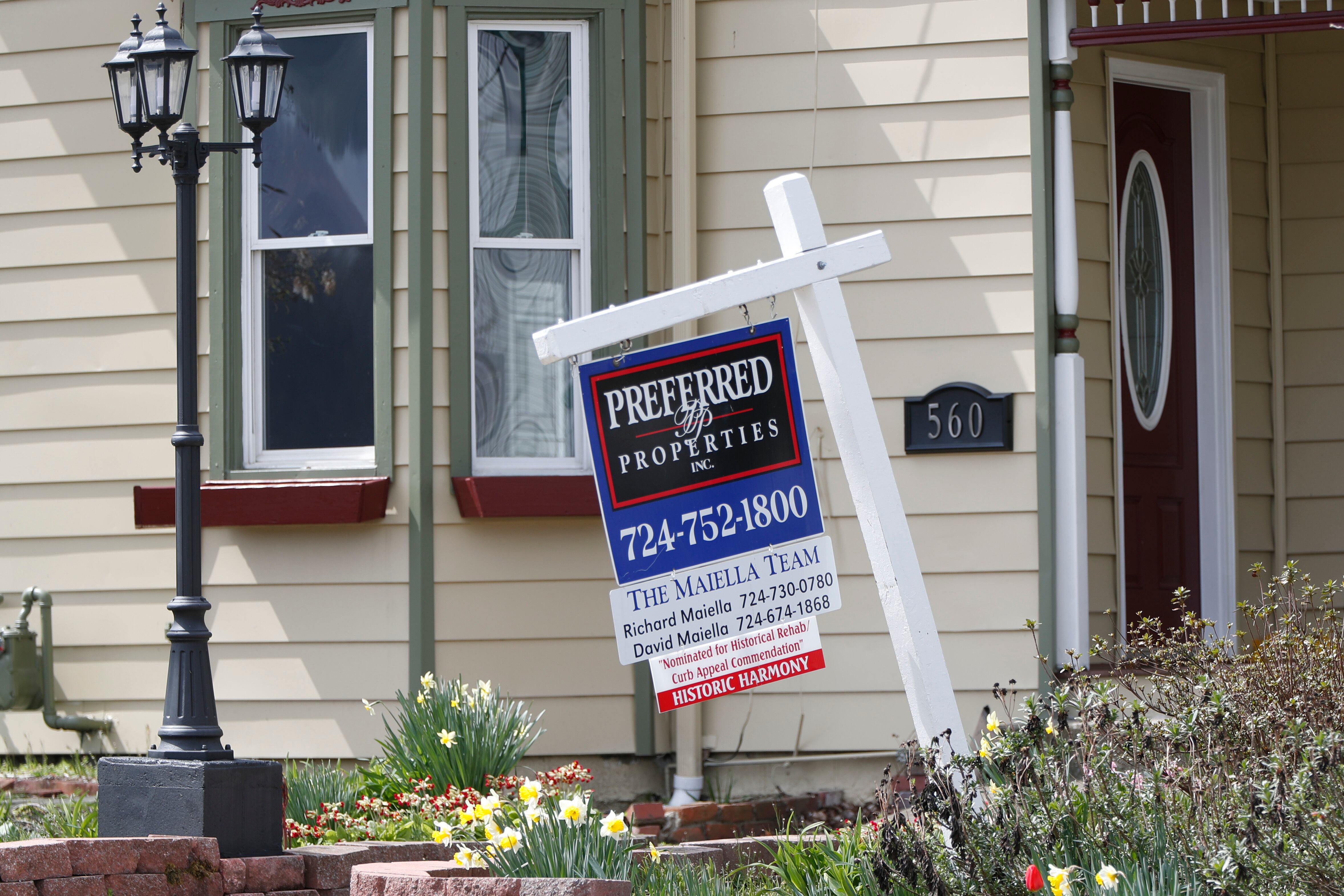
This April 16, 2020 photo shows a real estate company sign that marks a home for sale in Harmony, Pa. U.S. new home sales plunged 15.4% in March as the lockdowns that began in the middle of the month began to rattle the housing market. The Commerce Department reported Thursday, April 23, that sales of new single-family homes dropped to a seasonally ajdjusted annual rate of 627,000 last month after sales had fallen 4.6% in February. (AP Photo/Keith Srakocic)
By Martin Crutsinger
Updated 12:04 pm ET
Sales of new homes rose a surprisingly strong 16.6 percent in May with the reopening of major parts of the country potentially fueling activity in the housing market.
The Commerce Department reported Tuesday that sales of new single-family homes rose to a seasonally adjusted annual rate of 676,000 last month.
That was a much better performance than expected. Many economists had forecast that sales would fall in May.
The new home sales numbers come just one day after the U.S. reported a 9.7 percent plunge in May sales of existing homes to an annual rate of 3.91 million, the slowest pace in nearly a decade.
There are hopes that the housing slump that occurred with the virus shutdowns could be coming to an end, though the millions of jobs lost to the pandemic could impede any rebound.
Nancy Vanden Houten, lead U.S. economist with Oxford Economics, said she expected a modest recovery in sales in the coming months following the big declines in the first quarter but she still expects a decline overall this year.
"The slow recovery in the labor market will limit the upside of any rebound in the housing market," she said.
The median price of a new home rose 4.9 percent to $317,900 in May after falling by 8.7 percent in April, a drop that was attributed to heavy discounting by builders in the midst of the coronavirus shutdowns.
The big sales rebound left activity in May 12.7 percent higher than a year ago.
A new poll finds U.S. adults are more likely than they were a year ago to think immigrants in the country legally benefit the economy. That comes as President Donald Trump's administration imposes new restrictions targeting legal pathways into the country. The Associated Press-NORC Center for Public Affairs Research survey finds Americans are more likely than they were in March 2024 to say it’s a “major benefit” that people who come to the U.S. legally contribute to the economy and help American companies get the expertise of skilled workers. At the same time, perceptions of illegal immigration haven’t shifted meaningfully. Americans still see fewer benefits from people who come to the U.S. illegally.
Shares of Tylenol maker Kenvue are bouncing back sharply before the opening bell a day after President Donald Trump promoted unproven and in some cases discredited ties between Tylenol, vaccines and autism. Trump told pregnant women not to use the painkiller around a dozen times during the White House news conference Monday. The drugmaker tumbled 7.5%. Shares have regained most of those losses early Tuesday in premarket trading.
Scott Trench, host of the BiggerPockets Money Podcast, explores how recent rate cuts, high borrowing costs, and mortgage rates are reshaping U.S. real estate.
A look into how disruption, AI, and global economic trends are transforming the modern supply chain with Jeremy Jansen, Head of Supply Chain at Wells Fargo.
Delta CSO Amelia DeLuca reveals at the Fast Co. Innovation Festival how tech, sustainable aviation fuel, and smart operations are revolutionizing air travel.
Chipmaker Nvidia will invest $100 billion in OpenAI as part of a partnership that will add at least 10 gigawatts of Nvidia AI data centers to ramp up the computing power for the owner of the artificial intelligence chatbot ChatGPT.
Two of the nation’s biggest real estate services companies are combining in a deal that will bring Century 21, Compass and several other major brokerage brands under the same umbrella.