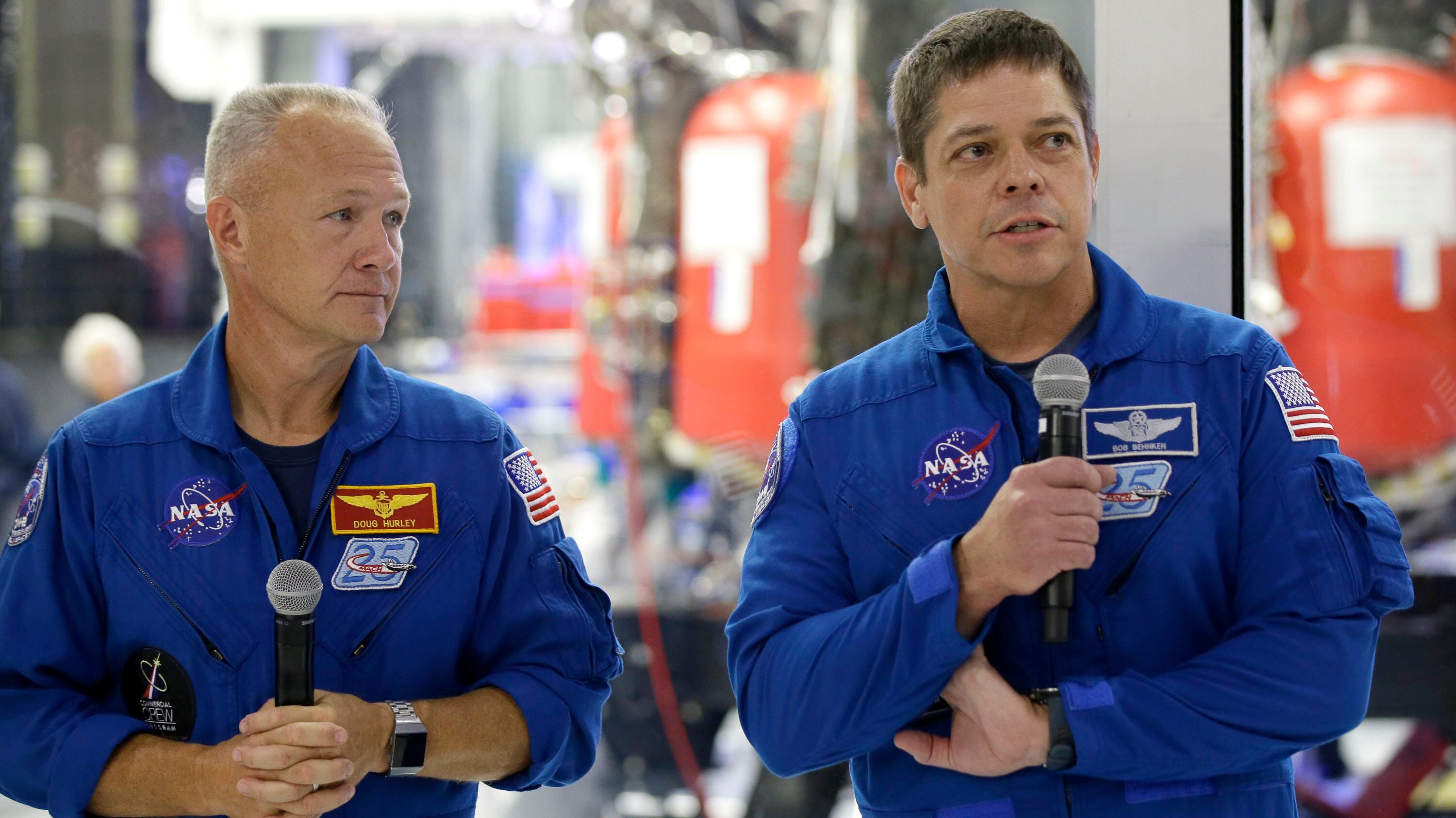
In this Thursday, Oct. 10, 2019 file photo, NASA astronauts Bob Behnken, right, and Doug Hurley talk to the media in front of the Crew Dragon spacecraft at SpaceX headquarters in Hawthorne, Calif. On Friday, April 17, 2020, NASA and SpaceX announced May 27 for resuming human launches from the U.S. after nearly a decade. Hurley and Behnken will blast off atop a SpaceX Falcon 9 rocket, departing from the same Kennedy Space Center launch pad used by Atlantis in July 2011. (AP Photo/Alex Gallardo)
By Marcia Dunn
NASA and SpaceX have picked May 27 for resuming astronaut launches from the U.S. after nine years of complete Russian dependence.
NASA Administrator Jim Bridenstine announced the launch date Friday. Astronauts haven’t launched into orbit from the U.S. since NASA’s last space shuttle flight in 2011. SpaceX aims to end the drought by sending two NASA astronauts to the International Space Station.
“On May 27, @NASA will once again launch American astronauts on American rockets from American soil!” Bridenstine tweeted.
Astronauts Doug Hurley and Bob Behnken will blast off atop a SpaceX Falcon 9 rocket, departing from the same Kennedy Space Center launch pad used by shuttle Atlantis in July 2011, as well as the Apollo moonshots a half-century ago. Hurley served as pilot on that last shuttle mission and will be the spacecraft commander for SpaceX's Dragon crew capsule.
Launch day will be a Wednesday, with a liftoff time of 4:32 p.m. EDT. It's too soon to know whether the coronavirus pandemic will prompt crowd restrictions.
Only three countries have launched people into orbit since 1961: Russia, the U.S. and China, in that order. SpaceX would be the first company.
SpaceX successfully conducted its first test flight of a Dragon crew capsule a year ago, sending the capsule — minus a crew — to the space station. The returned capsule was accidentally destroyed during ground testing at Cape Canaveral, further delaying the astronaut launch.
With the space station crew now down to three, Hurley and Behnken will spend weeks, perhaps months, helping to maintain the orbiting lab. The length of their mission is still under review, according to NASA.
NASA, meanwhile, is in the process of buying another seat on a Russian rocket. Russian Soyuz capsules have been the sole means of crew transportation to and from the space station since 2011.
SpaceX has been using Falcon 9 rockets to launch cargo to the space station in the company’s original Dragon capsules since 2012. NASA turned to private companies for deliveries once the shuttle program ended.
Boeing also is working to launch astronauts under NASA's commercial crew program, but the company's effort suffered a serious setback following last December's botched test flight. Launching without anyone on board, Boeing's Starliner capsule failed to reach the space station after ending up in the wrong orbit and came close to destruction twice because of software errors.
Boeing plans to repeat the test flight, again without astronauts, this fall.
___
The Associated Press Health and Science Department receives support from the Howard Hughes Medical Institute’s Department of Science Education. The AP is solely responsible for all content.
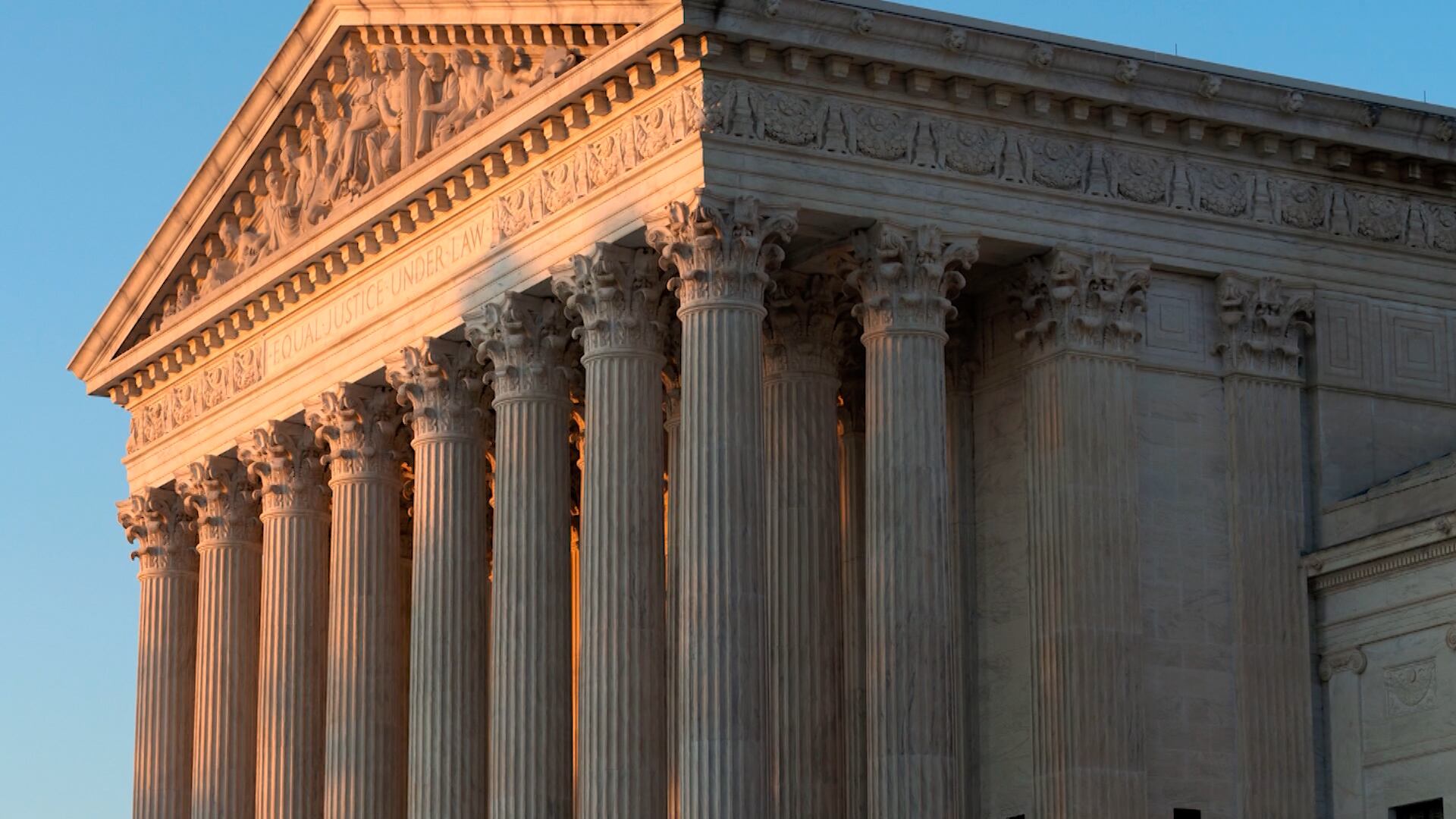
As the Omicron variant continues to sweep across the country. The US Supreme Court is expected to hear arguments at the end of this week on whether or not the Biden administration can force private companies to vaccinate or test millions of their employees. In addition, the National Nurses United has spearheaded legal action to protect nurses and health care workers, patients, and the public while on the job. President of the National Nurses Union, Zenei Cortez, joined Cheddar to discuss more.
Far too often, Americans are forced to navigate a tangled web of outdated government websites, offices way out of their reach, and hours of time 'on hold' to access the simple government services they depend on. A recent executive order, signed by President Biden, is intended to improve, streamline and modernize the 'customer' experience when accessing government services. Mina Hsiang, the administrator of the United States Digital Service, joins Cheddar News to discuss how the tech workforce is impacted by this executive order.
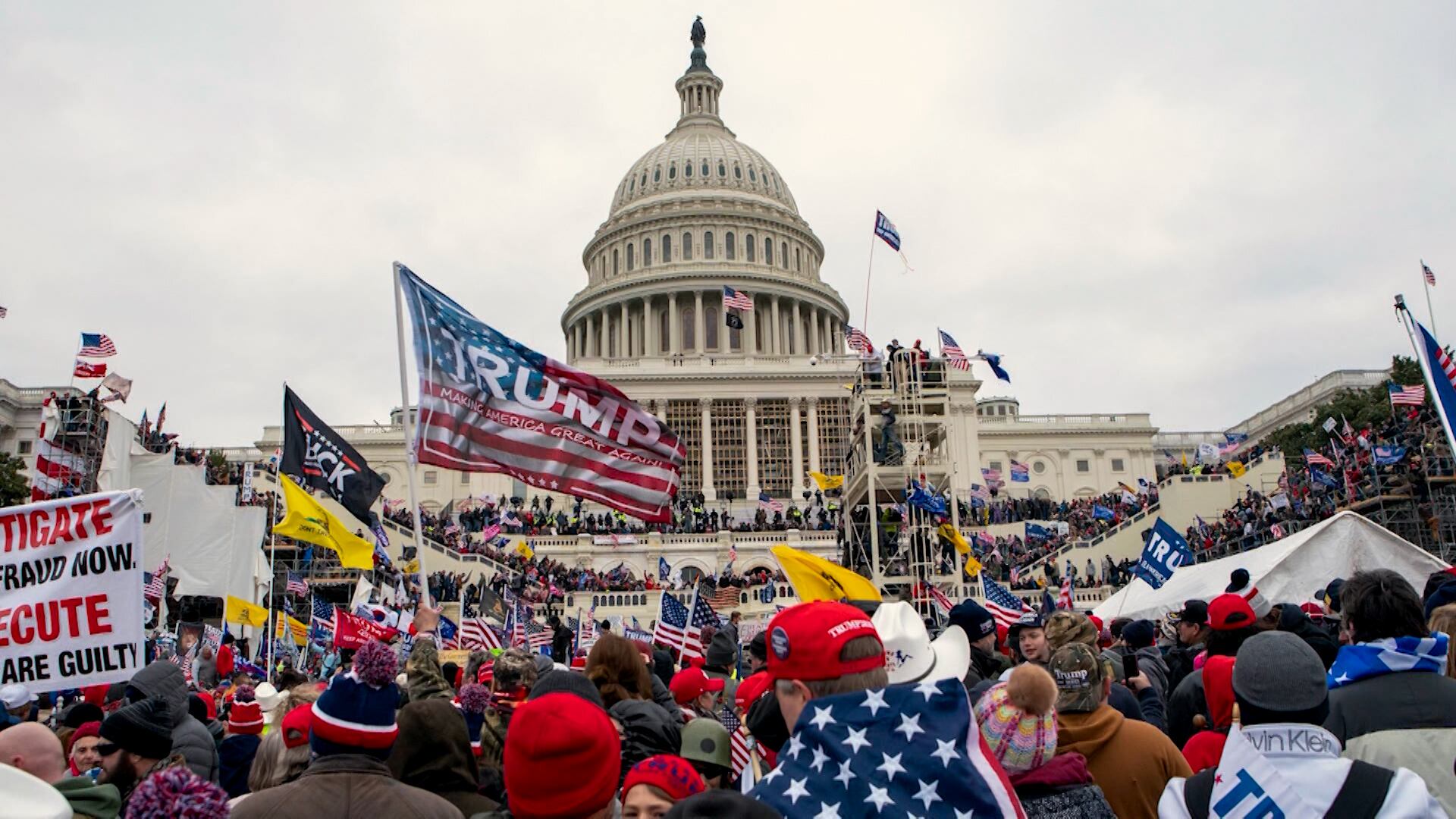
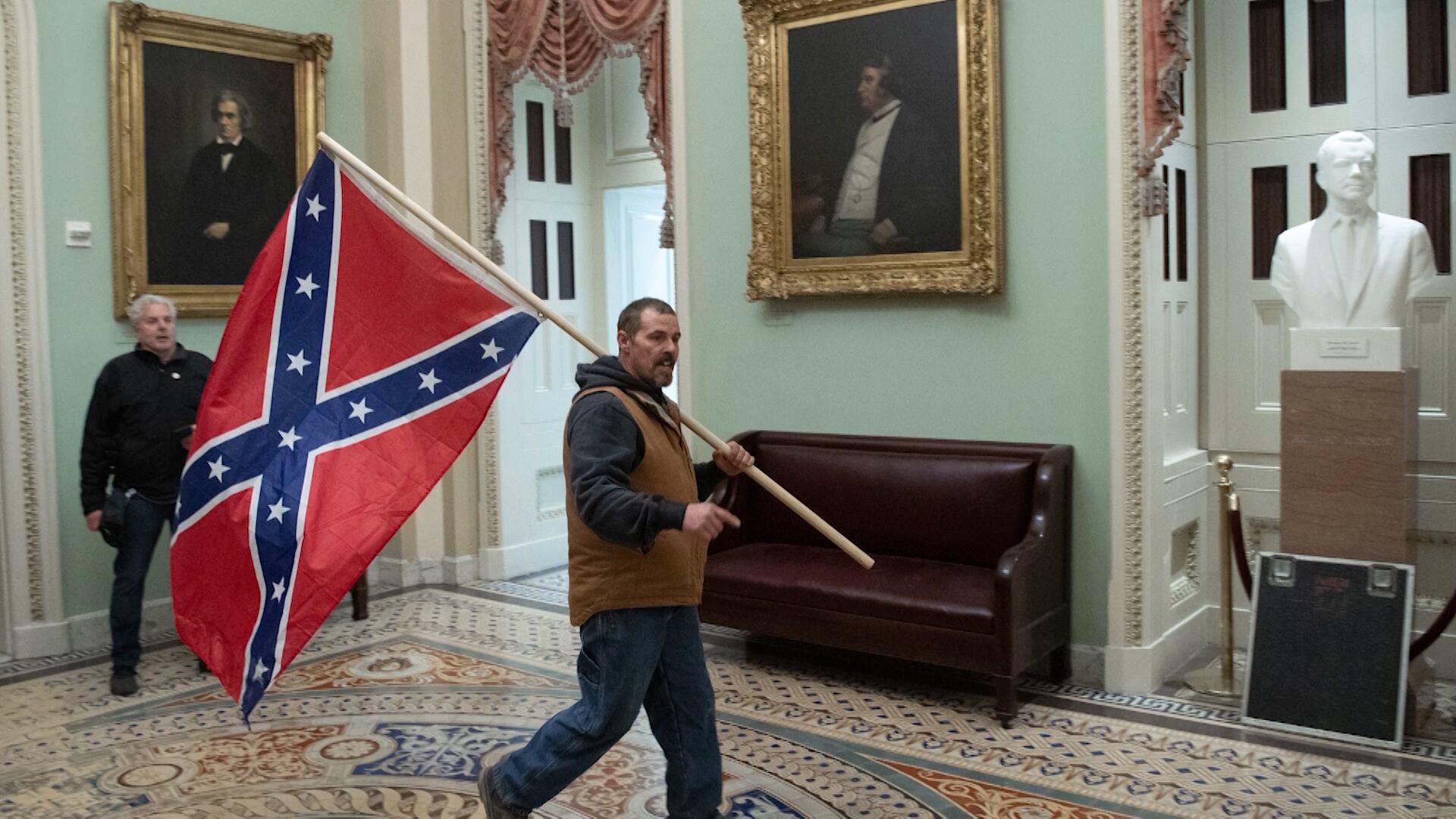
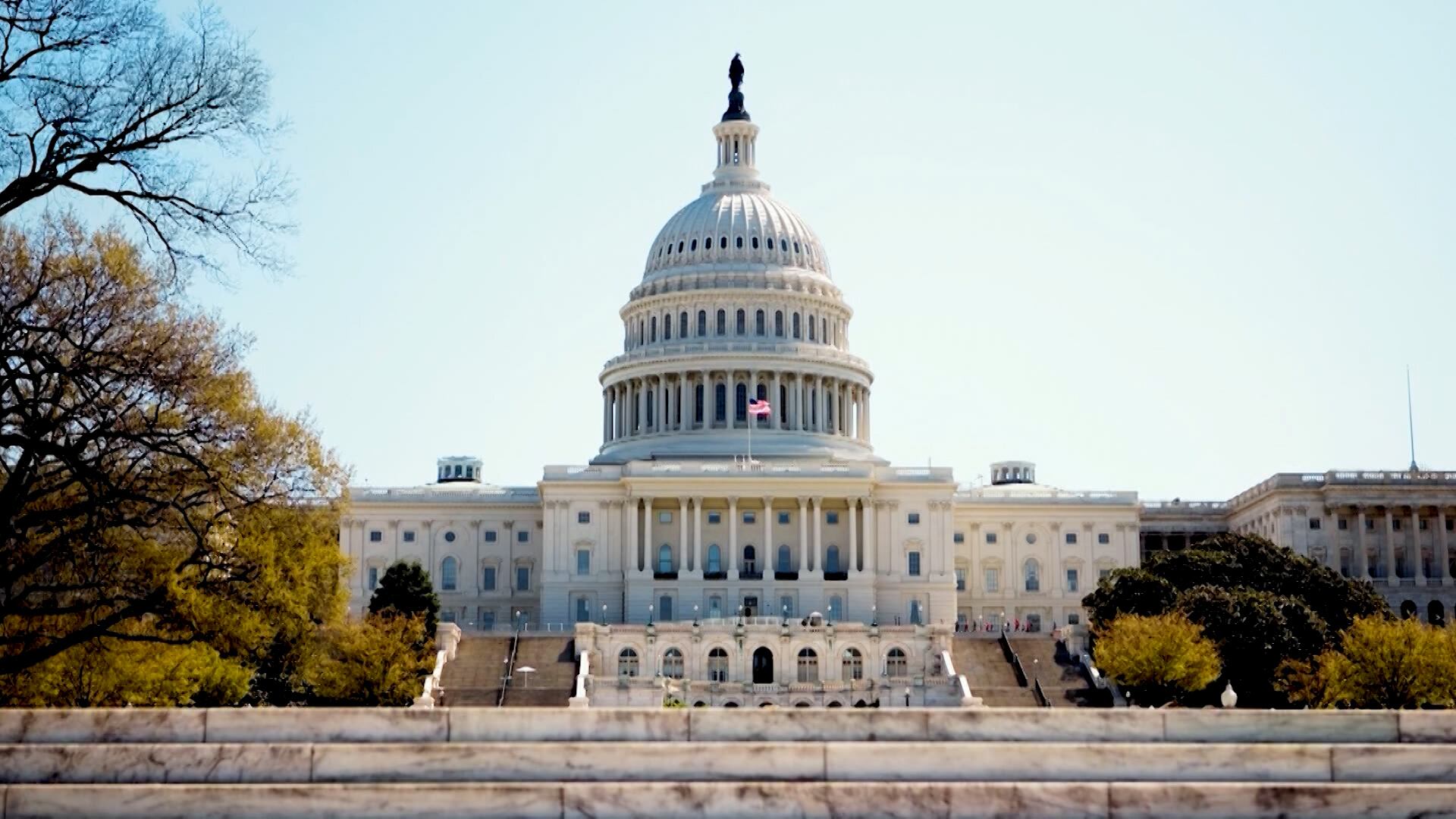
Today marks one year since the January 6 Attack on the United States Capitol. The Country watched as supporters of then-President Trump stormed what was assumed to be the most secure building in the country in an attempt to stop the certification of the 2020 Election. Several lawmakers, including the Vice President, could be seen ducking down as they feared for their lives. Democratic Michigan Representative Dan Kildee, joined Cheddar to discuss more.
Stocks closed lower on Friday as investors continue to worry over rate hikes. John Lynch, CIO of Comerica Wealth Management, joins Cheddar News' Closing Bell, where he says value is back in play with investors. Lynch also believes the market has overreacted to the latest Fed minutes, suggesting a bounce-back at some point.
Ben Armstrong, founder of Bitboy Crypto, joins Cheddar News to discuss Bitcoin's downward trend and what's next for crypto after protests in Kazakhstan cause crypto miners to shut down.
Washington, D.C. Attorney General Karl Racine joins Cheddar Politics to discuss his lawsuit against the extremist groups Proud Boys and Oath Keepers over their role in the January 6 attack on the U.S. Capitol.
Josh Pasek, a professor at the University of Michigan and expert on political communication and misinformation, joins Cheddar News to discuss how political radicalization happens and how America got to this point.
Kyle Kondik, managing editor at Sabato's Crystal Ball at the University of Virginia Center for Politics, joins Cheddar News to discuss what to expect at the 2022 midterm elections.
Katie Barlow, media editor at SCOTUSblog, joins Cheddar Politics to reflect on what happened at the Supreme Court in 2021 and what may be in store for 2022.
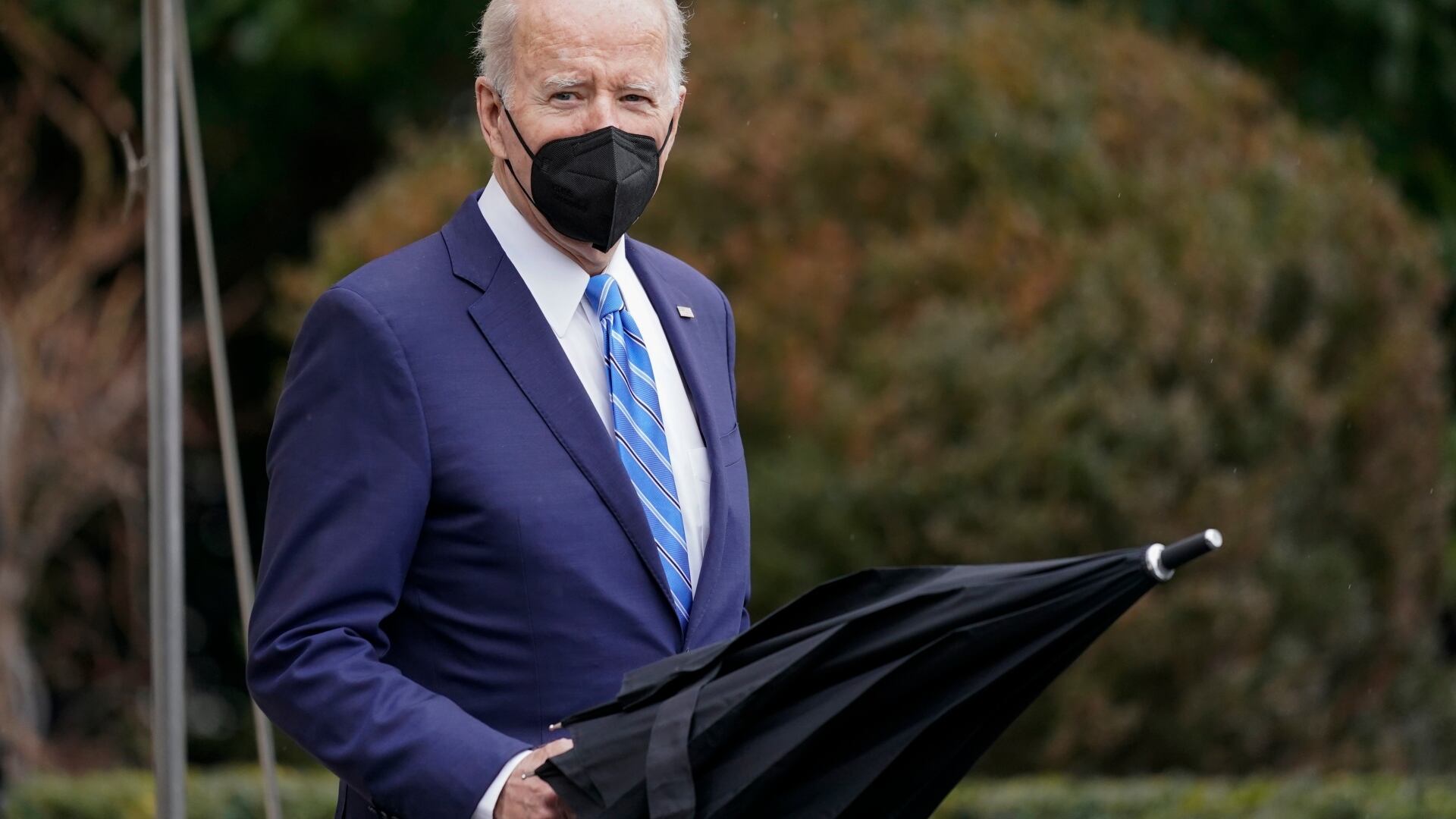
Gerren Keith Gaynor, managing editor of politics and Washington correspondent at The Grio, joins Cheddar Politics to discuss the progress President Biden made on his policy agenda in 2021, and what remains to be done in 2022.