Speaker Nancy Pelosi said the House Democrats will pass the ‘Families First Coronavirus Response Act’ on Friday, though she did not mention support from Republicans or the White House.
The aid package secures paid sick leave, free testing, and strengthens food security initiatives, but the future of the bill remains unclear as House Republicans await a signal from the president. Pelosi added that the bill will also strengthen unemployment insurance. This bill is meant to expand upon the $8.3 billion dollar coronavirus package already signed by President Trump.
Pelosi, who delivered her remarks from the rarely-used speakers balcony, said the three most important parts of the bill are “testing, testing, testing” providing free tests to everyone including the uninsured and noted the legislation is “focused directly on providing support for America’s families, who must be our first priority.”
"Sadly, and prayerfully, we have learned of the tragic death of at least 41 Americans from this public health emergency so far," Pelosi said. "The American people expect and deserve a coordinated, science-based, and whole-of-government response to keep them and their loved ones safe."
Pelosi and Treasury Secretary Steven Mnuchin have been negotiating on the deal for days, and the Speaker’s office has been publicly tracking the calls between them to show the evolution of the negotiations.
President Trump, slated to speak Friday afternoon, could deliver a statement that will either signal to the GOP bipartisan support for the measure or leave the bill to face the hurdle of a Republican-controlled Senate.
Updated March 17 to clarify that $8.3 billion price tag refers to the initial coronavirus relief bill, not the ‘Families First Coronavirus Response Act.’
Grant Stark, Director of Research at CapWealth, joins Cheddar News' Closing Bell, where he says that his firm is closely monitoring oil prices amid the geopolitical conflict between Russia and Ukraine, and elaborates on how inflation will continue to be a problem across multiple sectors.
A private prison company plans to run a new pilot program that would place hundreds of migrants caught crossing the U.S.-Mexico border under house arrest. The "home curfew" pilot program is part of "impactful detention reforms," according to a spokesperson for the U.S. Department of Homeland Security. Jacinta Gonzalez, senior campaign organizer with Mijente, joins Cheddar News to discuss.
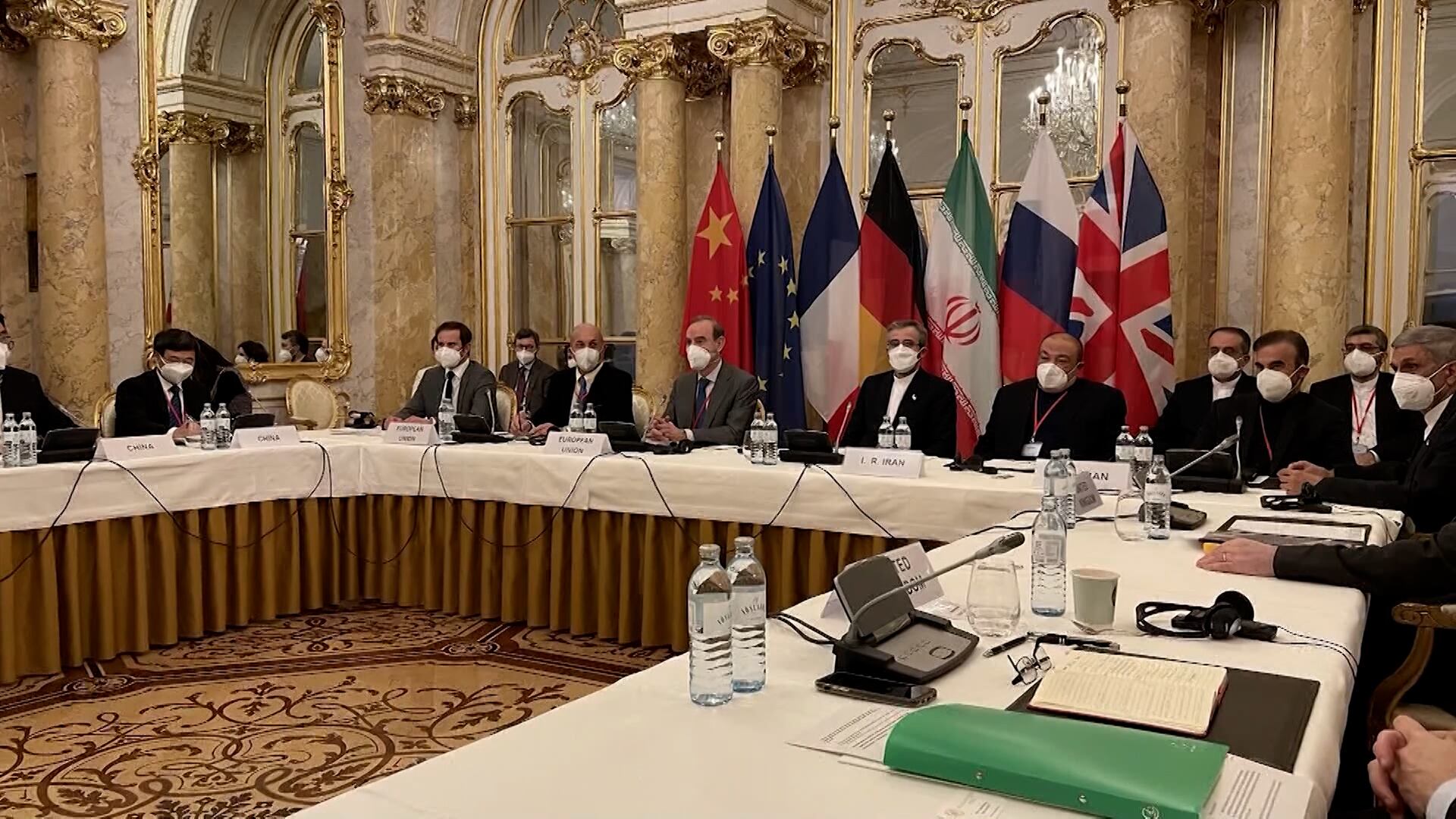
The U.S. is back in negotiations for a nuclear deal with Iran, years after former President Donald Trump withdrew the country from the Joint Comprehensive Plan of Action (JCPOA), which had been meant to curtail the Middle Eastern nation's nuclear ambitions. Former State Department senior advisor to the George W. Bush and Trump administrations, Christian Whiton, joined Cheddar News Wrap to discuss. “It appears to be very similar to the original JCPOA, which does put some constraints on Iran's nuclear program, but also has sunset provisions, including some that in the original plan were expected to take effect in 2025," he said. "And so, if we just reenter that plan, really it just buys perhaps a few years of slowing down, stopping, whatever you want to say, Iran's nuclear program."
The U.S. has announced the first of what could be multiple levels of sanctions against Russia after Moscow recognized two regions of Ukraine as independent. This comes as Britain imposes sanctions on five Russian banks and two oligarchs, and Germany freezes the Nord Stream gas pipeline. Terrell Star, a foreign affairs reporter at The Atlantic Council, joins from Kyiv to discuss.
Growing tensions in Ukraine might soon be impacting consumers in the United States. With Russia on an invasion footing in the region, gas prices are predicted to go up 10 to 15 cents a gallon in the next coming weeks, according to Robert Sinclair, spokesperson for AAA. Sinclair joined Cheddar to break down what could happen even further. "We've been seeing prices go up, and there's been nothing that's happened to affect supplies," he said. "But it's something known as the fear tax where just the talk of something that might interfere with supplies leads to prices going up speculatively."
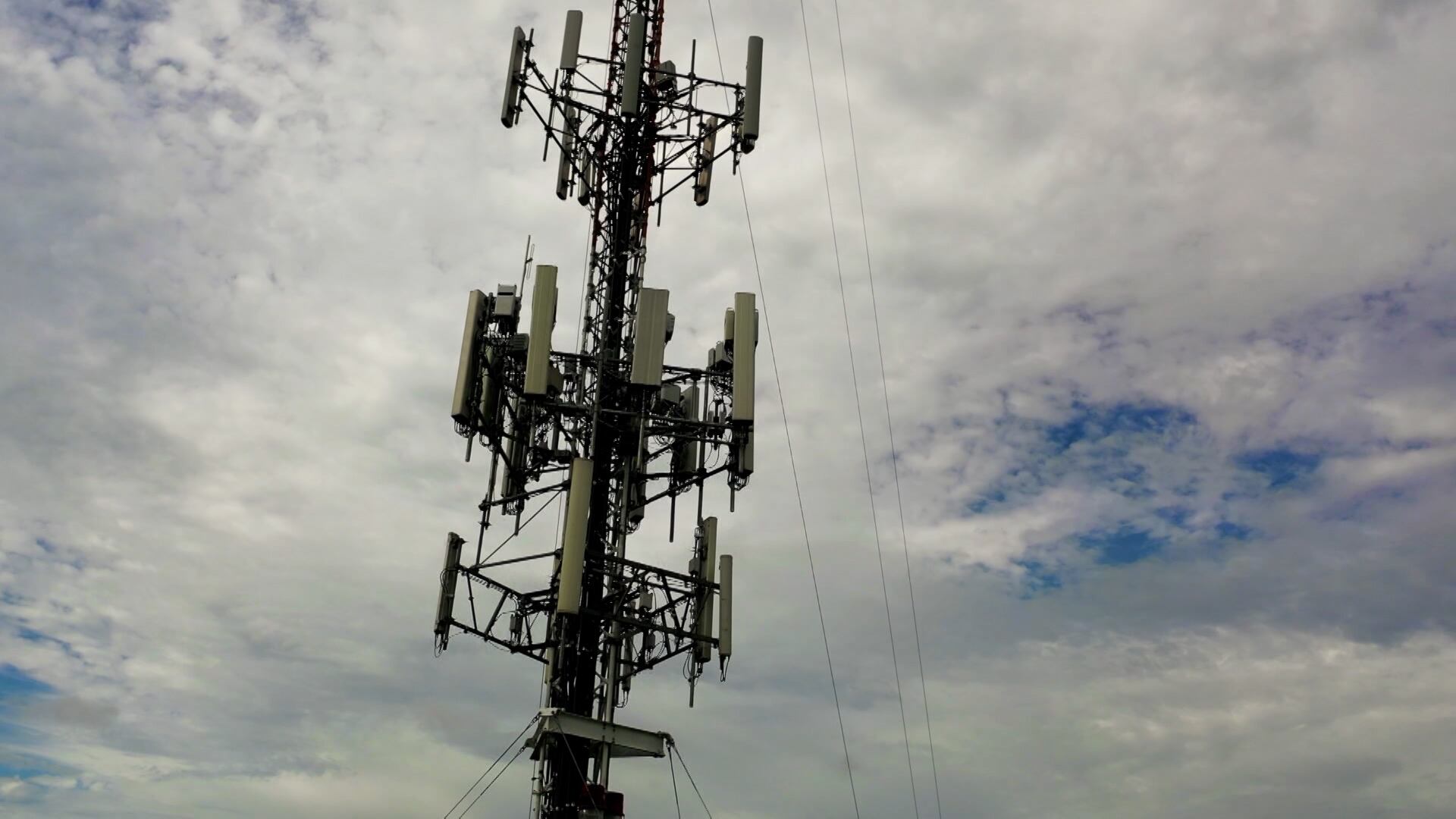
The end of 3G is upon us. On Tuesday, AT&T became the first major provider to disable its 3G services, and T-Mobile and Verizon plan to follow suit later this year. The shutdowns are expected to impact millions of vehicles that use 3G networks for updates, remote connection, and certain emergency and convenience features. Lance Ulanoff, the U.S. Editor-in-Chief of TechRadar, joined Cheddar's Closing Bell to discuss the ramifications of the changeover.
A new report shows nearly 240 former officials in Congress, the White House, and regulatory agencies have changed careers to work in the crypto industry.
President Biden unveiled new economic sanctions on Russia for what he called "the beginning of a Russian invasion". This came one day after Putin sent troops into two breakaway regions of eastern Ukraine. Alex Ward, national security reporter for POLITICO, explains what these sanctions might do to the global economy.
U.S. stocks ended today's session sharply lower on the heels of rising geopolitical tensions between Russia and Ukraine. Melissa Brown, Managing Director of Applied Research at Qontigo, joins Cheddar News' Closing Bell to discuss.