Speaker Nancy Pelosi said the House Democrats will pass the ‘Families First Coronavirus Response Act’ on Friday, though she did not mention support from Republicans or the White House.
The aid package secures paid sick leave, free testing, and strengthens food security initiatives, but the future of the bill remains unclear as House Republicans await a signal from the president. Pelosi added that the bill will also strengthen unemployment insurance. This bill is meant to expand upon the $8.3 billion dollar coronavirus package already signed by President Trump.
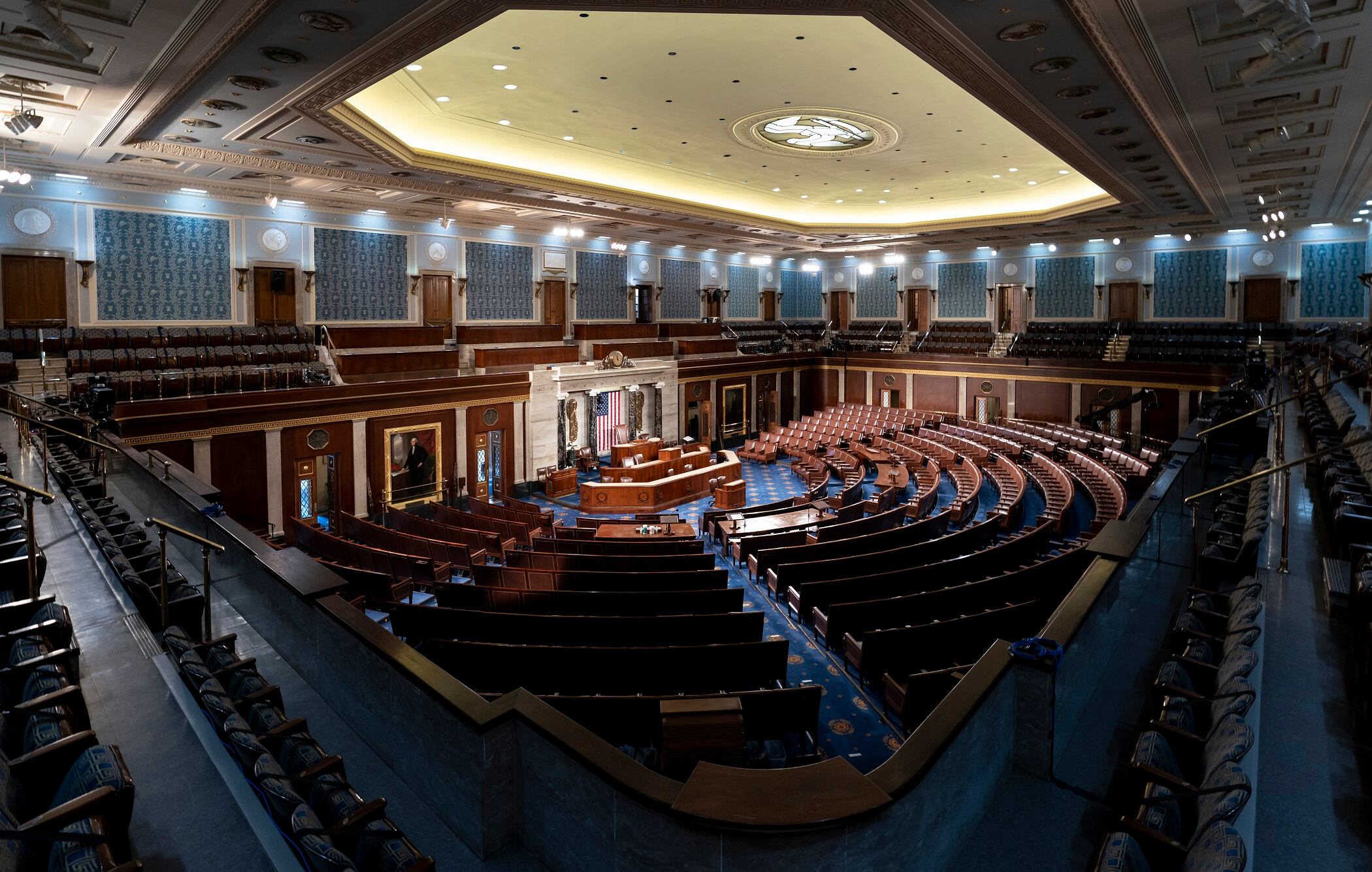
Pelosi, who delivered her remarks from the rarely-used speakers balcony, said the three most important parts of the bill are “testing, testing, testing” providing free tests to everyone including the uninsured and noted the legislation is “focused directly on providing support for America’s families, who must be our first priority.”
"Sadly, and prayerfully, we have learned of the tragic death of at least 41 Americans from this public health emergency so far," Pelosi said. "The American people expect and deserve a coordinated, science-based, and whole-of-government response to keep them and their loved ones safe."
Pelosi and Treasury Secretary Steven Mnuchin have been negotiating on the deal for days, and the Speaker’s office has been publicly tracking the calls between them to show the evolution of the negotiations.
President Trump, slated to speak Friday afternoon, could deliver a statement that will either signal to the GOP bipartisan support for the measure or leave the bill to face the hurdle of a Republican-controlled Senate.
Updated March 17 to clarify that $8.3 billion price tag refers to the initial coronavirus relief bill, not the ‘Families First Coronavirus Response Act.’
Russian forces escalated their attacks on populated urban areas Tuesday, bombarding the central square in Ukraine’s second-largest city and Kyiv’s main TV tower.
A bipartisan group of 43 representatives joined forces in a letter to President Joe Biden to remind the executive branch that it must seek the approval of Congress before authorizing a war — whether or not its in Ukraine as Russia continues its invasion. Rep. Peter DeFazio (D-Ore. 4th District) led the effort and joined Cheddar News Wrap to explain. "It's time for Congress to get back the authority, which is vested to us in the constitution, not in the executive branch," he said. "The president. once we're at war, we speak with one voice with the commander in chief. But before that, it's up to the American people and Congress whether or not we're going to become engaged in a war."
Chris Konstantinos, Chief Investment Strategist at RiverFront Investment Group, explains why he remains encouraged about the S&P and the state of the market despite the major indexes closing mostly lower on Monday.
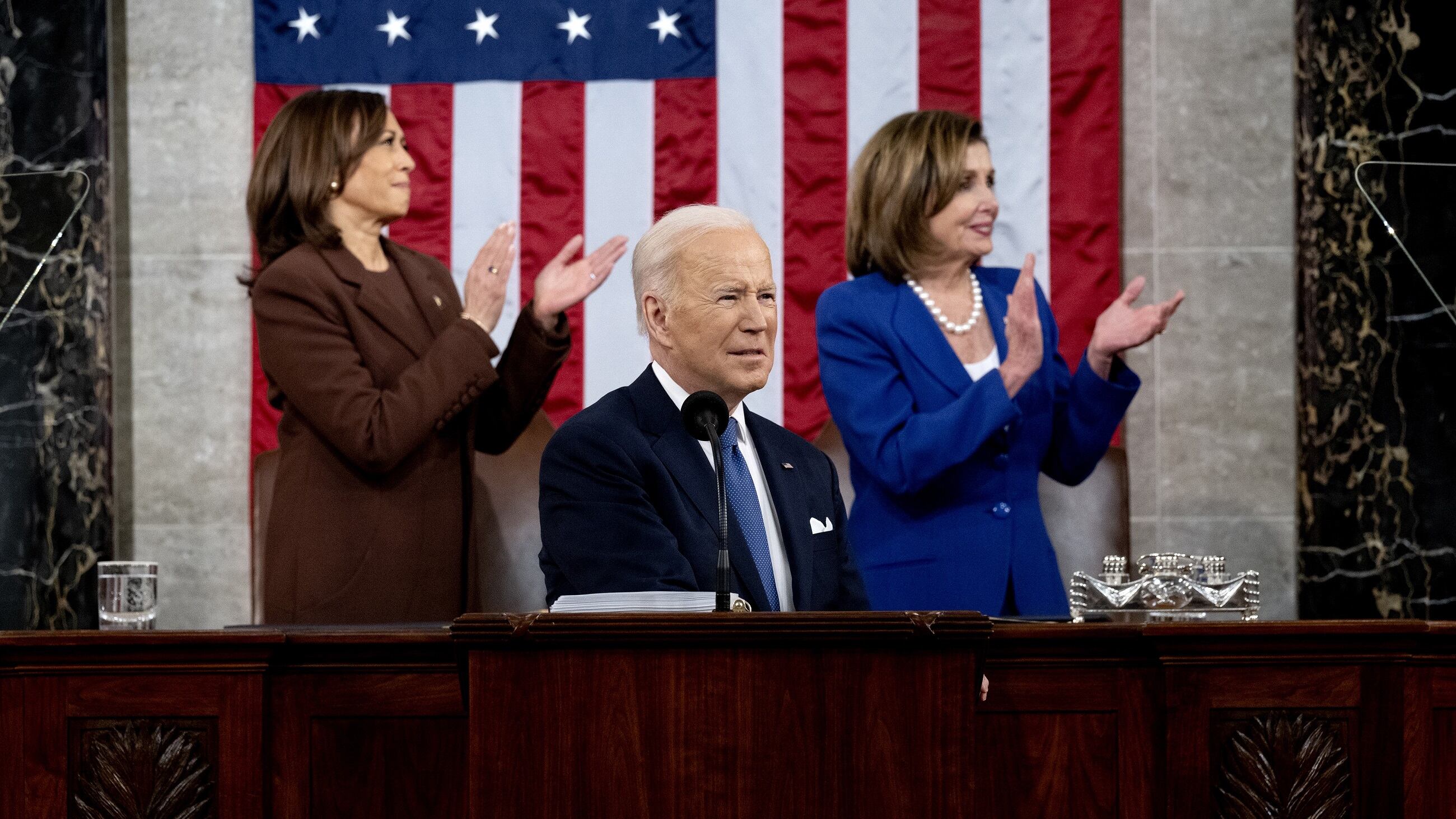
President Joe Biden will be delivering his first State of the Union address on Tuesday night, and with so many issues from Ukraine to inflation, everyone will be focused on what he might say. Rep. Nicole Malliotakis (R-N.Y. 11th District) joined Cheddar News to discuss what she thinks the president should address. "I think what he hasn't done yet is go after the gas, the oil, the minerals, the mining industries, that is incredibly important," she said. "There's still some banks there that are not sanctioned. He needs to go after all the banks, but I also think that providing the equipment that Ukraine needs to continue to protect its capital and its country are incredibly important."
As Russia’s attack on Ukraine continues, one of its few big allies remaining appears to be China. Gordon Chang, Asian affairs expert and author of "The Coming Collapse of China," joined Cheddar News to discuss what might be behind China's support for Putin's current strategy. “I think China is looking at what Putin did yesterday, which is to raise his nuclear forces on a higher alert level,” Chang stated, “If they see that Putin gets away with his nuclear threats, which he's been making over the last three or four days, then I'm sure that Beijing is going to ramp up its threats as well, and it could ramp them up against any number of different countries with which it perceives it has a problem with"
Joel Rubin, president of the Washington Strategy Group and former Deputy Assistant Secretary of State, joins Cheddar News to discuss the Russia-Ukraine tensions and the new sanctions President Biden placed on Russia.