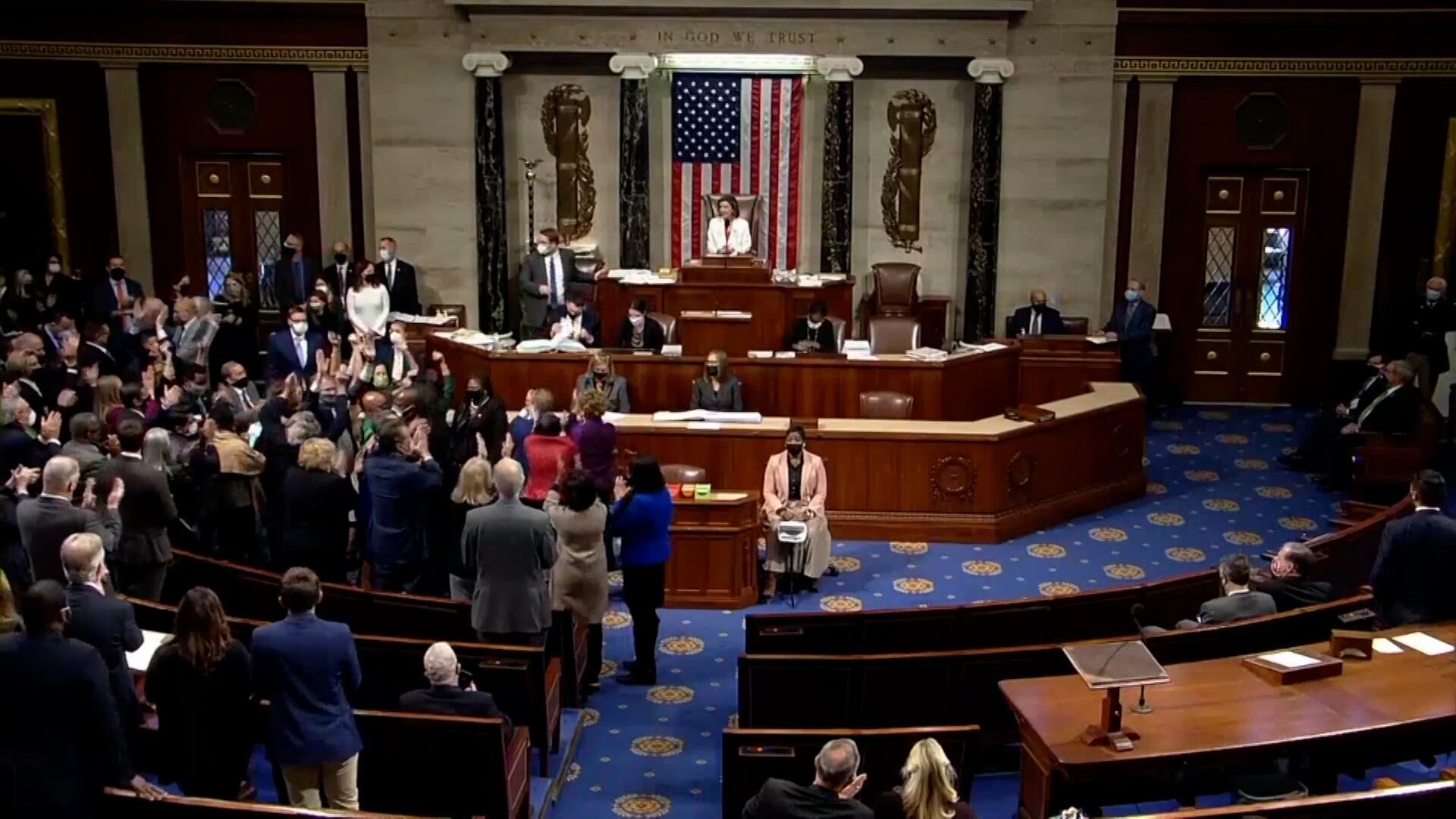
*By Christian Smith* Turnout in primaries in four states on Tuesday may indicate how likely it will be that Democrats wrest control of Congress from Republicans in midterm elections. Voters in Indiana, North Carolina, Ohio, and West Virginia head to the polls Tuesday to determine who will contest House and Senate seats in November, and the Democratic Congressional Campaign Committee has focused its resources on House districts in two of those states ー North Carolina and Ohio ー where Democrats have the best chance of of flipping the seats from red to blue. "A really important thing to look at besides the candidates themselves, in terms of who gets through, will be Democratic enthusiasm," said Meredith Kelly, a spokeswoman fro the DCCC. "If there's any sort of Democratic, unusual enthusiasm, unusual turnout it shows that people, or low turnout on the Republican side, that would be consistent with the special elections that we've seen and sort of consistent with the larger environment." The DCCC is supporting candidates in 42 competitive House races across the country with its "Red to Blue" program, which provides organizational and fundraising support to candidates running in districts currently held by Republicans. Four of those 42 candidates have primaries Tuesday in states that Trump won. Dan McCready, a Marine Corps veteran running for North Carolina's 9th district is running for a chance to unseat incumbent Republican Congressman Robert Pittenger. Kathy Manning, a lawyer and heir to the Kay chemical fortune, is running in North Carolina's 13th district. In Ohio, a state Trump won over Hillary Clinton by more than 8 percentage points, the DCCC is backing Aftab Pureval, Hamilton County clerk of courts, in the Ohio 1st district; and the president of world relief organization Team Rubicon, Ken Harbaugh, in the 7th district. Kelly said that the DCCC chose candidates to support based on who had local, grassroots support; strong polling; and the ability to not just win a primary, but successfully contest the general election in November. All four of those candidates in North Carolina and Ohio are expected to win their primaries, Kelly said. She suggested the most interesting race to watch Tuesday was the Republican primary in North Carolina's 9th district where Pittenger was in a tight race of his own against a local pastor, Mark Harris. No matter the outcome in that primary, Kelly said many Republican candidates in previously reliable red districts won't be prepared for the challenge they'll face in the fall. "I think that you're going to find that the Republicans are not ready for what's coming next," Kelly said. "These are underfunded, and they're not traditionally competitive seats, but because of the energy out there I think they're in for the races of their lives." The National Republican Congressional Committee's press secretary, Jesse Hunt, said the Democrats don't have these tightly-contested seats in the bag, especially after House Minority Leader Nancy Pelosi said she would run for Speaker if Democrats retake the House. "Pelosi is already the most unpopular politician in America," Hunt said in an [email to reporters] (http://www.businessinsider.com/nancy-pelosi-says-will-run-for-house-speaker-after-midterms-2018-5). "The prospect of her implementing an extremely progressive agenda will be a huge motivator for Republicans this fall." For full interview, [click here](https://cheddar.com/videos/voters-prepare-to-head-to-polls-in-beginning-of-primary-season).