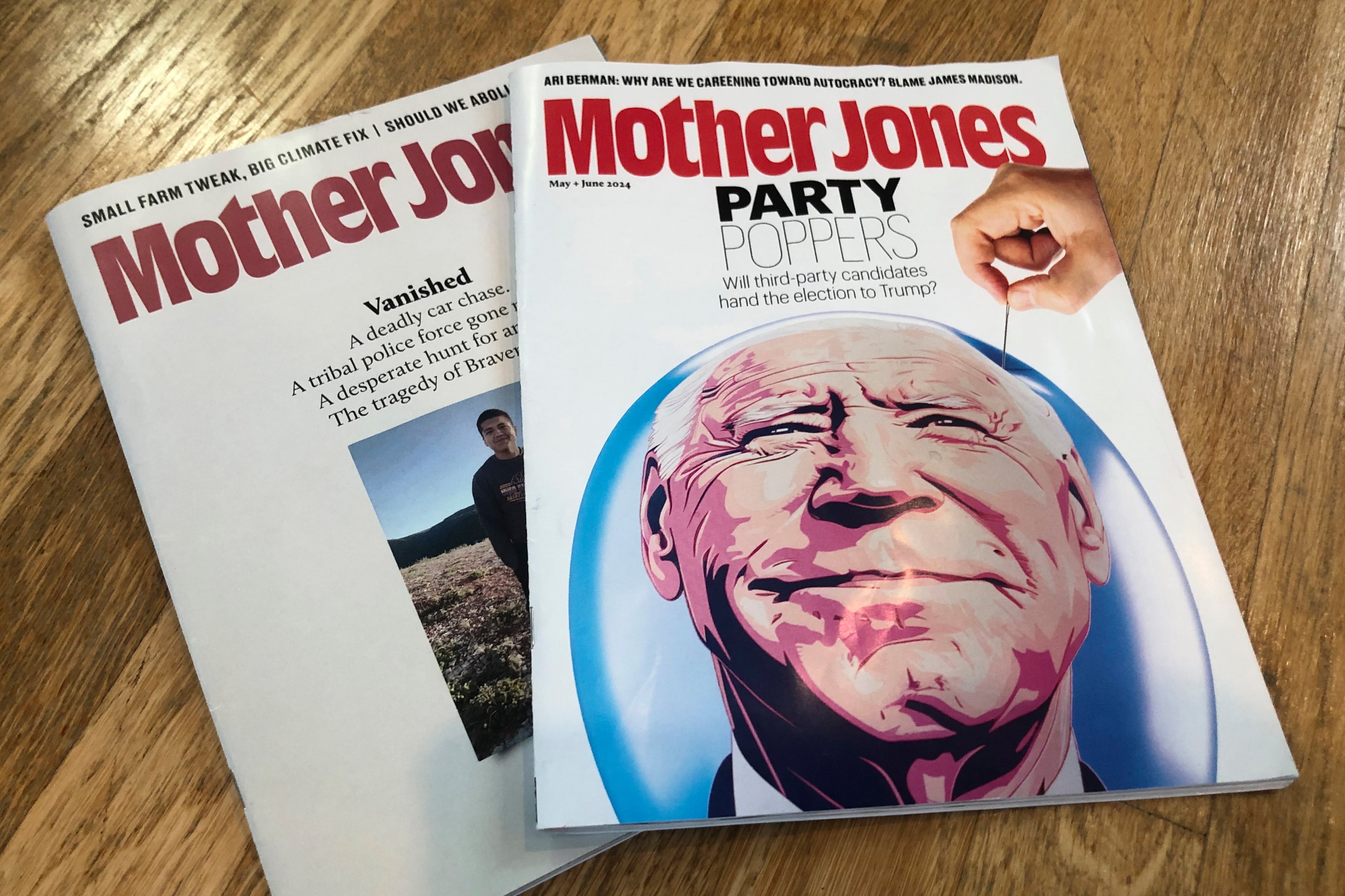
LOS ANGELES (AP) — The Center for Investigative Reporting said Thursday it has sued ChatGPT maker OpenAI and its closest business partner, Microsoft, marking a new front in the news industry’s fight against unauthorized use of its content on artificial intelligence platforms.
The nonprofit, which produces Mother Jones and Reveal, said that OpenAI used its content without permission and without offering compensation, violating copyrights on the organization’s journalism. The lawsuit, filed in a New York federal court, describes OpenAI's business as “built on the exploitation of copyrighted works” and focuses on how AI-generated summaries of articles threaten publishers.
“It’s immensely dangerous,” Monika Bauerlein, the nonprofit's CEO, told The Associated Press. “Our existence relies on users finding our work valuable and deciding to support it."
Bauerlein said that “when people can no longer develop that relationship with our work, when they no longer encounter Mother Jones or Reveal, then their relationship is with the AI tool.”
That, she said, could “cut the entire foundation of our existence as an independent newsroom out from under us" while also threatening the future of other news organizations.
OpenAI and Microsoft didn't immediately respond to requests for comment Thursday.
The lawsuit is the latest against OpenAI and Microsoft to land at Manhattan’s federal court, where the companies are already battling a series of other copyright lawsuits from The New York Times, other media outlets and bestselling authors such as John Grisham, Jodi Picoult and George R.R. Martin. The companies also face a separate case in San Francisco’s federal court brought by authors including comedian Sarah Silverman.
Some news organizations have chosen to collaborate rather than fight with OpenAI by signing deals to get compensated for sharing news content that can be used to train its AI systems. The latest to do so is Time, which announced Thursday that OpenAI will get access to its “extensive archives from the last 101 years.”
OpenAI and other major AI developers don’t typically disclose their data sources but have argued that taking troves of publicly accessible online text, images and other media to train their AI systems is protected by the “fair use” doctrine of American copyright law. CIR's lawsuit says a dataset that OpenAI has acknowledged using to build an earlier version of its chatbot technology contained thousands of links to the website of Mother Jones, a 48-year-old print magazine that's been publishing online since 1993. But the text used for AI training was usually missing information about a story's author, title or copyright notice.
Last summer, more than 4,000 writers signed a letter to the CEOs of OpenAI and other tech companies accusing them of exploitative practices in building chatbots.
“It’s not a free resource for these AI companies to ingest and make money on,” Bauerlein said of news media. “They pay for office space, they pay for electricity, they pay salaries for their workers. Why would the content that they ingest be the only thing that they don’t (pay for)?”
The AP is among the news organizations that have made licensing deals over the past year with OpenAI; others include The Wall Street Journal and New York Post publisher News Corp., The Atlantic, Axel Springer in Germany and Prisa Media in Spain, France’s Le Monde newspaper and the London-based Financial Times.
Mother Jones and CIR were both founded in the 1970s and merged earlier this year. Both are based in San Francisco, as is OpenAI.
The lawsuit from CIR, also known for its Reveal podcast and radio show, outlines the expense of producing investigative journalism and warns that losing control of copyrighted content will result in less revenue and even fewer reporters to tell important stories in “today’s paltry media landscape.”
“With fewer investigative news stories told, the cost to democracy will be enormous,” the lawsuit says.
——
O'Brien reported from Providence, Rhode Island.
——
The Associated Press and OpenAI have a licensing and technology agreement that allows OpenAI access to part of AP’s text archives.