By Tales Azzoni
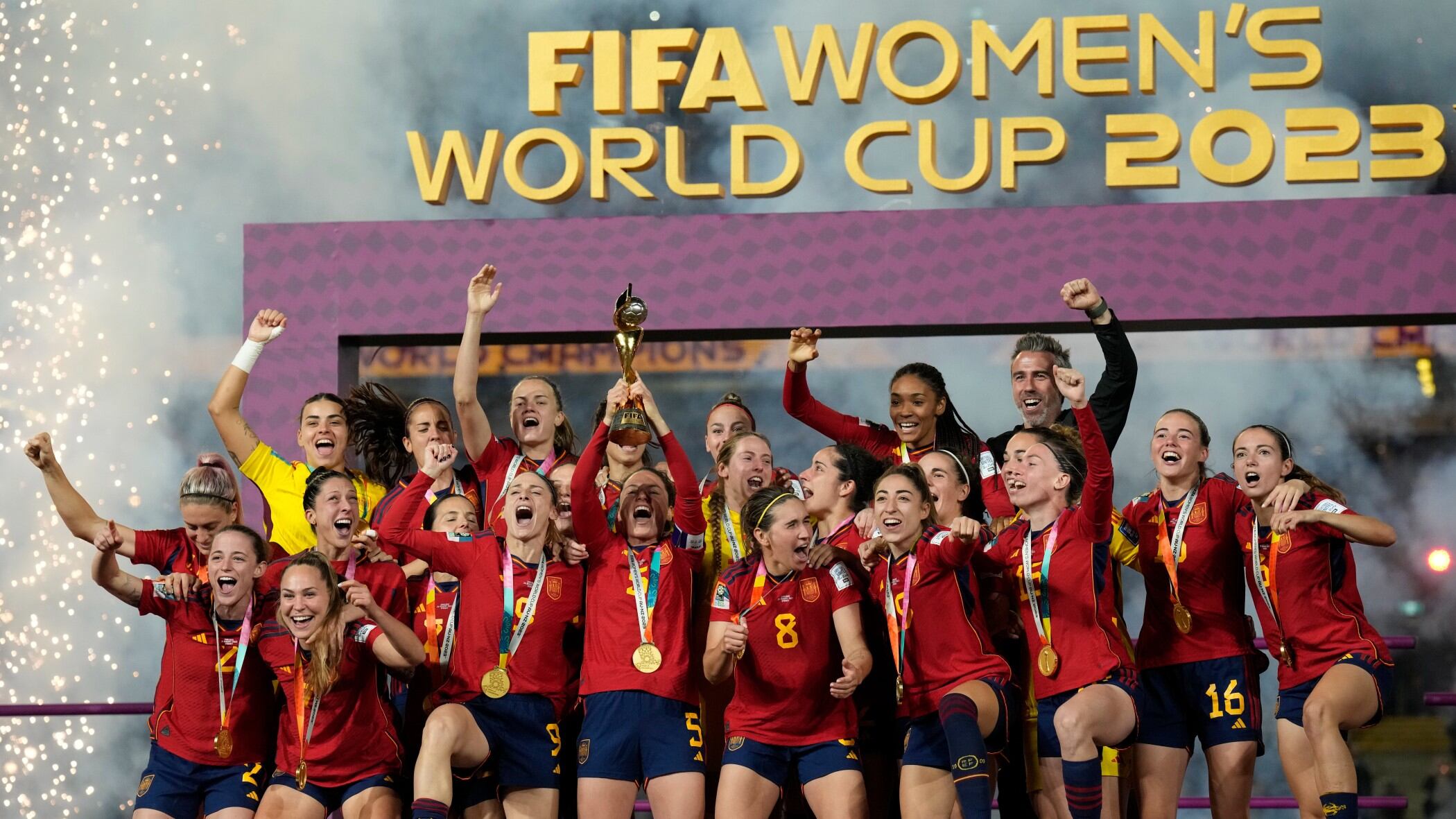
Most of Spain's World Cup-winning players ended their boycott of the women's national team early Wednesday after the government intervened to help shape an agreement that was expected to lead to immediate structural changes at the country's soccer federation.
Only two players, Barcelona teammates Patri Guijarro and Mapi León, opted to leave the training camp in the eastern city of Valencia after receiving guarantees from the government that they would not be sanctioned, with the rest staying after being told that some of their demands for reform would be met.
The players reported to camp on Tuesday after being picked by new coach Montse Tomé against their will on Monday in the latest twist in the crisis that has engulfed Spanish soccer since former federation president Luis Rubiales kissed player Jenni Hermoso on the lips during the awards ceremony following Spain's Women's World Cup title in Australia last month.
They had been in open rebellion for more than three weeks, ever since the players said on Aug. 25 that they would not play again for their country until the federation had new leadership. After Rubiales stepped down, the players still refused to come back until federation underwent thorough reform.
Specific details of the changes agreed upon were not immediately revealed following the hours-long meetings involving the government’s top sports official, players, Tomé and federation officials. The meetings ended at nearly 5 a.m. on Wednesday.
The president of the FUTRPO players’ union, Amanda Gutiérrez, said steps had been made toward establishing the same treatment for Spain's women's and men's national teams.
“An agreement has been reached to make changes to the structure of women’s soccer, so that the executive and administrative staff will match that of the men’s team, to further professionalize the team and staff,” Gutiérrez said.
Víctor Francos, Spain’s Secretary for Sports and president of the Higher Council for Sports, said the “cordial meetings” led to the creation of a committee involving players, the federation and the government.
He said the agreements should promote advances in gender policies and equal pay, as well as lead to structural changes in women’s soccer. It was not clear, though, if any firings would take place in the federation.
The first step taken by the federation was the elimination of the term “de fútbol femenino,” “women’s soccer,” from the name of the team. The federation said in a statement on Wednesday that both the men’s and women’s national teams would official be known as “Selección Española de Fútbol,” or “Spain’s national soccer team.”
“More than a symbolic change, we want this to represent a conceptual shift, and recognition that soccer is soccer, regardless of who plays it," Pedro Rocha, the federation's interim president, said in the statement.
Among the demands by the players was to have Rocha, who took over after Rubiales’ resignation, to also step down.
León and Guijarro have not played for Spain since they formed part of a player revolt by 15 team members last year when they refused to play for the national team until the federation established a more “professional” working environment, in what turned out to be prequel to the current uprising.
“The situation for Patri (Guijarro) and me is different from our teammates,” León said when leaving the team. “This was not the proper way to come back (to the team). We were not ready to just say, OK, we are back. This is a process. (However) it is true that we are happy that changes are being made.”
Spain’s acting Minister for Culture and Sports, Miquel Iceta, said he was hopeful the expected reforms by the federation would create an environment in which “the players truly feel motivated, comfortable and happy to play and to win.”
Iceta said the federation plans to hold early elections in the first months of 2024.
“We hope that that the renewal of the federation will be a turning point,” Iceta said.
Officials said the players did not call for Tomé to step down. Tomé was an assistant to former coach Jorge Vilda at the Women's World Cup. She had resigned during the Rubiales uproar but agreed to come back to replace Vilda after he was fired.
On Monday, Tomé picked nearly half of the 39 players who said they would not play for the national team until their demands were met, including 15 World Cup-winning players. Hermoso was not among them, and Tomé said the decision was made as “a way to protect her.” Hermoso, who said she did not consent to the kiss by Rubiales, had accused the federation of trying to intimidate her teammates by picking them for the national team against their will.
The squad announcement had been originally planned for Friday but was postponed because no agreement had been reached with the players.
The players said they were caught by surprise by the squad announcement but showed up to camp because otherwise they risked breaking a Spanish sports law that requires athletes to answer the call of national teams unless there are circumstances that impede them from playing, such as an injury.
Not responding to a call-up by a national team can expose a player to fines or even being banned from playing for their clubs. Those punishments would have to be requested by the federation to the government’s sports council, which would decide whether to apply them.
The government said after the meetings that it would not seek any punishment for the players who decided to leave.
Spain will play Nations League games against Sweden on Friday and Switzerland on Tuesday. The team is set to practice later Wednesday at the hotel in Valencia where the players and officials held their marathon meeting.
The overnight meeting coincided with Spanish Prime Minister Pedro Sánchez meeting with Gianni Infantino in New York to promote Spain’s joint bid with Portugal and Morocco to host the men’s World Cup in 2030.
Sánchez’s government had expressed concern that the Rubiales scandal could hurt the bid.
Spanish politicians, soccer clubs and players, along with many fans, have supported the players in their clash with the federation. The government and feminist groups have characterized it as a “Me Too” movement in Spanish soccer.
Associated Press writer Joseph Wilson in Barcelona, Spain, contributed to this report.