As the first set of Democratic candidates took the stage for the second round of presidential debates, some 2020 hopefuls criticized Sen. Bernie Sanders' (I-Vt.) plan to totally eliminate student loan debt by providing free college for all Americans.
During the debate, Sanders called for a political revolution to force Wall Street to pay for the crisis with a tax.
The "ultra-wealth tax" has gained steam among progressives in the race, like Massachusetts Sen. Elizabeth Warren. Because college costs are so high, Sanders argues, the wealth gap widens as most families are unable to pay for tuition. Therefore, his plan calls for the termination of student loan debt and would make two- and four-year public and tribal colleges and universities tuition-free and debt-free.
However, South Bend Mayor Pete Buttigieg who, in the last debate said he and his husband have a "six-figure student debt," rejected Sanders's plan to terminate all debt throughout the U.S., even though it would presumably mean his own family's debt would be forgiven.
<i>Sen. Amy Klobuchar, D-Minn., from left, South Bend Mayor Pete Buttigieg, Sen. Bernie Sanders, I-Vt., and Sen. Elizabeth Warren, D-Mass. / Photo Credit: Paul Sancya/AP/Shutterstock</i>
"That'd be great for us," Buttigieg said. "And then the next day there would be a student loan program and people would be out taking student loans wondering why they weren't lucky enough in timing to get theirs wiped away completely too."
Rather, the youngest candidate in the race proposed a plan to enact debt-free college for low- and middle-income students by expanding Pell Grants and "compelling states to pick up more of the burden." He also said he would open up access to a public service loan forgiveness program.
Like Buttigieg, former Texas Congressman Beto O'Rourke also disagreed with Sanders's plan for free college.
O'Rourke said he supports free two-year colleges, and debt-free four-year programs. He noted that his plan includes free board and books, a difference from other candidates' proposals.
Minnesota Sen. Amy Klobuchar, has said that taking on student debt is personal; however, she is wary of whose debt should be forgiven.
"I want to make it easier for kids to go to college, and I think we do it by using our resources on the people that need it the most," Klobuchar said Tuesday night.
Klobuchar critiqued Sanders's plan that would pay for all Americans to attend college, including students who are not in need. "It would literally pay for wealthy kids, for Wall Street kids, to go to college for free," she said.
Rather than providing free college to all young adults, Klobuchar said she plans to refinance loans and expand repayments for teachers.
The only candidate to offer support for Sanders' plan was author Marianne Williamson, who said a candidate must focus on stimulating the economy: "The best thing to do to stimulate this economy is to get rid of this debt."
Warren spoke briefly about her plan to end student debt, which includes universal, tuition-free college for all kids, increased Pell Grants and increasing funding in historically black colleges and universities by $50 billion. "It cancels student loan debt for 95 percent of the kids with student loan debt, and helps close the black-white wealth gap in America," said Warren
For more on 2020 candidates' plan to fix the student loan debt, click here.
Russian forces escalated their attacks on populated urban areas Tuesday, bombarding the central square in Ukraine’s second-largest city and Kyiv’s main TV tower.
A bipartisan group of 43 representatives joined forces in a letter to President Joe Biden to remind the executive branch that it must seek the approval of Congress before authorizing a war — whether or not its in Ukraine as Russia continues its invasion. Rep. Peter DeFazio (D-Ore. 4th District) led the effort and joined Cheddar News Wrap to explain. "It's time for Congress to get back the authority, which is vested to us in the constitution, not in the executive branch," he said. "The president. once we're at war, we speak with one voice with the commander in chief. But before that, it's up to the American people and Congress whether or not we're going to become engaged in a war."
Chris Konstantinos, Chief Investment Strategist at RiverFront Investment Group, explains why he remains encouraged about the S&P and the state of the market despite the major indexes closing mostly lower on Monday.
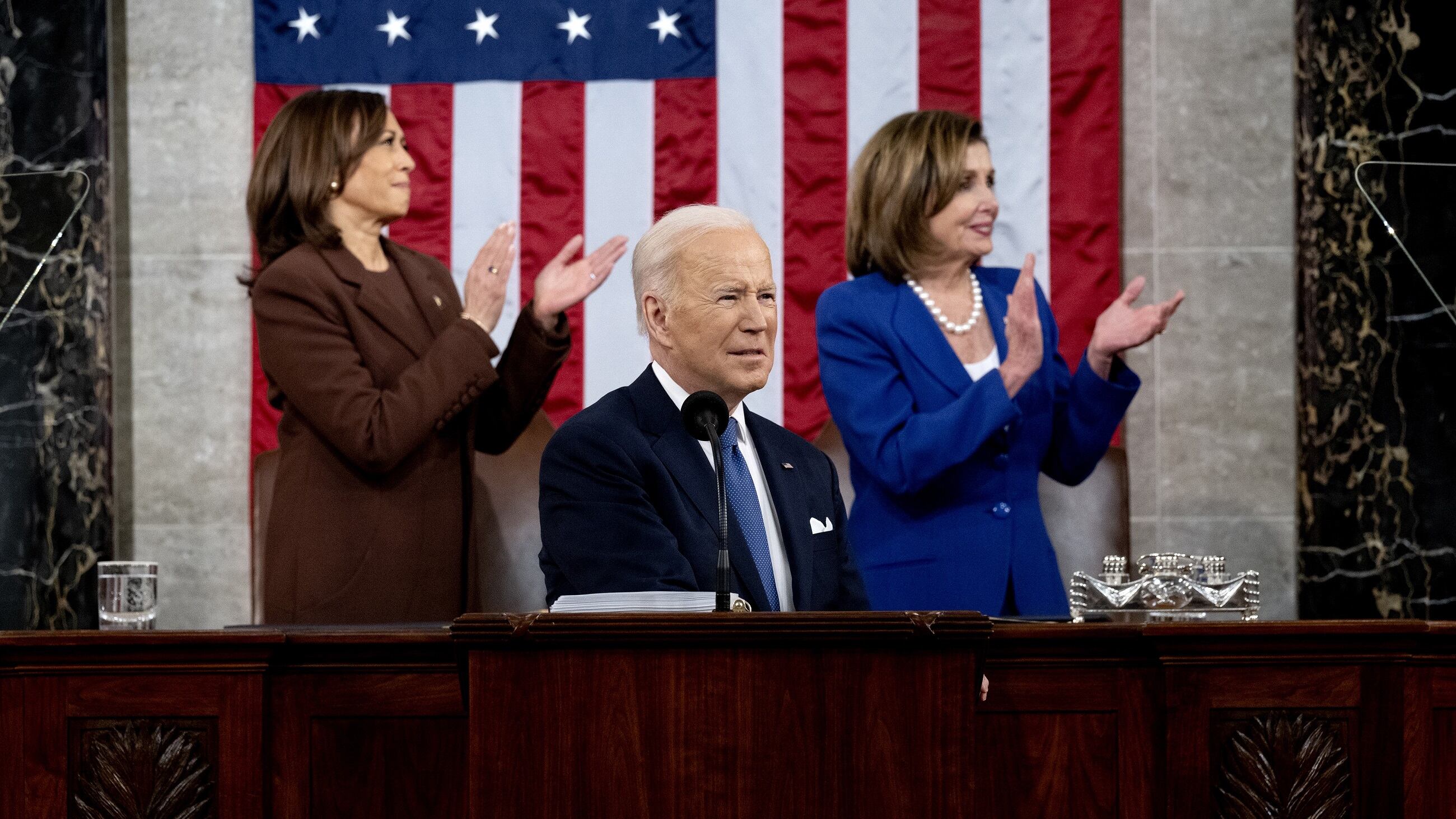
President Joe Biden will be delivering his first State of the Union address on Tuesday night, and with so many issues from Ukraine to inflation, everyone will be focused on what he might say. Rep. Nicole Malliotakis (R-N.Y. 11th District) joined Cheddar News to discuss what she thinks the president should address. "I think what he hasn't done yet is go after the gas, the oil, the minerals, the mining industries, that is incredibly important," she said. "There's still some banks there that are not sanctioned. He needs to go after all the banks, but I also think that providing the equipment that Ukraine needs to continue to protect its capital and its country are incredibly important."
As Russia’s attack on Ukraine continues, one of its few big allies remaining appears to be China. Gordon Chang, Asian affairs expert and author of "The Coming Collapse of China," joined Cheddar News to discuss what might be behind China's support for Putin's current strategy. “I think China is looking at what Putin did yesterday, which is to raise his nuclear forces on a higher alert level,” Chang stated, “If they see that Putin gets away with his nuclear threats, which he's been making over the last three or four days, then I'm sure that Beijing is going to ramp up its threats as well, and it could ramp them up against any number of different countries with which it perceives it has a problem with"
Joel Rubin, president of the Washington Strategy Group and former Deputy Assistant Secretary of State, joins Cheddar News to discuss the Russia-Ukraine tensions and the new sanctions President Biden placed on Russia.