As the first set of Democratic candidates took the stage for the second round of presidential debates, some 2020 hopefuls criticized Sen. Bernie Sanders' (I-Vt.) plan to totally eliminate student loan debt by providing free college for all Americans.
During the debate, Sanders called for a political revolution to force Wall Street to pay for the crisis with a tax.
The "ultra-wealth tax" has gained steam among progressives in the race, like Massachusetts Sen. Elizabeth Warren. Because college costs are so high, Sanders argues, the wealth gap widens as most families are unable to pay for tuition. Therefore, his plan calls for the termination of student loan debt and would make two- and four-year public and tribal colleges and universities tuition-free and debt-free.
However, South Bend Mayor Pete Buttigieg who, in the last debate said he and his husband have a "six-figure student debt," rejected Sanders's plan to terminate all debt throughout the U.S., even though it would presumably mean his own family's debt would be forgiven.
<i>Sen. Amy Klobuchar, D-Minn., from left, South Bend Mayor Pete Buttigieg, Sen. Bernie Sanders, I-Vt., and Sen. Elizabeth Warren, D-Mass. / Photo Credit: Paul Sancya/AP/Shutterstock</i>
"That'd be great for us," Buttigieg said. "And then the next day there would be a student loan program and people would be out taking student loans wondering why they weren't lucky enough in timing to get theirs wiped away completely too."
Rather, the youngest candidate in the race proposed a plan to enact debt-free college for low- and middle-income students by expanding Pell Grants and "compelling states to pick up more of the burden." He also said he would open up access to a public service loan forgiveness program.
Like Buttigieg, former Texas Congressman Beto O'Rourke also disagreed with Sanders's plan for free college.
O'Rourke said he supports free two-year colleges, and debt-free four-year programs. He noted that his plan includes free board and books, a difference from other candidates' proposals.
Minnesota Sen. Amy Klobuchar, has said that taking on student debt is personal; however, she is wary of whose debt should be forgiven.
"I want to make it easier for kids to go to college, and I think we do it by using our resources on the people that need it the most," Klobuchar said Tuesday night.
Klobuchar critiqued Sanders's plan that would pay for all Americans to attend college, including students who are not in need. "It would literally pay for wealthy kids, for Wall Street kids, to go to college for free," she said.
Rather than providing free college to all young adults, Klobuchar said she plans to refinance loans and expand repayments for teachers.
The only candidate to offer support for Sanders' plan was author Marianne Williamson, who said a candidate must focus on stimulating the economy: "The best thing to do to stimulate this economy is to get rid of this debt."
Warren spoke briefly about her plan to end student debt, which includes universal, tuition-free college for all kids, increased Pell Grants and increasing funding in historically black colleges and universities by $50 billion. "It cancels student loan debt for 95 percent of the kids with student loan debt, and helps close the black-white wealth gap in America," said Warren
For more on 2020 candidates' plan to fix the student loan debt, click here.
President Biden's first year did not come to the close that he had hoped after last night's Senate vote blocked the voting rights bill, a priority that Biden has promoted since his inauguration. Joining us to discuss the voting rights bill, and many others passing through congress is congresswoman Lori Trahan, representing Massachusett's 3rd district.
Members of Congress have voted to advance a bill meant to address antitrust concerns related to tech giants including Amazon, Apple, Google, and Meta. The 'American Innovation and Choice Online Act' is largely seen as one of the best chances for the government to reign in Big Tech's dominance
Seth Schachner, Managing Director StratAmericas; Digital Business Executive joined Cheddar's Opening Bell to discuss.
American semiconductor company, Intel officially announcing plans to build a new $20 billion chip manufacturing complex outside Columbus, Ohio. This comes as the global chip shortage continues to hamper production of everything from smart phones, to cars. Jennifer Smith - Logistics and Supply Chain Reporter, WSJ joined Cheddar's Opening Bell to discuss.
The U.S. has put more than 8,000 American troops on high alert for possible deployment to Eastern Europe as the West prepares for a potential Russian invasion of Ukraine. With Russia building up more than 100,000 troops near the Ukrainian border, concerns over the country's behavior are mounting. Joel Rubin, Former Deputy Assistant Secretary of State and President of the Washington Strategy Group, joined Cheddar to discuss what this means for U.S.-Russia relations, and where the conflict might be heading next.
As the midterm election looms, things aren't looking too promising for President Joe Biden. One year into his term as president, Biden is facing one of the lowest approval ratings of any modern-day president, threatening his party's control of the House in 2022. Brian Bennett, Senior White House Correspondent for TIME, joined Cheddar's Opening Bell to discuss.
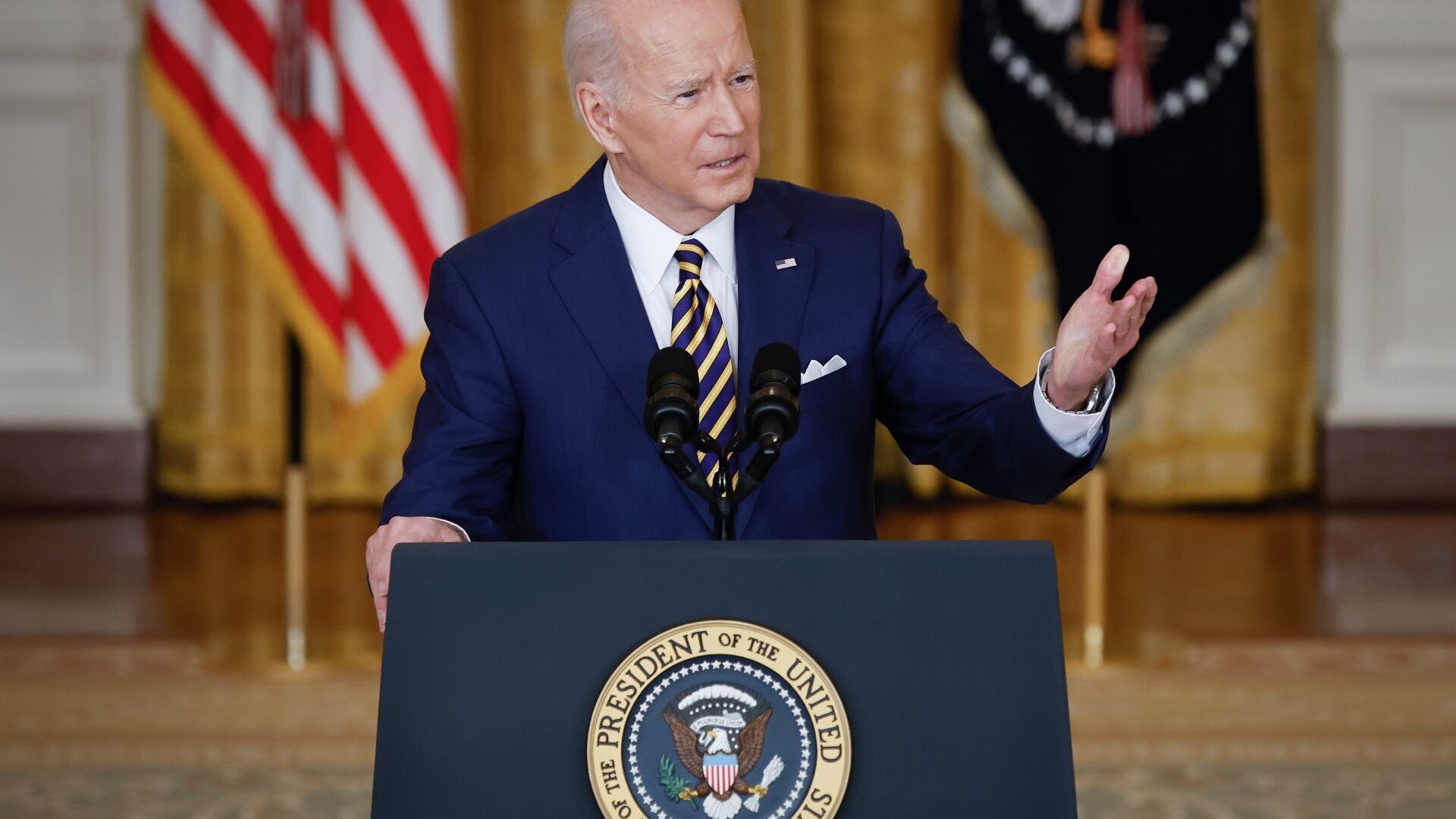
A full one year into his term as President of The United States, President Biden addressed the nation on Wednesday, facing questions on everything from inflation to chip shortages and covid-19. As Biden enters his second year in office, he is facing one of the lowest approval ratings of any modern-day president. Kate Davidson, Reporter, POLITICO joined Cheddar's Opening Bell to discuss.
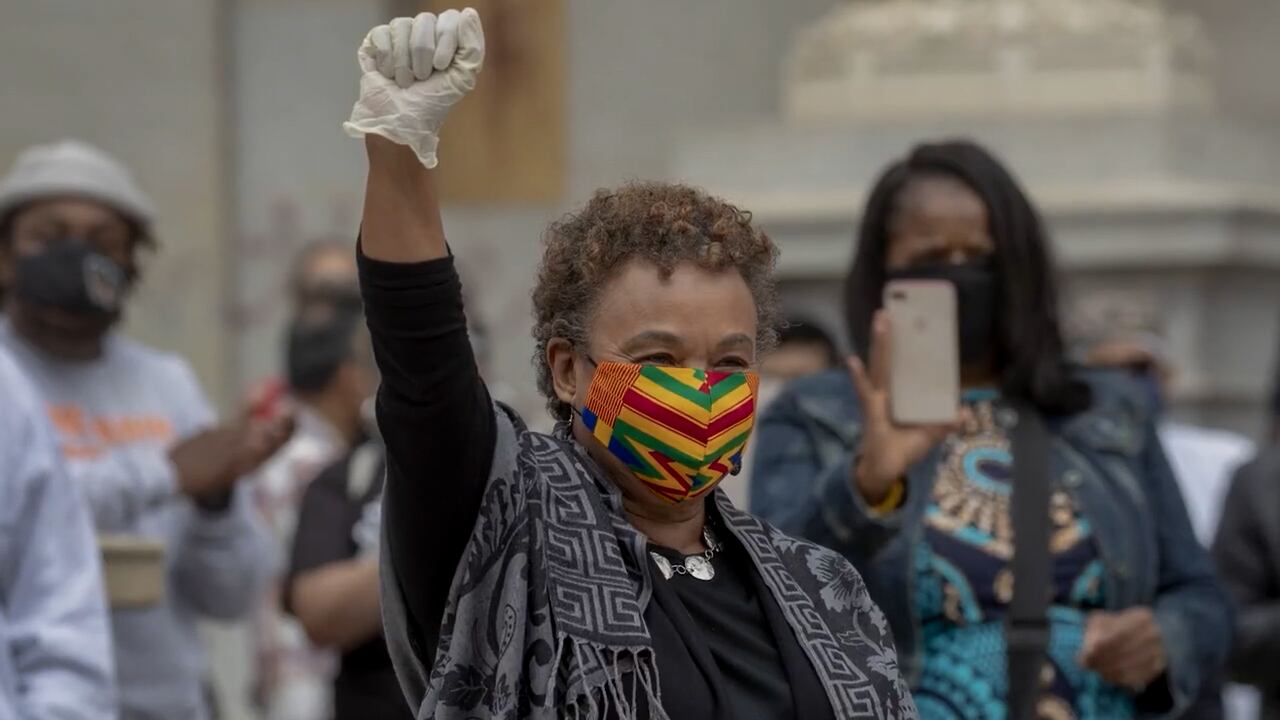
"Barbara Lee: Speaking Truth to Power" is the story of how the longtime House Democrat became, as she Is known to some, as "the Conscience of Congress." The film also
shows Representative Lee from her days working to fight community poverty to famously becoming the only member of Congress to vote "no" against the war in Afghanistan days after 9/11. The film is nominated for an NAACP Image Award, and Premieres on Starz on February 1. Film director Abby Ginzberg and Rep. Barbara Lee (D-Calif. 13th District), joined Cheddar to discuss more.
San Diego has just implemented a new law that could set the stage for how the country deals with food waste. This new law hopes to make a dent in that. Businesses and groceries stores out in San Diego will need to put a plan in place to *donate edible food rather than toss it straight to the trash. Food Rescue Manager at Feeding San Diego, Kate Garret
Earlier this month, New York City experienced one of the deadliest fires it has seen in decades. 17 people lost their lives in the Fordham section of the Bronx. This was due to a faulty space heater which reportedly began on the lower floor of the 120 unit building. Thanks to the F. D. N. Y. And heroic neighbors, many were able to get out in time. Unfortunately, the toxic smoke surged upwards through a safety door. Now, many advocates say negligence by policymakers and landlords has led to the deaths in black and brown communities from fires that honestly could have been preventable. Legislative Director of Citizen Action of New York, Rebecca Garrard, and the Chair of Journalism and New Media Studies at St. Joseph's College Theodore Hamm, joined Cheddar to discuss more.