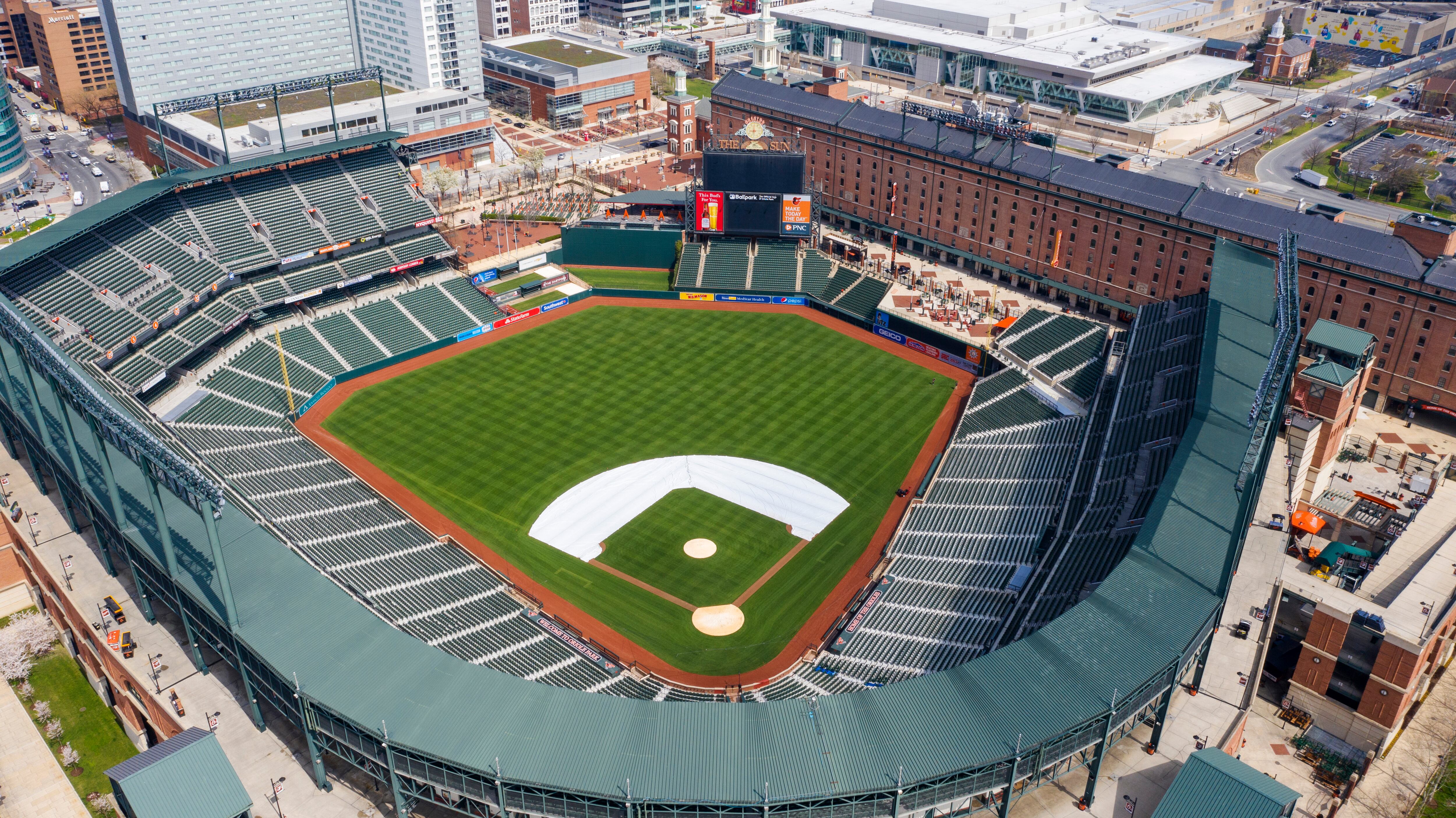
In this Thursday, March 26, 2020, file photo, Oriole Park at Camden Yards is closed on what would've been Opening Day in Baltimore, Md. Whenever baseball returns because of the coronavirus pandemic, there's an element that might come into play like never before: the sound of silence. (AP Photo/Steve Helber, File)
By Ronald Blum
Major League Baseball owners gave the go-ahead Monday to making a proposal to the players’ union that could lead to the coronavirus-delayed season starting around the Fourth of July weekend in ballparks without fans, a plan that envisioned expanding the designated hitter to the National League for 2020.
Spring training would start in early to mid-June, a person familiar with the decision told The Associated Press. The person spoke on the condition of anonymity because details of the plan were not announced.
MLB officials are slated to make a presentation to the union on Tuesday. An agreement with the players' association is needed, and talks are expected to be difficult — especially over a proposal for a revenue split that would be unprecedented for baseball.
Each team would play about 82 regular-season games: against opponents in its own division plus interleague matchups limited to AL East vs. NL East, AL Central vs. NL Central and AL West vs. NL West.
Teams would prefer to play at their regular-season ballparks but would switch to spring training stadiums or neutral sites if medical and government approvals can’t be obtained for games at home. Toronto might have to play home games in Dunedin, Florida.
The All-Star Game, scheduled for Dodger Stadium in Los Angeles on July 14, likely would be called off.
Teams will propose that players receive the percentage of their 2020 salaries based on a 50-50 split of revenues MLB receives during the regular-season and postseason, which likely will be among the most contentious aspects of the proposal during negotiations with the players’ association.
That proposal would take into account fans being able to return to ballparks at some point, perhaps with a small percentage of seats sold at first and then gradually increasing.
Baseball players have refused to consider even the frameworks for the type of revenue splits that have been agreed to by unions in the NFL, NBA, and NHL. The last attempt by baseball owners to gain a salary cap with a revenue split led to a 7 1/2-month strike in 1994-95 that wiped out the World Series for the first time in 90 years.
Rosters would be expanded from 26 to around 30. With minor leagues shuttered, there likely will be the addition of about 20 players per club akin to the NFL’s practice squad.
Players and teams agreed to a deal on March 26 that called for each player to receive only a portion of salary, determined by what percentage of a 162-game schedule is played. As part of that deal, if no season is played each player would receive 2020 service time matching what the player earned in 2019.
But that deal is contingent there being no restrictions on mass gatherings at the federal, state, city and local level; no relevant travel restrictions in the U.S. and Canada; and Commissioner Rob Manfred after consulting the union and medical expects, determines there is no risk to playing in front of fans at regular-season ballparks.
Players and teams committed to “discuss in good faith the economic feasibility of playing games in the absence of spectators or at appropriate neutral sites.” Manfred has said about 40% of MLB revenue is tied to gate, including concessions, parking, ballpark advertising, luxury suites and programs.
Union officials and players have cited the March 26 agreement as setting economic terms and say they have no inclination for additional cuts. Players are more interested in medical protocols and testing designed to protect them from and detect the new coronavirus. The proposal will detail the plan for dealing with players and staff who test positive.
Because players accrue salaries for the regular season only and not for spring training or the postseason, the union may counter by asking for more regular-season games during negotiations that could significantly alter or possibly even scuttle the restart plan.
The DH was adopted by the American League for the 1973 season but has been resisted by National League owners. The players’ union has favored it because it would create more jobs for high-paying hitters in their 30s, by MLB has looked at it as an economic issue.
Money, however, has disappeared as an issue at this stage for 2020 because nearly all veteran players have agreed to contracts. Yasiel Puig is the most notable exception.
Wellness retreats have grown in popularity as self-care has become a bigger focus during the pandemic. Jamie Costello, Vice President of Sales and Fitness at Pritikin Longevity Center, joined Cheddar to discuss the goals of a retreat program, and how to make health and wellness accessible to more people.
The gambling industry has seen a boom since shutting down in 2020, outpacing even pre-pandemic levels. But as gamblers have returned to the tables, there's been a rise in reports of gambling addiction as well. Sara Slane, founder of Slane Advisory and sports betting/casino gaming executive, joined Cheddar to discuss the state of the gambling industry.
Shares of Peloton recovered after CEO John Foley debunked rumors that the company would halt production of some products, confirming that the company will instead be quote 'right-sizing' production as it faces lagging demand.
This comeback for the stock comes after reports surfaced that Peloton could completely hit the brakes on production of its bikes and treadmills. In the last year, Peloton has wiped nearly $40 billion off its market cap, with its stock down over 70% in 2021. Doug Astrop, managing partner at Exponential Investment Partners, joined Cheddar Movers to discuss.
After an intense hours-long meltdown Monday, stocks closed higher in a last minute, stunning comeback. At one point, the Dow shed over 1,000 points, the tech-heavy Nasdaq was down close to 5% and inching toward correction territory, and the S&P 500 briefly hit a correction earlier in the day. During most of Monday's session, stocks were on track to mark their worst months since March 2020, and for the Nasdaq, since October 2008. Philip Palumbo, Founder, CEO and Chief Investment Officer of Palumbo Wealth Management, joined Cheddar News' Closing Bell to discuss today's stunning market comeback, whether there's more room for stocks to fall, his 2022 market predictions, and more.
Bobby Zagotta, CEO of Bitstamp USA, joins Cheddar News' Closing Bell, where he discusses what he expects to see from Bitcoin and other cryptocurrencies amid a volatile period in the market, and explains how his crypto exchange is helping investors.
Markets started the week on a rocky note: the major indexes at most points during the day were double digits off of their highs, on the path to their worst performances since March 2020 and for the Nasdaq, since October 2008. Investors were skittish about the Federal Reserve's meeting this week, where the central bank is expected to announce more details about its plans to hike interest rates and taper asset purchasing this year. Art Hogan, Chief Market Strategist at National Securities, joined Cheddar News' Closing Bell to discuss today's market meltdown, why investors were feeling pressure, what to expect from the Fed, and more.
AT&T announced it's offering two tiers of high-speed internet, 2 gigs, and 5 gigs, to its fiber customers in more than 70 metro regions. AT&T Consumer CEO Thaddeus Arroyo joined Cheddar to talk about the newly available speed upgrades for 5.2 million of its customers, and where the rollout goes from here. "Over the course of 2022, we'll rapidly continue to retrofit the rest of the base," he said. "And importantly now is, as we build-out, we've talked about building out to cover 30 million homes and businesses by the end of 2025, we're going to continue to ensure that every new location that we stand up has this multi gig capability."
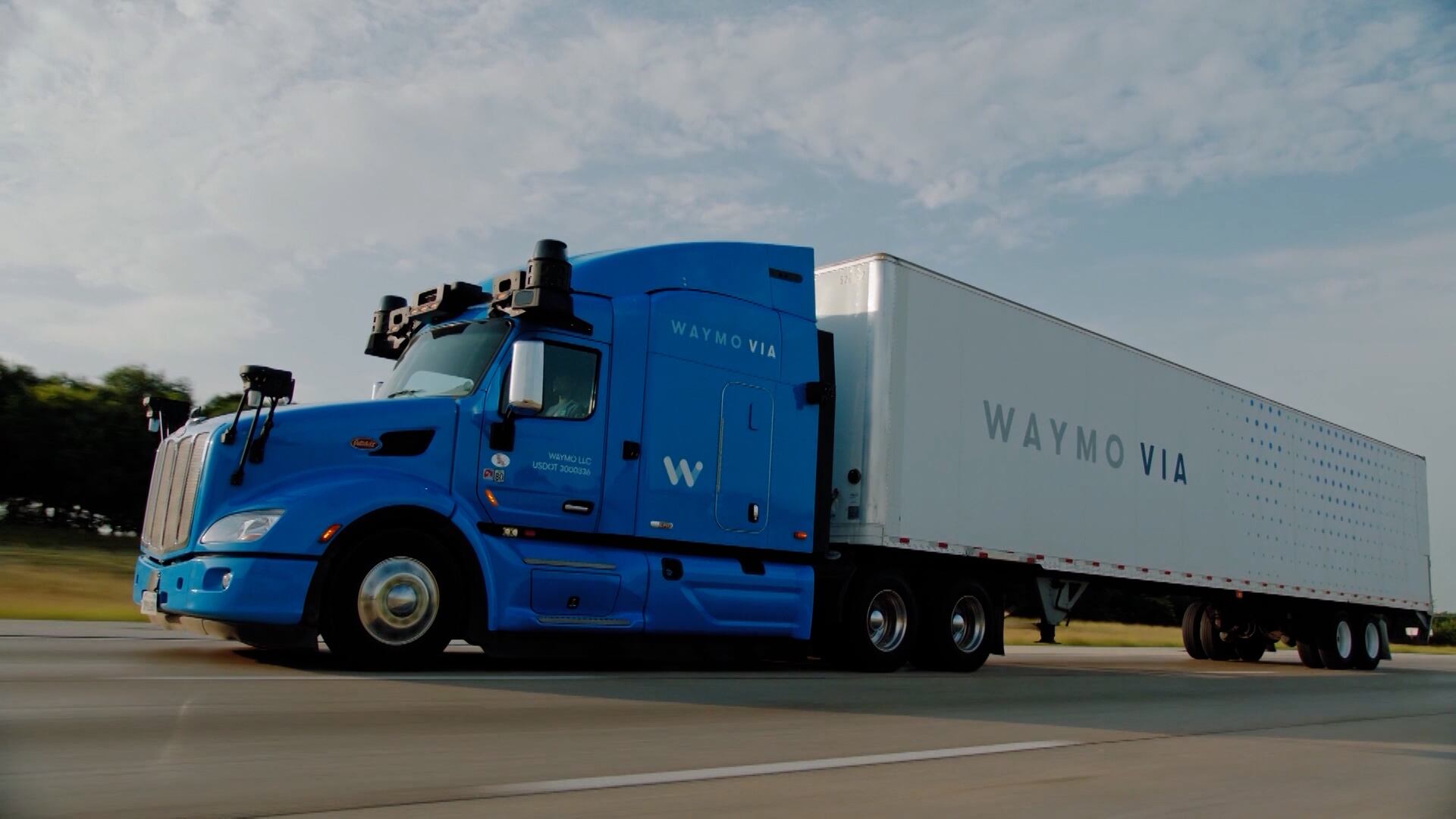
Autonomous driving tech company Waymo is partnering with transportation and logistics business J.B. Hunt. The two firms are teaming up to bring autonomous shipping to the highways. Head of commercialization for trucking at Waymo, Charlie Jatt, joined Cheddar to discuss how the companies are combining their strengths. "We, of course at Waymo, are working on the technology side of affairs, and J. B Hunt brings critical operational and commercial expertise," Jatt said. "And together we're going to work to deploy the first fully autonomous Class 8 truck hauling goods for one of their customers in the coming years in Texas."
Amid a rough week for Peloton's stock, as well as its image — its bikes being the cause of death for two fictional TV characters now — an activist investor is calling for a change in upper management. Chief investment officer of Blackwell, Jason Aintabi, petitioned in a letter that Peloton’s CEO, John Foley, must be fired. Joining Cheddar to discuss the ultimatum, Hatem Dhiab, a portfolio manager and managing partner at Gerber Kawasaki Wealth and Investment Management noted the conditions leading to the demand for Foley's removal. "The stock is basically 85 percent below the high," he said. "I think there is some change that needs to happen, and that's just the reality."