By Ronald Blum

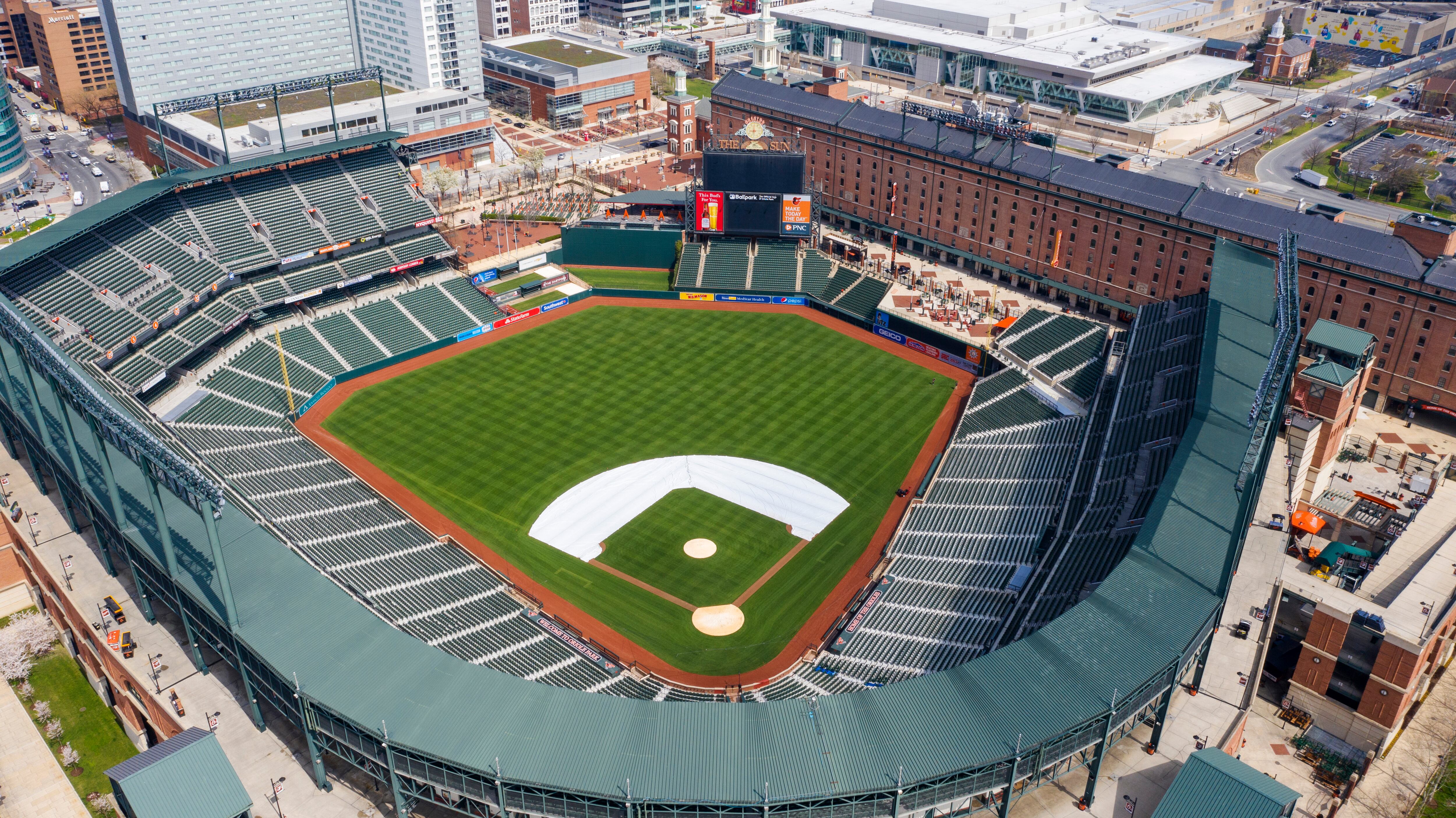
Major League Baseball owners gave the go-ahead Monday to making a proposal to the players’ union that could lead to the coronavirus-delayed season starting around the Fourth of July weekend in ballparks without fans, a plan that envisioned expanding the designated hitter to the National League for 2020.

Spring training would start in early to mid-June, a person familiar with the decision told The Associated Press. The person spoke on the condition of anonymity because details of the plan were not announced.

MLB officials are slated to make a presentation to the union on Tuesday. An agreement with the players' association is needed, and talks are expected to be difficult — especially over a proposal for a revenue split that would be unprecedented for baseball.

Each team would play about 82 regular-season games: against opponents in its own division plus interleague matchups limited to AL East vs. NL East, AL Central vs. NL Central and AL West vs. NL West.

Postseason play would be expanded from 10 clubs to 14 by doubling wild cards in each league to four.

Teams would prefer to play at their regular-season ballparks but would switch to spring training stadiums or neutral sites if medical and government approvals can’t be obtained for games at home. Toronto might have to play home games in Dunedin, Florida.

The All-Star Game, scheduled for Dodger Stadium in Los Angeles on July 14, likely would be called off.

Teams will propose that players receive the percentage of their 2020 salaries based on a 50-50 split of revenues MLB receives during the regular-season and postseason, which likely will be among the most contentious aspects of the proposal during negotiations with the players’ association.

That proposal would take into account fans being able to return to ballparks at some point, perhaps with a small percentage of seats sold at first and then gradually increasing.

Baseball players have refused to consider even the frameworks for the type of revenue splits that have been agreed to by unions in the NFL, NBA, and NHL. The last attempt by baseball owners to gain a salary cap with a revenue split led to a 7 1/2-month strike in 1994-95 that wiped out the World Series for the first time in 90 years.

Rosters would be expanded from 26 to around 30. With minor leagues shuttered, there likely will be the addition of about 20 players per club akin to the NFL’s practice squad.

Players and teams agreed to a deal on March 26 that called for each player to receive only a portion of salary, determined by what percentage of a 162-game schedule is played. As part of that deal, if no season is played each player would receive 2020 service time matching what the player earned in 2019.

But that deal is contingent there being no restrictions on mass gatherings at the federal, state, city and local level; no relevant travel restrictions in the U.S. and Canada; and Commissioner Rob Manfred after consulting the union and medical expects, determines there is no risk to playing in front of fans at regular-season ballparks.

Players and teams committed to “discuss in good faith the economic feasibility of playing games in the absence of spectators or at appropriate neutral sites.” Manfred has said about 40% of MLB revenue is tied to gate, including concessions, parking, ballpark advertising, luxury suites and programs.

Union officials and players have cited the March 26 agreement as setting economic terms and say they have no inclination for additional cuts. Players are more interested in medical protocols and testing designed to protect them from and detect the new coronavirus. The proposal will detail the plan for dealing with players and staff who test positive.

Because players accrue salaries for the regular season only and not for spring training or the postseason, the union may counter by asking for more regular-season games during negotiations that could significantly alter or possibly even scuttle the restart plan.

The DH was adopted by the American League for the 1973 season but has been resisted by National League owners. The players’ union has favored it because it would create more jobs for high-paying hitters in their 30s, by MLB has looked at it as an economic issue.

Money, however, has disappeared as an issue at this stage for 2020 because nearly all veteran players have agreed to contracts. Yasiel Puig is the most notable exception.

Share:
More In Business
Spotify Beats Earnings Expectations, Projects Tame User Growth as it Deals with Joe Rogan Controversy
Spotify beat fourth quarter earnings expectations, and also reported a jump in monthly active users and in paid subscribers. The report comes as the company grapples with a new question: is it simply a streaming platform, or is it a media company responsible for the content it posts, like Joe Rogan's controversial podcast? Greg Martin, Co-Founder of Rainmaker Securities, joins Closing Bell to discuss why the stock took a hit even though earnings results were positive, how the company can move forward through the Rogan controversy, and more.
Wormhole Victim of Latest Crypto Hack in DeFi Space
Chen Arad, Chief Operating Officer for Solidus Labs, joins Cheddar News' Closing Bell, where he explains why Wormhole was particularly vulnerable to a $320+ million crypto hack and discusses what new investors need to do in order to protect their assets.
RenoRun Raises $142 Million to Fuel Construction E-Commerce Platform Across Canada and U.S.
E-commerce platform for construction and building materials RenoRun has raised $142 million in a Series B round, which the company says is the fourth largest Series B round in Canadian history. RenoRun’s platform offers same-day delivery of construction materials to job sites in Canada and the United States. The company aims to revolutionize the construction industry by maximizing productivity and efficiency. RenoRun co-founder and CEO Eamonn O’Rourke joins Cheddar News' Closing Bell to discuss.
Meta's Earnings Meltdown: Weak Results, Apple iOS Privacy Impact, Metaverse Revenue Loss
Facebook parent company Meta reported weaker-than-expected fourth quarter earnings, and also issued disappointing guidance for Q1 2022. The tech giant is also under pressure due to Apple's iOS privacy change, as well as continued multi-billion dollar losses for its metaverse focused business unit. Angelo Zino, Tech Analyst at CFRA Research, joins Closing Bell to discuss the earnings results, how Apple's iOS privacy change will impact revenue, whether the metaverse is an underrated investment opportunity, and more.
Millions of Americans Forced to Relocate Due to Rising Rent
Rental prices are rising across the country, causing millions to relocate. Average rents rose 14 percent last year, and Americans expect rents will continue to rise by about 10 percent just this year. Daryl Fairweather, chief economist at Redfin, joins Cheddar News to discuss.
Gaming Industry Levels Up as Sony Acquires Bungie for $3.6 Billion
The video game industry has seen monumental growth the past few years - with an increasing amount of companies jumping head first into the space. In January alone, Microsoft announced its plan to acquire Activision Blizzard, game publisher Take-Two agreed to buy Zynga, and most recently, Sony announced it has agreed to buy game developer Bungie for $3.6 billion. Tobias Batton, CEO and founder of Ex Populus, joined Cheddar Movers to discuss the surge in M&A activity in the gaming space.
Facebook Parent Meta Slips on Disappointing Q4 Earnings
Facebook parent Meta reported disappointing results in its first quarterly earnings report since rebranding to focus on the metaverse. The tech giant delivered mixed results with quarterly profit falling well below Wall Street expectations. Shares plunged more than 20 percent in after hours trading as a result. Martin Garner, COO of CCS Insight, joined Cheddar Movers to break down the company's results.
Super Group Lists on NYSE as Sports Betting Heats Up
Super Group, the company behind leading global online sports betting and gaming businesses Betway and Spin, has landed on Wall Street. The company went public via SPAC with Sports Entertainment Acquisition Corp., and now lists on the NYSE under the ticker symbol 'SGHC.' This debut comes as the U.S. sports betting market continues to heat up with more and more states legalizing the practice. Eric Grubman, chairman of Super Group, joined Cheddar to discuss.
Miami Wants to Become Crypto Capital of the World
Miami wants to be the crypto capital of the world. Mayor Francis Suarez has gone all in on the blockchain, even accepting one of his first paychecks in Bitcoin, hosting one of the world's largest digital cryptocurrency conferences, and marketing Miami as a great place for tech experts to work. Maja Vujinovic, managing director of OGroupLLC, joined Cheddar's Fast Forward to discuss Miami's enthusiasm toward crypto, some of the potential risks that entails, and where the city might be heading when it comes to the crypto takeover.
Load More