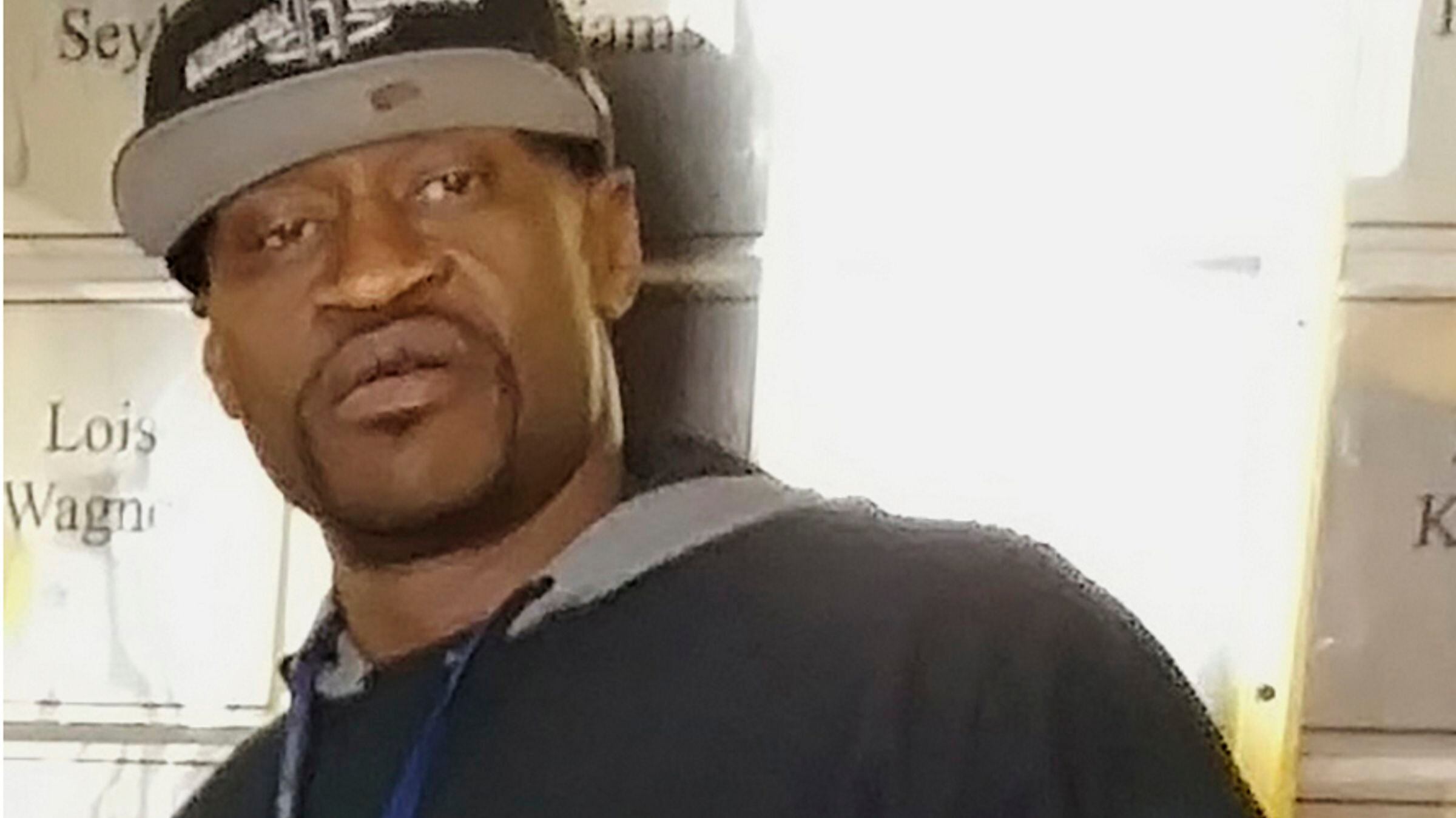
This undated file photo provided by Christopher Harris shows George Floyd. Floyd died May 25, after he was pinned to the pavement by a police officer who put his knee on the handcuffed black man's neck until he stopped breathing. (Christopher Harris via AP, File)
By Steve Karnowski and Amy Forliti
The state of Minnesota filed a human rights complaint Tuesday against the Minneapolis Police Department in the death of George Floyd who died after an officer pressed his knee into Floyd’s neck for minutes, even after he stopped moving.
Gov. Tim Walz and the Minnesota Department of Human Rights announced the filing at a news conference Tuesday afternoon.
“We know that deeply seated issues exist," the governor said. "I know it because we saw the casual nature of the erasing of George Floyd’s life and humanity. We also saw the reaction of the community. They expected nothing to happen because nothing happened so many times before.”
Walz said the investigation into the police department's policies, procedures, and practices over the past 10 years will determine if the force has engaged in systemic discrimination toward people of color, and work out how to stop it. State Human Rights Commissioner Rebecca Lucero will lead the investigation.
Lucero's department will seek an agreement from Minneapolis city leaders and the police department to immediately implement interim measures, followed by long-term measures to address systemic discrimination.
The FBI is also investigating whether police willfully deprived Floyd of his civil rights.
Spokesmen for the police department and the mayor’s office didn’t immediately respond to messages seeking comment. The Minneapolis City Council planned to issue a statement on the investigation later Tuesday.
The department enforces the state’s human rights act, particularly as it applies to discrimination in employment, housing, education, public accommodations, and public services. Mediation is one of its first-choice tools, but the cases it files can lead to fuller investigations and sometimes end up in litigation.
The Minneapolis Police Department has faced decades of allegations of brutality and other discrimination against African Americans and other minorities, even within the department itself. Critics say its culture resists change, despite the elevation of Medaria Arradondo as its first black police chief in 2017.
Arradondo himself was among five black officers who sued the police department in 2007 over alleged discrimination in promotions, pay, and discipline. They said in their lawsuit that the department had a history of tolerating racism and discrimination. The city eventually settled the lawsuit for $740,000.
Earlier Tuesday, an attorney for Floyd's family again decried the official autopsy that found his death was caused by cardiac arrest as police restrained him and compressed his neck. The medical examiner also listed fentanyl intoxication and recent methamphetamine use, but not as the cause of death.
A separate autopsy commissioned for Floyd’s family concluded that he died of asphyxiation due to neck and back compression.
“The cause of death was that he was starving for air. It was lack of oxygen. And so everything else is a red herring to try to throw us off,” family attorney Ben Crump said Tuesday. He said the Hennepin County medical examiner went to great lengths to try to convince the public that what was shown on bystander video didn’t cause Floyd to die.
Minnesota Attorney General Keith Ellison told ABC's “Good Morning America” that prosecutors are working as fast as they can to determine whether more charges will be filed.
After premiering at the 2022 Sundance Festival, Showtime is slated to drop the four-part docuseries "We Need to Talk About Bill Cosby" this Sunday. Director W. Kamau Bell joined Cheddar to discuss the sensitive project and about coming to grips with the reality of who Bill Cosby is following the numerous allegations of sexual assault. Bell said the biggest takeaway from the project is that survivors are not only looking for the 84-year-old comedian to be held accountable, they also want to prevent future assaults. "Maybe the key thing to learn is how do we create a society that is more supportive and accepting particularly women in this case who are survivors of sexual assault," Bell said.
Tax season is now underway, and it's going to be a bit different than in years past. For starters, the deadline is April 18, instead of the typical April 15th, and many Americans will need to account for advance child tax credit payments, the return of the recovery rebate credit, and a special break for charitable contributions, among other things. Brent Weiss, Co-Founder and certified financial planner at Facet Wealth, tells us what we need to know about filing our taxes this year, and when we can expect to receive our returns.
College enrollment has been on a steady decline for years, and the pandemic hasn't helped. Since the start of the pandemic, there has been a 6.6% — more than 1 million students — drop in undergraduate enrollment, according to a recent report. Douglas Belkin, higher education reporter at the Wall Street Journal, joined Cheddar to discuss the long-term implications of students sitting out of college, and what institutions can do about it.
As the midterm election looms, things aren't looking too promising for President Joe Biden. One year into his term as president, Biden is facing one of the lowest approval ratings of any modern-day president, threatening his party's control of the House in 2022. Brian Bennett, Senior White House Correspondent for TIME, joined Cheddar's Opening Bell to discuss.
A full one year into his term as President of The United States, President Biden addressed the nation on Wednesday, facing questions on everything from inflation to chip shortages and covid-19. As Biden enters his second year in office, he is facing one of the lowest approval ratings of any modern-day president. Kate Davidson, Reporter, POLITICO joined Cheddar's Opening Bell to discuss.
San Diego has just implemented a new law that could set the stage for how the country deals with food waste. This new law hopes to make a dent in that. Businesses and groceries stores out in San Diego will need to put a plan in place to *donate edible food rather than toss it straight to the trash. Food Rescue Manager at Feeding San Diego, Kate Garret
The streaming giant Netflix posted its latest earnings from its fourth quarter after the close on Thursday. The company's stock plummeted shortly after the company warned that its rate of subscription additions are slowing down. Senior Reporter at MarketWatch Jon Swartz, joined Cheddar to discuss more.
Earlier this month, New York City experienced one of the deadliest fires it has seen in decades. 17 people lost their lives in the Fordham section of the Bronx. This was due to a faulty space heater which reportedly began on the lower floor of the 120 unit building. Thanks to the F. D. N. Y. And heroic neighbors, many were able to get out in time. Unfortunately, the toxic smoke surged upwards through a safety door. Now, many advocates say negligence by policymakers and landlords has led to the deaths in black and brown communities from fires that honestly could have been preventable. Legislative Director of Citizen Action of New York, Rebecca Garrard, and the Chair of Journalism and New Media Studies at St. Joseph's College Theodore Hamm, joined Cheddar to discuss more.
Revenue operations platform Clari recently raised $225 million in a Series F financing round led by Blackstone, bringing the company's valuation to more than $2.6 billion. Calri says more than 450 companies from around the world use its A.I.-powered platform to make their revenue operations more connected, efficient, and predictable. Clari CEO Andy Byrne joined Cheddar News' Closing Bell to discuss.