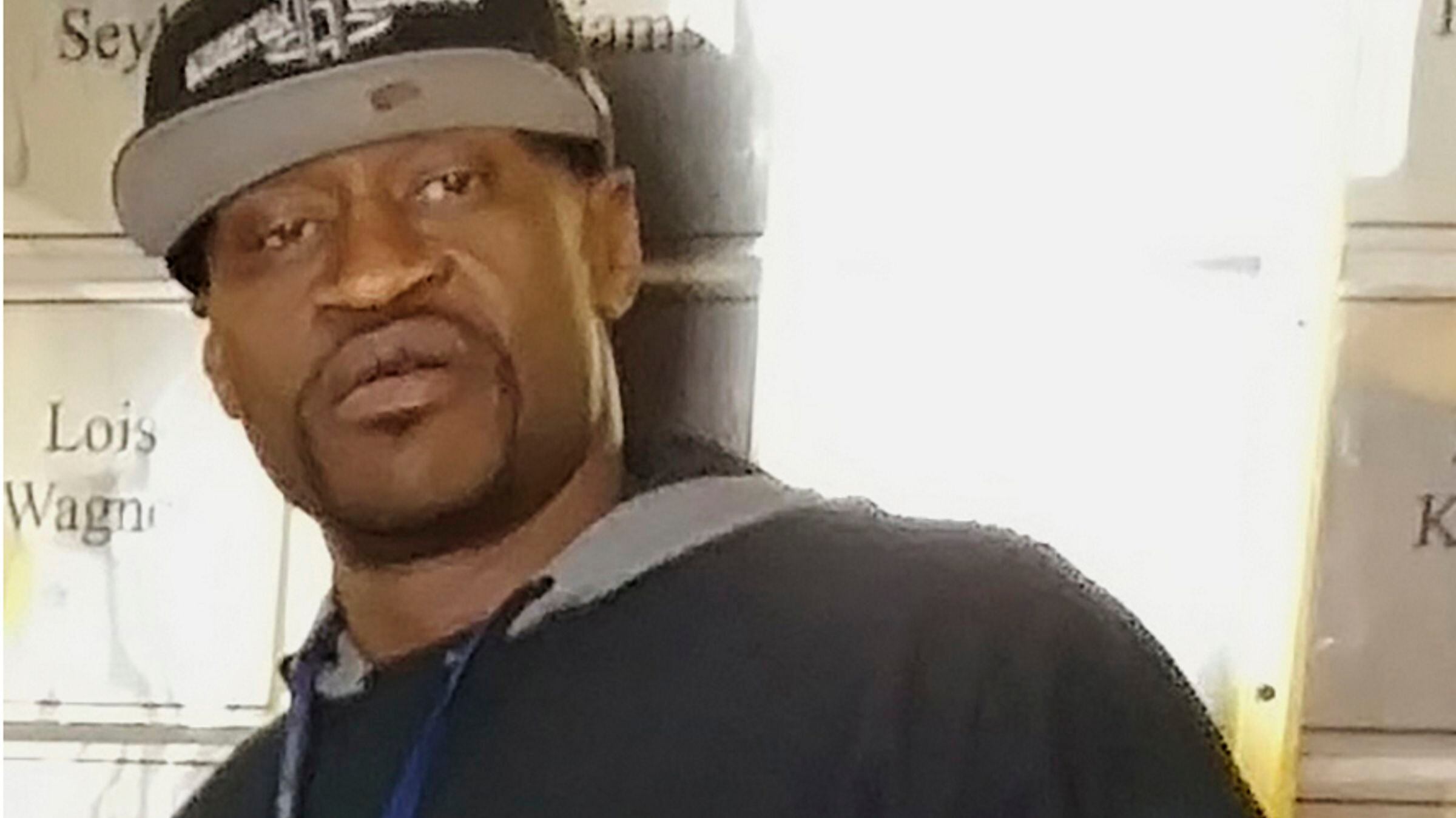
This undated file photo provided by Christopher Harris shows George Floyd. Floyd died May 25, after he was pinned to the pavement by a police officer who put his knee on the handcuffed black man's neck until he stopped breathing. (Christopher Harris via AP, File)
By Steve Karnowski and Amy Forliti
The state of Minnesota filed a human rights complaint Tuesday against the Minneapolis Police Department in the death of George Floyd who died after an officer pressed his knee into Floyd’s neck for minutes, even after he stopped moving.
Gov. Tim Walz and the Minnesota Department of Human Rights announced the filing at a news conference Tuesday afternoon.
“We know that deeply seated issues exist," the governor said. "I know it because we saw the casual nature of the erasing of George Floyd’s life and humanity. We also saw the reaction of the community. They expected nothing to happen because nothing happened so many times before.”
Walz said the investigation into the police department's policies, procedures, and practices over the past 10 years will determine if the force has engaged in systemic discrimination toward people of color, and work out how to stop it. State Human Rights Commissioner Rebecca Lucero will lead the investigation.
Lucero's department will seek an agreement from Minneapolis city leaders and the police department to immediately implement interim measures, followed by long-term measures to address systemic discrimination.
The FBI is also investigating whether police willfully deprived Floyd of his civil rights.
Spokesmen for the police department and the mayor’s office didn’t immediately respond to messages seeking comment. The Minneapolis City Council planned to issue a statement on the investigation later Tuesday.
The department enforces the state’s human rights act, particularly as it applies to discrimination in employment, housing, education, public accommodations, and public services. Mediation is one of its first-choice tools, but the cases it files can lead to fuller investigations and sometimes end up in litigation.
The Minneapolis Police Department has faced decades of allegations of brutality and other discrimination against African Americans and other minorities, even within the department itself. Critics say its culture resists change, despite the elevation of Medaria Arradondo as its first black police chief in 2017.
Arradondo himself was among five black officers who sued the police department in 2007 over alleged discrimination in promotions, pay, and discipline. They said in their lawsuit that the department had a history of tolerating racism and discrimination. The city eventually settled the lawsuit for $740,000.
Earlier Tuesday, an attorney for Floyd's family again decried the official autopsy that found his death was caused by cardiac arrest as police restrained him and compressed his neck. The medical examiner also listed fentanyl intoxication and recent methamphetamine use, but not as the cause of death.
A separate autopsy commissioned for Floyd’s family concluded that he died of asphyxiation due to neck and back compression.
“The cause of death was that he was starving for air. It was lack of oxygen. And so everything else is a red herring to try to throw us off,” family attorney Ben Crump said Tuesday. He said the Hennepin County medical examiner went to great lengths to try to convince the public that what was shown on bystander video didn’t cause Floyd to die.
Minnesota Attorney General Keith Ellison told ABC's “Good Morning America” that prosecutors are working as fast as they can to determine whether more charges will be filed.
Catching you up on the entertainment headlines of the day with Justin Timberlake selling his entire musical catalog to IP management firm Hipgnosis, Ellen DeGeneres airing the final episode of her show, Alanis Morissette making a guest appearance on Olivia Rodrigo’s ‘Sour’ tour, and more.
Cheddar recently teamed up with Amazon Bestseller Jamie Hopkins to explore the term 'Rewirement' while highlighting those who didn't let retirement be the end of their journey... Instead, they used it as a new beginning.
Today, Jamie is speaking with Linda Lombri, a former home economist and marketing executive, and Virginia Cornue, a former cultural anthropologist. For them, retirement didn't mean stopping work--it meant re-inventing themselves and living out their dreams of becoming mystery authors, even though neither had written fiction before. Together, Linda and Virginia began an e-book series, the Sandra Troux Mysteries.
Brightseed Co-Founder Sofia Elizondo breaks down what plant bioactives are, and how they're using the latest technology to study human's biological connections with plants.
On this episode of Cheddar Innovates: Brightseed Co-Founder breaks down what plant bioactives are, and how they're using the latest technology to study human's biological connections with plants; Esper Bionics CEO breaks down how they re creating a mind-controlled bionic hand that guest smarter the more you use it; Cheddar gets a look at Curiosity Stream's 'Capturing A Black Hole In Our Milky Way.'
The number of births in the U.S. increased last year for the first time in seven years. According to a new federal report, about 3.6 million babies were born in 2021, only about a 1% increase from 2020. Ted Rossman, a senior industry analyst for creditcards.com, joined Cheddar's Opening Bell to discuss why the pandemic baby boom was more like a baby bust, and how to raise kids while on a tight budget.
Following the mass shooting at the Robb Elementary School in Uvalde, Texas, that left 19 children and two adults dead, the debate over gun control has been reignited. While studies have shows most Americans agree on some additional regulations, there hasn't been much legislative traction even as gun violence worsens in the country. Brian Lemek, the executive director of Defend The Vote and the former executive director at Brady PAC for gun control, joined Cheddar to discuss reform efforts. "The lawmakers that we have aren't passing these at the federal level," he said. "That's the problem. We have the wrong people in charge."
The crypto industry is still reeling from Terra's recent crash. The company's blockchain was temporarily halted earlier this month after the collapse of its cryptocurrency Luna (LUNA) and its stablecoin TerraUSD (UST), which led to almost $45 billion being wiped from the tokens' market caps within a week. Now, many are left wondering what Terra's struggles mean for the broader crypto market. Reeve Collins, CEO of the NFT platform BLOCKv, joins Cheddar News' Closing Bell from Davos 2022 to discuss.
China's largest ride-hailing company will no longer be listed on the world's largest stock exchange. Didi shareholders voted on Monday to delist from the New York Stock Exchange, less than a year after launching a $4.4 billion IPO with the most significant U.S. share offering by a Chinese company since Alibaba debuted in 2014. Since going public in June of last year, around $70 billion has been wiped from Didi's market value and shares of the company have dropped nearly 90%. Now, Didi is expected to begin preparations to list in Hong Kong. Kevin T. Carter, founder and Chief Investment Officer of EMQQ Global, joins Cheddar News' Closing Bell to discuss.