By Christopher Rugaber
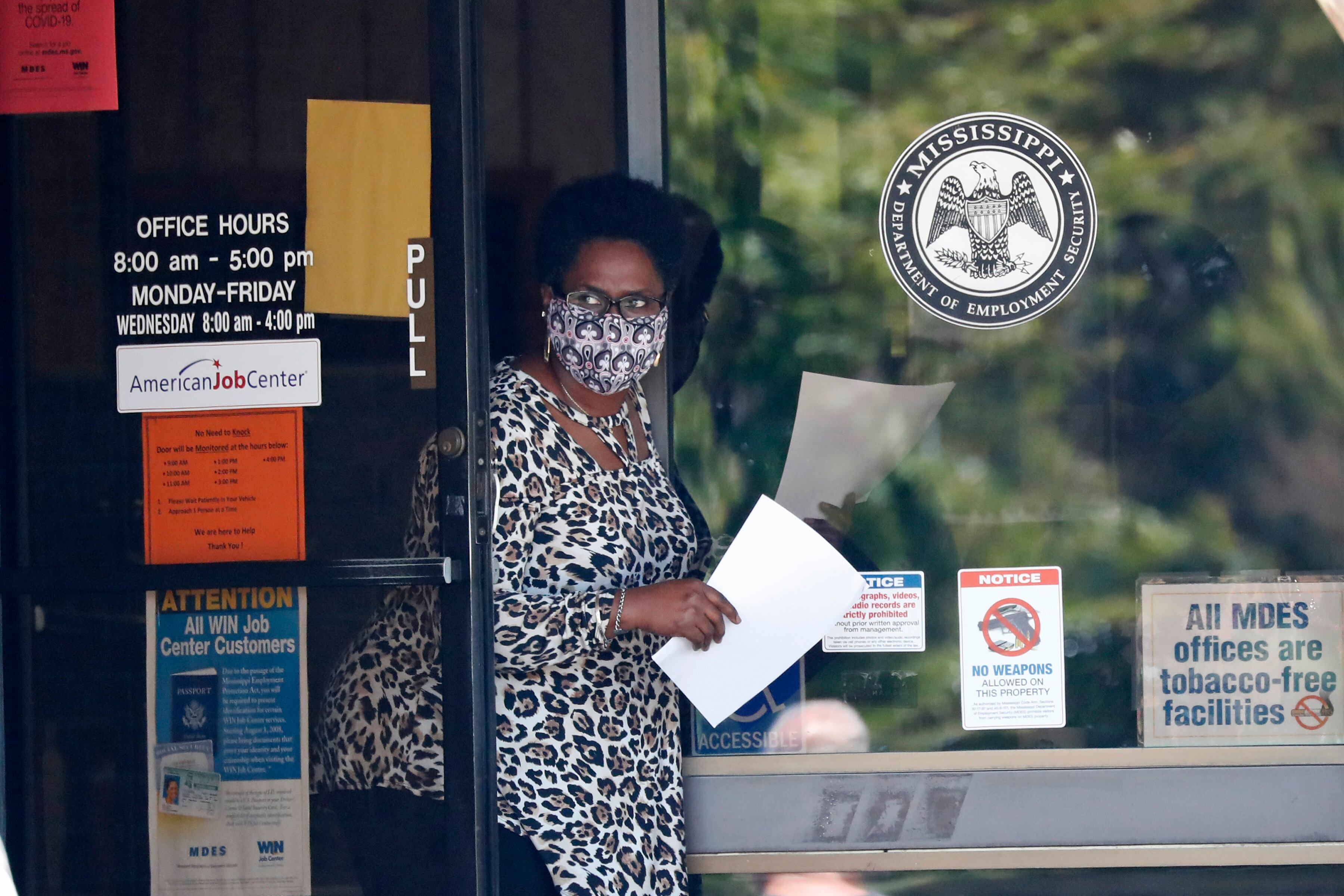
More than 4.4 million laid-off workers applied for U.S. unemployment benefits last week as job cuts escalated across an economy that remains all but shut down, the government said Thursday.
Roughly 26 million people have now filed for jobless aid in the five weeks since the coronavirus outbreak began forcing millions of employers to close their doors. About one in six American workers have lost their jobs in the past five weeks, by far the worst string of layoffs on record. Economists have forecast that the unemployment rate for April could go as high as 20%.
The enormous magnitude of job cuts has plunged the U.S. economy into the worst economic crisis since the Great Depression of the 1930s. Some economists say the nation’s output could shrink by twice the amount that it did during the Great Recession, which ended in 2009.
The painful economic consequences of the virus-related shutdowns have sparked angry protests in several state capitals from crowds insisting that businesses be allowed to reopen. Thursday's report, showing that the pace of layoffs remains immense, could heighten demands for re-openings.
Some governors have begun easing restrictions despite warnings from health authorities that it may be too soon to do so without causing new infections. In Georgia, gyms, hair salons and bowling alleys can reopen Friday. Texas has reopened its state parks.
Yet those scattered re-openings won’t lead to much rehiring, especially if Americans are too wary to leave their homes. Most people say they favor stay-at-home orders, according to a survey by The Associated Press-NORC Center for Public Affairs, and believe it won’t be safe to lift social distancing guidelines anytime soon. And there are likely more layoffs to come from many small businesses that have tried but failed to receive loans from a federal aid program.
The number of people who are receiving unemployment benefits has reached a record 16 million, surpassing a previous high of 12 million set in 2010, just after the 2008-2009 recession ended. This figure reflects people who have managed to navigate the online or telephone application systems in their states, have been approved for benefits and are actually receiving checks.
In some states, many laid-off workers have run into obstacles in trying to file applications for benefits. Among them are millions of freelancers, contractors, gig workers and self-employed people — a category of workers who are now eligible for unemployment benefits for the first time.
“This has been a really devastating shock for a lot of families and small businesses,” said Aaron Sojourner, a labor economist at the University of Minnesota. “It is beyond their control and no fault of their own.”
In Florida, applications for unemployment benefits nearly tripled last week to 505,000, the second-highest total behind much-larger California's 534,000. Florida has had trouble processing many of its applications. Its figure suggests that the state is finally clearing a backlog of filings from jobless workers.
In Michigan, 17% of the state's workforce is now receiving unemployment aid, the largest proportion in the country. It is followed by Rhode Island at 15%, Nevada at 13.7%, and Georgia at 13.6%.
Just about every major industry has absorbed sudden and severe layoffs. Economists at the Federal Reserve estimate that hotels and restaurants have shed the most jobs -- 4 million since Feb. 15. That is nearly one-third of all the employees in that industry.
Construction has shed more than 9% of its jobs. So has a category that includes retail, shipping, and utilities, the Fed estimated. A category that is made up of data processing and online publishing has cut 4.7.
When the government issues the April jobs report on May 8, economists expect it to show breathtaking losses. Economists at JPMorgan are predicting a loss of 25 million jobs. That would be nearly triple the total lost during the entire Great Recession period.
A $2 trillion-plus federal relief package that was signed into law last month made millions of gig workers, contractors and self-employed people newly eligible for unemployment aid. But most states have yet to approve unemployment applications from those workers because they’re still trying to reprogram their systems to do so. As a result, many people who have lost jobs or income aren’t being counted as laid-off because their applications for unemployment aid haven't been processed.
Among them is Sasha McVeigh, a musician in Nashville. Having grown up in England with a love of country music, she spent years flying to Nashville to play gigs until she managed to secure a green card and move permanently two years ago. McVeigh had been working steadily until the city shut down music clubs in mid-March.
Since then, she’s applied for unemployment benefits but so far has received nothing. To make ends meet, she’s applied for some grants available to out-of-work musicians, held some live streaming concerts, and pushed her merchandise sales.
By cutting expenses to a bare minimum, McVeigh said, “I’ve managed to just about keep myself afloat.” But she worries about what will happen over the next few months.