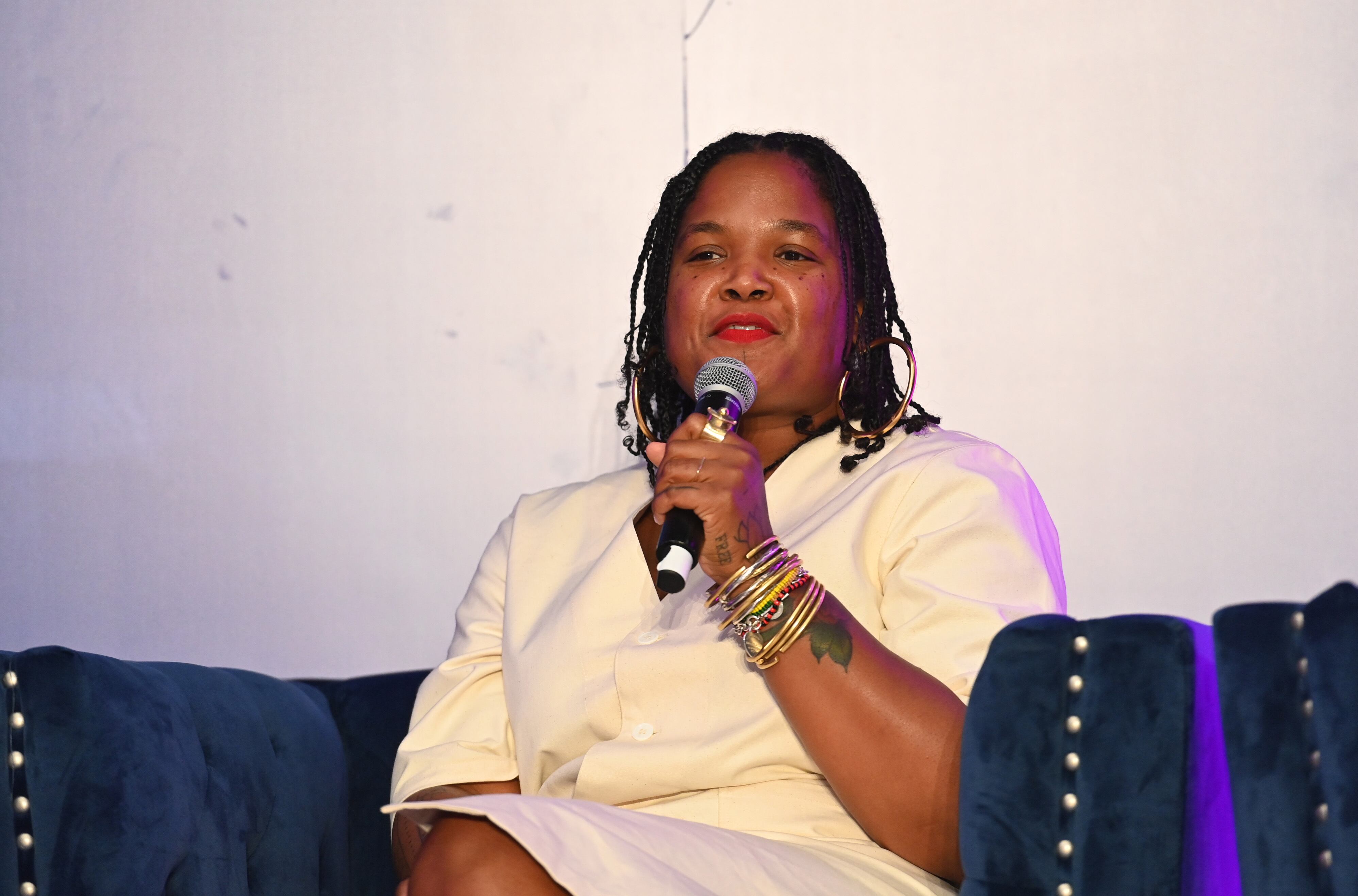
*By Christian Smith* The era of concealing tattoos for job interviews may be coming to an end, as more millennials climb the employment ladder to positions with hiring power. "Baby boomers are holding a little bit less power," Liz Wolfe, managing editor of under-30 focused platform Young Voices, said Wednesday in an interview on Cheddar. "We're basically being judged by members of our own generation group at this point." As of now, millennials make up the largest portion of the workforce ー approximately 35 percent, according to [recent data](http://www.pewresearch.org/fact-tank/2018/04/11/millennials-largest-generation-us-labor-force/) from the Pew Research Center. Millennials are also the most likely generation to have tattoos, with a [2015 Harris poll](https://theharrispoll.com/tattoos-can-take-any-number-of-forms-from-animals-to-quotes-to-cryptic-symbols-and-appear-in-all-sorts-of-spots-on-our-bodies-some-visible-in-everyday-life-others-not-so-much-but-one-thi/?mod=article_inline) finding 47 percent said they have at least one. That's five times the rate of baby boomers, or "Generation X." Whether tattoos affect perception in the workplace is unclear. Professors at the University of Miami and the University of Western Australia recently published a study that found ink neither makes a difference in hiring practices nor determines earning power. That was corroborated by findings published in the journal [Human Relations](http://journals.sagepub.com/doi/10.1177/0018726718782597), which said that, contrary to popular belief, "having a tattoo does not appear to be associated with disadvantage or discrimination in the labor market." On the other hand, Colorado State University and California State University found the opposite ー tattoos and body piercings can in fact lead to employment discrimination. Data aside, Wolfe believes employers should think twice before using body art as a determining factor in hiring decisions ー mostly because it limits their options. "If hiring managers do want to discriminate against tattooed people, they're going to be losing out on a decent portion of the workforce and a decent portion of the highly qualified workforce," she said. For full interview [click here](https://cheddar.com/videos/are-tattoos-holding-millennials-back-in-the-workplace).