This August 2020 photo provided by Dr. Se-Jin Lee shows a normal mouse and a “twice-muscled” mouse developed at the The Jackson Laboratory of the University of Connecticut School of Medicine in Farmington, Conn. Findings published on Monday, Sept. 7, 2020, show that muscle-bound mice, similar to the one pictured, held on to their bodybuilder-type physiques during a one month space mission. (Dr. Se-Jin Lee/University of Connecticut School of Medicine via AP)
By Marcia Dunn
Bulked-up, mutant "mighty mice" held onto their muscle during a monthlong stay at the International Space Station, returning to Earth with ripped bodybuilder physiques, scientists reported Monday.
The findings hold promise for preventing muscle and bone loss in astronauts on prolonged space trips like Mars missions, as well as people on Earth who are confined to a bed or need wheelchairs.
A research team led by Dr. Se-Jin Lee of the Jackson Laboratory in Connecticut sent 40 young female black mice to the space station in December, launching aboard a SpaceX rocket.
In a paper published in the Proceedings of the National Academy of Sciences, Lee said the 24 regular untreated mice lost considerable muscle and bone mass in weightlessness as expected — up to 18%.
But the eight genetically engineered "mighty mice" launched with double the muscle maintained their bulk. Their muscles appeared to be comparable to similar "mighty mice" that stayed behind at NASA's Kennedy Space Center.
In addition, eight normal mice that received "mighty mouse" treatment in space returned to Earth with dramatically bigger muscles. The treatment involves blocking a pair of proteins that typically limit muscle mass.
A SpaceX capsule brought all 40 mice back in good condition, parachuting into the Pacific off the California coast in January. Some of the ordinary mice were injected with the "mighty mice" drug after returning and quickly built up more muscle than their untreated companions, Lee said.
The scientists completed the experiment just as the coronavirus was hitting the U.S.
"The only silver lining of COVID is that we had time to write it up very intensively" and submit the results for publication, said Dr. Emily Germain-Lee of Connecticut Children's Medical Center, Lee's wife who also took part in the study. Both are affiliated with the University of Connecticut.
While encouraged by their findings, the couple said much more work needs to be done before testing the drug on people to build up muscle and bone, without serious side effects.
"We're years away. But that's how everything is when you go from mouse to human studies," Germain-Lee said.
Lee said the experiment pointed out other molecules and signaling pathways worth investigating — "an embarrassment of riches ... so many things we'd like to pursue." His next step: possibly sending more "mighty mice" to the space station for an even longer stay.
Three NASA astronauts looked after the space mice, performing body scans and injections: Christina Koch and Jessica Meir, who performed the first all-female spacewalk last fall, and Andrew Morgan. They are listed as co-authors.
___
The Associated Press Health and Science Department receives support from the Howard Hughes Medical Institute's Department of Science Education. The AP is solely responsible for all content.
A powerful winter storm hit the Northeast over the weekend leaving 100,000 New Yorkers in the dark as well as snowfall up to 30.9 inches in parts of Massachusetts. The nor'easter hit with blizzard conditions of wind speed and poor visibility.
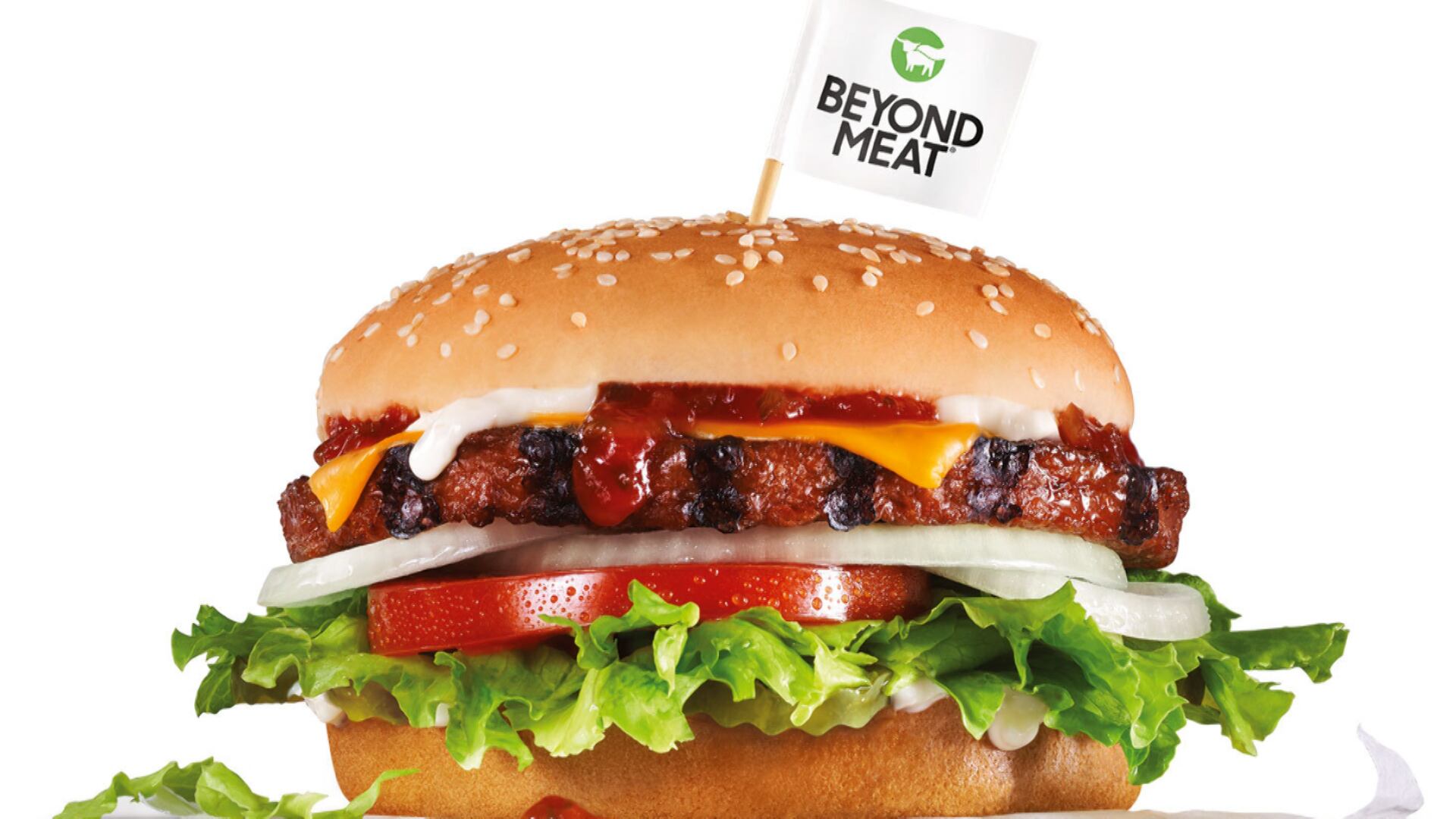
Plant-based meat giant Beyond Meat's reign over the fast food world continues, as McDonald's announced that it is expanding its test of Beyond's McPlant burger, to nearly 600 restaurants, an increase from the eight that it's been testing in since November. This comes less than two weeks after Beyond Fried Chicken made its nationwide debut at KFC restaurants, the first time that plant based chicken has been widely distributed in a fast food capacity. Arun Sundaram, Senior Equity Analyst at CFRA Research explains why these latest collaborations may be proof that Beyond Meat products could slowly be becoming an unlikely staple in the fast food and chain restaurant world as consumers opt for more healthy food options.
BD Veritor is a variation of the at-home COVID test that uses a smartphone to interpret the results. The test is taken via a nose swab test strip that is then scanned by your phone’s camera with the result clearly displayed as positive or negative. James Walker, vice president of integrated diagnostics USA for BD, joined Cheddar to discuss how the test hopefully takes the "guesswork out of testing." Walker also went into what BD is doing to deal with the surging demand for at-home tests amid the omicron spread. "While we don't disclose how much we produce, we have capacity to manufacture up to 12 million rapid antigen tests per month and are delivering on our commitments to distributors and retailers," he said.
On this episode of Cheddar Innovates: Sidechef CEO breaks down how it's building a platform to make recipe shopping easy; Luum CEO explains the process of having a robot put on eyelash extensions; A look at Curiosity Stream's new original series, 'Evolve.'
Moderna launched a clinical trial of a COVID-19 booster shot specifically targeting the omicron variant. The first participant has already received a dose, and Moderna expects to enroll about 600 adults total, split between two groups. In the first group, participants will have previously received two doses of the Moderna vaccine, and in the second, participants will have received its booster. Dr. Paul Burton, chief medical officer at Moderna, joined Cheddar’s Opening Bell to discuss the trial, yearly boosters, and what lies ahead for the company.
With the 2022 Beijing Winter Olympics right around the corner, experts are warning that climate change is threatening not only the event but also the future of snow sports. Despite being the world's top polluter, China is hoping to use the event to demonstrate the country's commitment to fighting climate change, and pledging to host a "low carbon" games. Xubin Zeng, professor of hydrology and atmospheric sciences at the University of Arizona, joins Cheddar News.