Microsoft is reportedly considering a $10 billion investment in San Francisco-based startup OpenAI, which owns ChatGPT.
The artificial intelligence-based chatbot became available to the public in November and quickly garnered both praise and criticism for its ability to churn out reams of human-sounding text based on a few simple prompts.
The chatbot is so convincing that schools across the United States are banning it from classrooms to prevent students from using it to cheat on assignments, and venture capital firms are looking into ways to use the tech in their daily operations.
Microsoft is apparently a fan of the technology. The company invested $1 billion worth of cash and cloud credits into OpenAI in 2019, and now it could be looking to increase its stake. So what is it exactly, and why is one of the biggest tech companies in the world interested?
ChatGPT uses what's called a "large language model" to read and translate text from a database and then predict future words in a sequence. This is similar to how Google Docs is able to predict the end of a sentence that you're writing, but ChatGPT is writing the entire sentence. The end result is something that sounds a lot like intelligent speech, but it's actually just a series of probabilities rapidly generated and then spit out for your reading pleasure (or displeasure).
While ChatGPT can approximate human speech, oftentimes the actual content doesn't make sense. Just scan social media for examples of how silly ChatGPT's output can be. As one critic recently argued in The Atlantic, it currently functions more as a toy than a tool.
OpenAI CEO Sam Altman also recognized that the technology has serious limits.
"ChatGPT is incredibly limited, but good enough at some things to create a misleading impression of greatness," he tweeted in December. "It's a mistake to be relying on it for anything important right now."
That said, Altman is banking on continual improvements, which could explain why Microsoft is interested.
High-speed connectivity solutions provider Credo went public on the Nasdaq on Thursday, raising $200 million in its IPO. CEO Bill Brennan, joined Cheddar to discuss its entry into the capital markets and the next chapter for the company. "We're going to be focused on what we have been focused on, which is really creating, creating innovative connectivity solutions that really pushed the edge on efficient power as well as very effective cost," he said.
BD Veritor is a variation of the at-home COVID test that uses a smartphone to interpret the results. The test is taken via a nose swab test strip that is then scanned by your phone’s camera with the result clearly displayed as positive or negative. James Walker, vice president of integrated diagnostics USA for BD, joined Cheddar to discuss how the test hopefully takes the "guesswork out of testing." Walker also went into what BD is doing to deal with the surging demand for at-home tests amid the omicron spread. "While we don't disclose how much we produce, we have capacity to manufacture up to 12 million rapid antigen tests per month and are delivering on our commitments to distributors and retailers," he said.
Low-code app development platform Crowdbotics raised $22 million in a Series A funding round led by Jackson Square Ventures. Crowdbotics has helped more than 14,000 customers launch apps without having to learn how to code. The company can offer a team of expert developers to help companies launch custom apps, or provide the means for companies to develop apps themselves. Crowdbotics CEO Anand Kulkarni joined Cheddar News' Closing Bell to discuss.
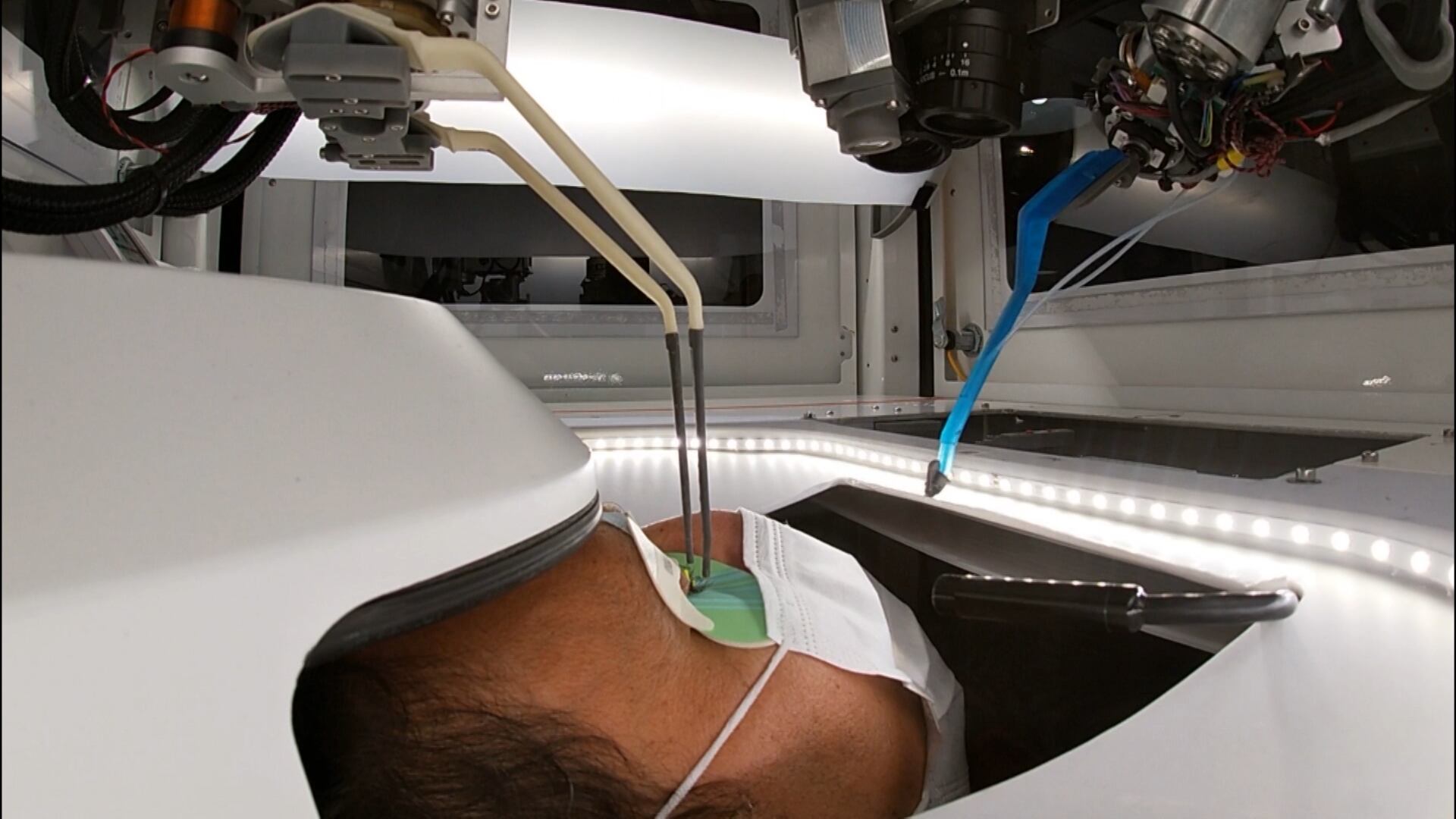
Nathan Harding, CEO of Luum, joins Cheddar Innovates to discuss the process of having a robot put on eyelash extensions, and how automation is making its way into the beauty industry
Kevin Yu, Founder and CEO of Sidechef, joins Cheddar Innovates to discuss how it's building a platform to make recipe shopping easy, and how its features help you discover new recipes with the same ingredients to fight the massive problem of food waste.
On this episode of Cheddar Innovates: Sidechef CEO breaks down how it's building a platform to make recipe shopping easy; Luum CEO explains the process of having a robot put on eyelash extensions; A look at Curiosity Stream's new original series, 'Evolve.'