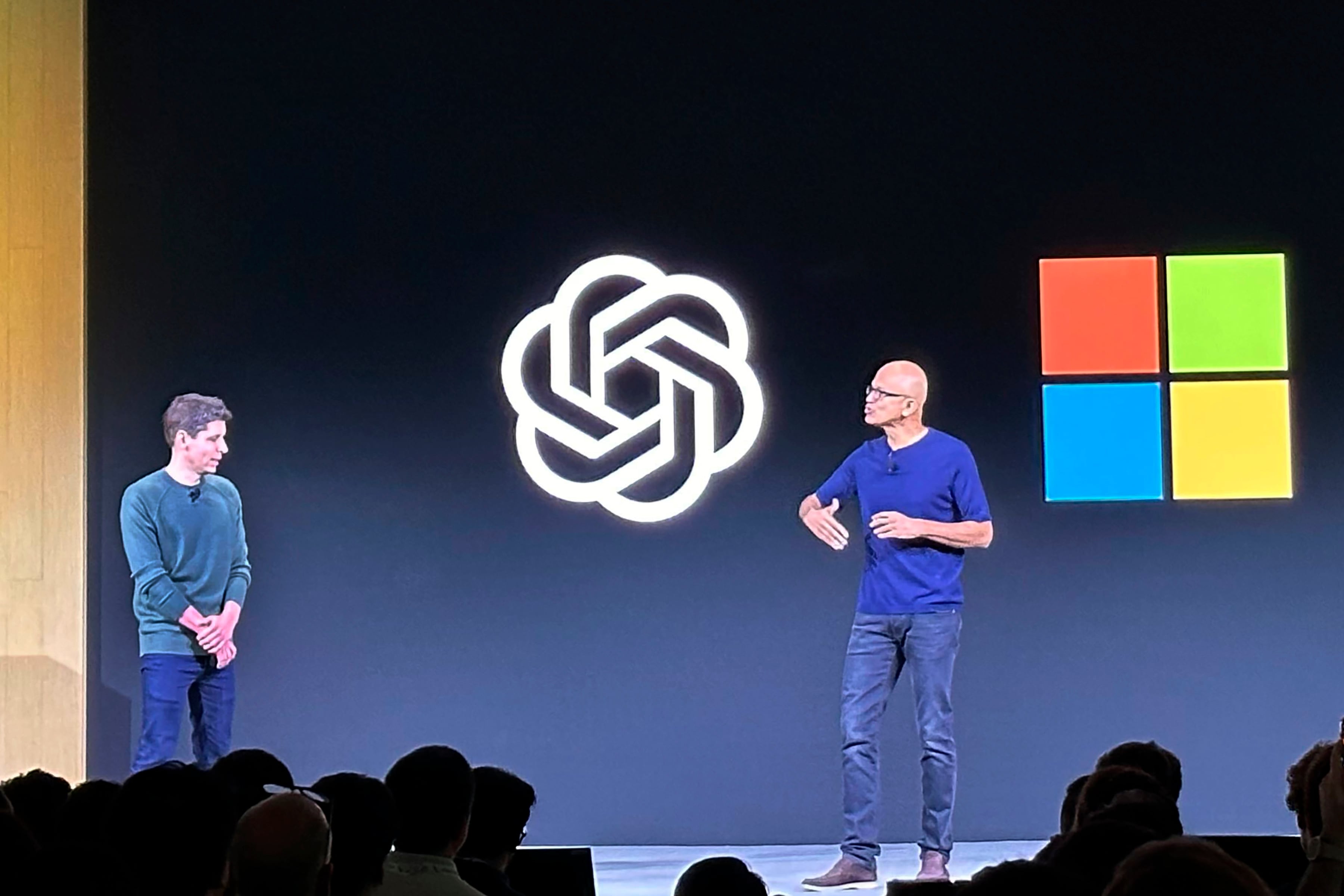
Microsoft has relinquished its seat on the board of OpenAI, saying its participation is no longer needed because the ChatGPT maker has improved its governance since being roiled by boardroom chaos last year.
In a Tuesday letter, Microsoft confirmed it was resigning, “effective immediately,” from its role as an observer on the artificial intelligence company's board.
“We appreciate the support shown by OpenAI leadership and the OpenAI board as we made this decision," the letter said.
The surprise departure comes amid intensifying scrutiny from antitrust regulators of the powerful AI partnership. Microsoft has reportedly invested $13 billion in OpenAI.
European Union regulators said last month that they would take a fresh look at the partnership under the 27-nation bloc's antitrust rules, while the U.S. Federal Trade Commission and Britain's competition watchdog have also been examining the pact.
Microsoft took the board seat following a power struggle in which OpenAI CEO Sam Altman was fired, then quickly reinstated, while the board members behind the ouster were pushed out.
"Over the past eight months we have witnessed significant progress by the newly formed board and are confident in the company’s direction," Microsoft said in its letter. “Given all of this we no longer believe our limited role as an observer is necessary.”
With Microsoft's departure, OpenAI will no longer have observer seats on its board.
“We are grateful to Microsoft for voicing confidence in the Board and the direction of the company, and we look forward to continuing our successful partnership," OpenAI said in a statement.
It's not hard to conclude that Microsoft's decision to ditch the board seat was heavily influenced by rising scrutiny of big technology companies and their links with AI startups, said Alex Haffner, a competition partner at U.K. law firm Fladgate.
“It is clear that regulators are very much focused on the complex web of inter-relationships that Big Tech has created with AI providers, hence the need for Microsoft and others to carefully consider how they structure these arrangements going forward,” he said.
OpenAI said it would take a new approach to “informing and engaging key strategic partners” such as Microsoft and Apple and investors such as Thrive Capital and Khosla Ventures, with regular meetings to update stakeholders on progress and ensure stronger collaboration on safety and security.