Microsoft Explores New Ways to Pay, Fighting Off Amazon In-Store and In the Cloud
*By Alisha Haridasani*
Microsoft is reportedly exploring how to automate cashless check-out at brick-and-mortar retailers in a bid to challenge Amazon not just in-store but in the cloud.
The technology would track what shoppers add to their carts and bill them automatically after they walk out of a store, according to a [Reuters](https://www.reuters.com/article/us-microsoft-store-exclusive/exclusive-microsoft-takes-aim-at-amazon-with-push-for-checkout-free-retail-idUSKBN1JA0D5) report on Microsoft's plans. The tech giant is in talks with Walmart and other retailers about potential collaborations, the report said, citing people familiar with the effort.
Microsoft's effort to develop a new payment model comes almost five months after Amazon opened its first [Amazon Go](https://www.nytimes.com/2018/01/21/technology/inside-amazon-go-a-store-of-the-future.html) store in Seattle, where cameras and sensors track what shoppers pick up and then bills their online account, eliminating cashiers and the long lines that snake around them.
Microsoft is exploring a number of ways it can make this payment system work, including installing cameras in shopping carts instead of on shelves, as Amazon does, said Jeffrey Dastin, the Reuters technology correspondent who first reported the story.
"The reason that it has looked into this is, of course, that some of the technology that Amazon Go has introduced is a bit expensive," said Dastin. "This is a reaction to retailers not being so sold on the technology that Amazon has put forth and maybe this is a go-to-market strategy that's faster."
Amazon’s new technology, and the potential to put it to use in its Whole Foods stores ー the online retailer acquired the grocery chain last year ー has scared other grocers who fear the combination of online disruption of retail and in-store convenience will further eat into their business.
The challenge has prompted other players, including Walmart, to innovate their [online](https://cheddar.com/videos/jetblacks-competitive-advantage-time-savings-and-a-human-touch) and [in-store](https://cheddar.com/videos/walmart-upgrades-digital-services-to-boost-in-store-experiences) operations.
Microsoft's decision to develop this technology is driven by its ambitions to boost its cloud business, said Dastin. "What Microsoft essentially is doing here is becoming more than just an IT provider and becoming a strategic ally to retailers," he said.
The cameras and algorithms associated with the technology would ultimately use Microsoft's cloud business, but it would also provide retailers with data on consumers that can help them stay competitive, said Dastin.
"This is securing cloud revenue growth and at the same time securing long-standing relationships with a major vertical."
For the full interview, [click here](https://cheddar.com/videos/microsoft-developing-cashierless-tech).
Private equity firms in 2021 spent $401.71 billion in U.S. tech investments — doubling 2020's level of $196.34 billion. As tech becomes increasingly interwoven into our lives amid the pandemic, investors grow bullish on the sector, especially software-as-a-service companies. How will 2022 stack up to 2021, and is there potential for parts of the tech sector to sink this year? John Jannarone, Editor in Chief at IPO-Edge, joins Cheddar News' Closing Bell to discuss 2021's record year of deals, how potential interest rate hikes will impact tech investments in 2022, the fastest-growing IPOs, and more.
Bed Bath & Beyond delivered disappointing fiscal third-quarter results for 2022. Shares initially dove more than 9% in premarket trading on the news but finished the day up nearly 8%. Bed Bath & Beyond has been a meme-stock target for online investors in the past -- so was meme-stock mania a factor in the recent stock movement for the company? Jaime Rogozinski, the founder of the subreddit WallStreetBets, joins Cheddar News' Closing Bell for more, as his forum helped spark the meme stock phenomena. He also discussed some decentralized finance services and trends for the retail investor to watch for in 2022.
Digital medical care provider Pear Therapeutics rang the closing bell on the Nasdaq Friday and President and CEO Dr. Corey McCann, joined Cheddar to talk about how the company plans to grow the business of software-based therapeutics and how the first FDA authorized prescription digital therapeutics company will go about treating illnesses like insomnia and addiction. "These really are pieces of software. In many cases, they're apps and in the cases of our addiction products, these are based on something called cognitive behavioral therapy or CBT," he said. "These products change the patient's brain circuitry to help them be abstinent, to help them stay in treatment, and that's exactly what we see in randomized clinical trials and that's what we see in the real world." He also addressed the ongoing mental health crises brought on by the pandemic. **copy updated to remove IPO information as Pear Therapeutics went public in December**
Gamestop shares were up on The Wall Street Journal report that the video game retail company plans to enter the NFT and crypto space. Adam Hollander, the founder of Hungry Wolves NFT, joined Cheddar to break down how it could be a lifeline for the struggling meme stock darling. "They're not resigning themselves to becoming the next Blockbuster story, and so while people may not be buying as many video games in a retail environment anymore, NFTs, in particular, people are starting to expect more gaming utility on the backend — at least for a variety of projects — and I personally think its a very smart move for them to do this," Hollander told Cheddar.
On Saturday, New York will join neighboring New Jersey and Connecticut in authorizing mobile sports betting. Matt Kalish, president and co-founder of Draftkings North America, joined Cheddar to talk about the landmark change that is estimated to rake in $500 million in annual tax revenue on a potential billion-dollar market. Kalish also addressed the possibility that legalized sports betting in the Empire State could cannibalize his company's revenues in the bordering states. "It's pretty inconvenient, you know, to go across the border to make a bet. And people were doing it, but I think it really stifled a lot of the opportunity," he said. "So while there's some of that going on, I think really a tremendous amount, like a giant percent, of New York will be very incremental."
Ben Armstrong, founder of Bitboy Crypto, joins Cheddar News to discuss Bitcoin's downward trend and what's next for crypto after protests in Kazakhstan cause crypto miners to shut down.
Jake Carbone, senior data analyst at InfluenceMap joins Cheddar News to talk about a new report by The Guardian and InfluenceMap that reveals how companies are creating fossil fuel ads designed to look like Google search results.
Satoshi Island is looking to become the world's first blockchain-driven economy. James Law, the chief architect of the planned private community, joined Cheddar to discuss the vision for the potential crypto capital of the world and how it will be brought to life. For people looking to live on the island, Law said they will be able to purchase land and homes and even design their own dwellings both in real life and via the metaverse. "Satoshi Island has already been digitally scanned. We have an absolute digital twin already in our metaverse," he said. Citizenship applications are expected to be launched via NFTs, he told Cheddar.
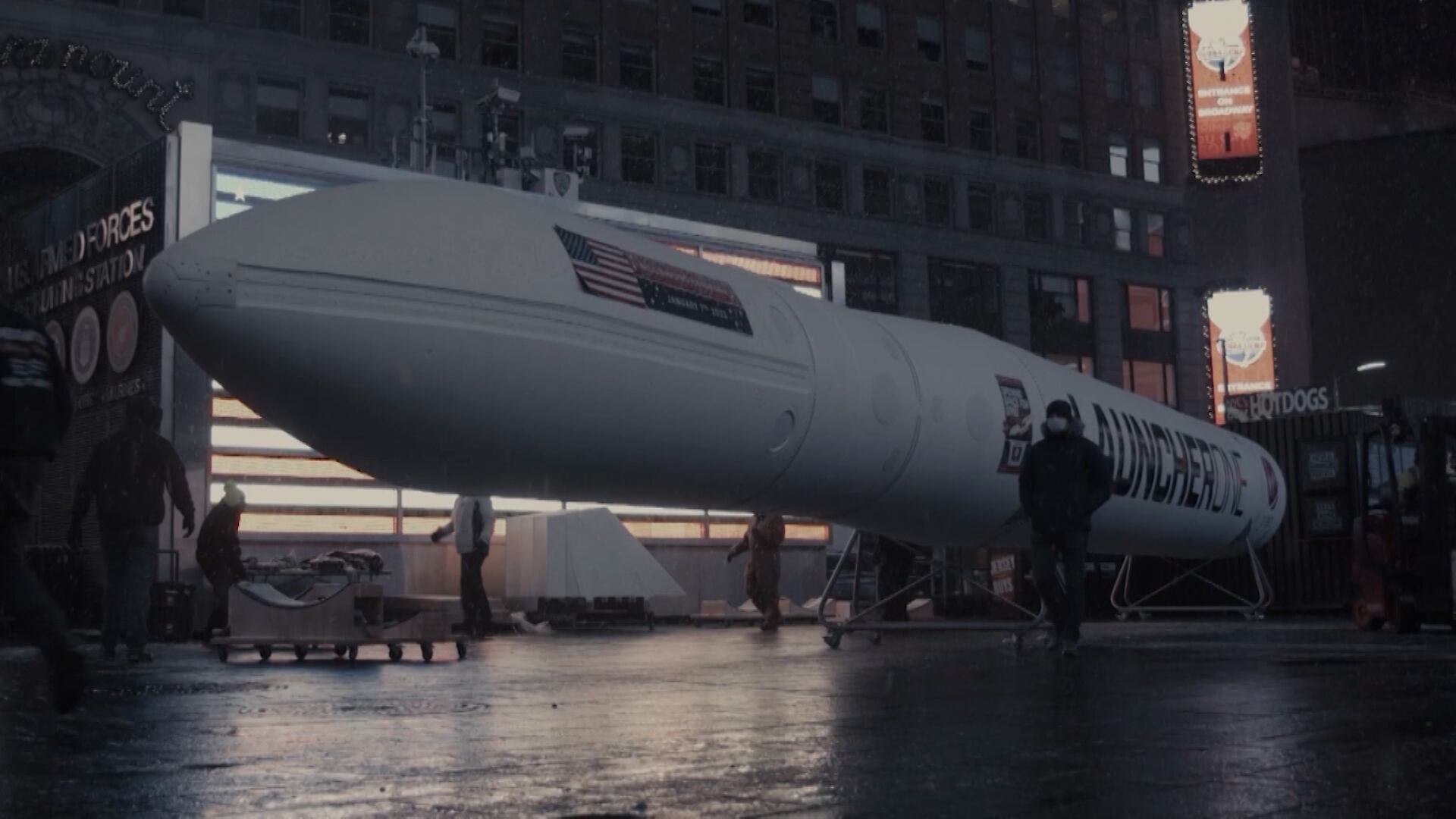
Satellite launch service Virgin Orbit has gone public on the Nasdaq via a SPAC merger with NextGen Acquisitions with a valuation of about $3.2 billion. CEO Dan Hart joined Cheddar's "Between Bells" from in front of his LauncherOne rocket in New York City's Times Square to talk about what's next after the IPO, an upcoming "Above the Clouds" mission to deliver commercial and national security payloads, and the benefits of their rockets being launched from commercial 747 aircraft. "We can launch anywhere in the world," he said. "There are almost 80 space agencies across the world, for instance, and about 10 of them have space launch. We can give them a space flight capability overnight by taking a runway and turning it into a spaceport."
Tech and entertainment giant Sony appears to be getting serious about automaking. An electric concept SUV — the Vision S-02 — was unveiled at CES 2022 and is slated to be produced by a new subdivision, Sony Mobility. This comes after the company revealed the Vision S concept Sedan at CES 2020.