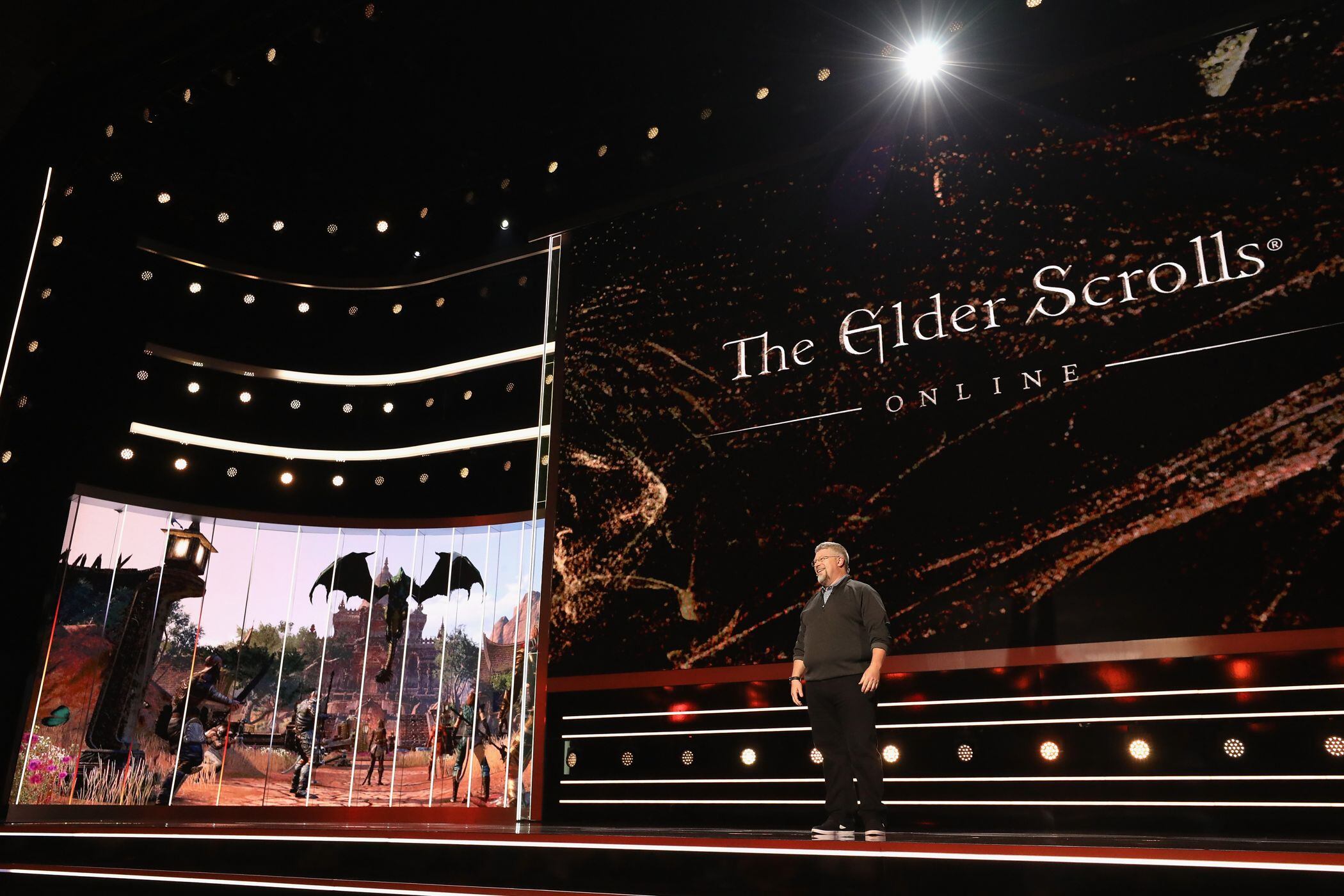
Matt Firor, President at ZeniMax Online Studios LLC, speaks about 'The Elder Scrolls Online, Elsweyr' during the Bethesda E3 Showcase at The Shrine Auditorium on June 09, 2019 in Los Angeles, California. (Photo by Christian Petersen/Getty Images)
Microsoft is buying the company behind popular video games The Elder Scrolls, Doom, and Fallout.
The software giant said Monday that it is paying $7.5 billion for ZeniMax Media, the parent company of video game publisher Bethesda Softworks.
Microsoft said it is buying Bethesda in part to beef up its Xbox Game Pass game subscription service, which it says has over 15 million subscribers.
Bethesda games, such as Starfield, which is currently in development, will launch on Xbox Game Pass the same day they launch on Xbox or computers, Microsoft said.
Microsoft has new consoles debuting on Nov. 10: the Xbox Series X and the stripped down Series S version. It will be competing against Sony's new PlayStation 5 console.
R.W. Baird analyst Colin Sebastian said the deal is part of a wider industry trend of consolidation. Microsoft already owns studios that make popular games including Minecraft and the Halo franchise.
"We believe the deal checks a lot of boxes for Microsoft, such as strengthening the Xbox/Games division product portfolio as competition increases, boosting the profile of Xbox subscription services, and providing more content for the company’s cloud gaming initiatives," he wrote in an investor note.
Microsoft Corp., which is based in Redmond, Washington, expects the deal to close in the second half of fiscal 2021.
Americans are still spending, but rising anxiety over jobs, AI, housing and tariffs tells a different story. Kearney Consumer Institute’s Katie Thomas explains.
Disney is back in focus after Q3 earnings. Investors are watching streaming profits, theme parks and ESPN as the entertainment giant looks for its next catalyst
Healthcare policy is shifting fast, raising questions about drug prices, Medicare and access. Leap Health CEO Hani Elias explains what patients need to know.
The U.S. job market is cooling as hiring slows and employers turn cautious. LinkedIn’s Kory Kantenga breaks down jobs, wages, spending and AI’s impact.
AI is entering a new phase as enterprises move beyond experimentation and demand measurable returns. Appian CEO Matt Calkins discusses what comes next.
Commercial Metals CEO Peter Matt reveals how a $2.5B acquisition spree is transforming the 111-year-old steelmaker into a construction solutions powerhouse.
Angelo Zino, Senior Vice President and Technology Equity Research Analyst at CFRA, breaks down Big Tech earnings, AI spending, and what's next for the Mag 7.