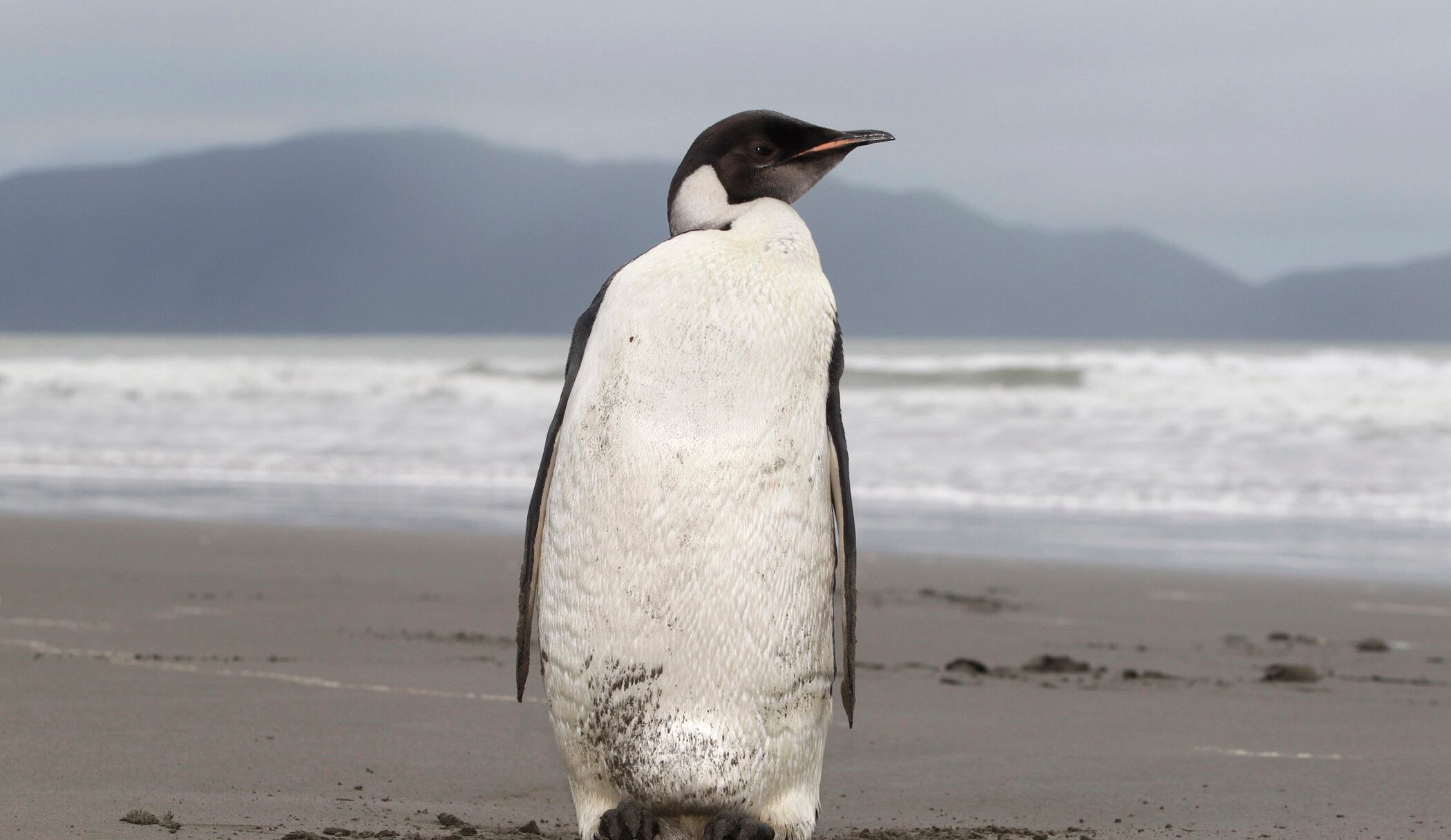
In this June 21, 2011 file photo, an Emperor penguin stands on Peka Peka Beach of the Kapiti Coast in New Zealand. With climate change threatening the sea ice habitat of Emperor penguins, the U.S. Fish and Wildlife Service on Tuesday, Aug. 3, 2021, announced a proposal to list the species as threatened under the Endangered Species Act. (Mark Mitchell/New Zealand Herald via AP, File)
By Christina Larson
With climate change threatening the sea ice habitat of Emperor penguins, the U.S. Fish and Wildlife Service on Tuesday announced a proposal to list the species as threatened under the Endangered Species Act.
“The lifecycle of Emperor penguins is tied to having stable sea ice, which they need to breed, to feed and to molt,” said Stephanie Jenouvrier, a penguin ecologist at the Woods Hole Oceanographic Institution.
Research published Tuesday in the journal Global Change Biology found that by 2100, 98% of Emperor penguin colonies may be pushed to the brink of extinction, if no changes are made to current rates of carbon emissions and climate change.
Around 70% of colonies will be in danger sooner, by 2050.
The new study looked at overall warming trends and the increasing likelihood of extreme weather fluctuations due to global warming. And it noted that extremely low levels of sea ice in 2016 led to a massive breeding failure of an Emperor penguin colony in Antarctica’s Halley Bay.
That year, seasonal sea ice broke up before penguin chicks had time to develop waterproof adult feathers, and about 10,000 baby birds drowned, Jenouvrier said. The colony did not recover afterward.
Emperor penguins breed exclusively in Antarctica during winter. They endure temperatures of minus 40 degrees Fahrenheit (minus 40 degrees Celsius) and wind speeds approaching 90 miles (144 kilometers) per hour by huddling together in groups of several thousand birds. But they can't survive without sufficient sea ice.
“These penguins are hard hit by the climate crisis, and the U.S. government is finally recognizing that threat,” said Sarah Uhlemann, international program director at the nonprofit Center for Biological Diversity.
The U.S. government has previously listed species outside the country as threatened, including the polar bear, which lives in Arctic regions and is also imperiled by climate change and sea ice loss.
Emperor penguins — the world's largest penguins — currently number about 270,000 to 280,000 breeding pairs, or 625,000 to 650,000 individuals. The proposed listing will be published in the Federal Register on Wednesday to open to a 60-day public comment period.
Listing the bird provides protections such as prohibition against importing them for commercial purposes. Potential impacts on penguins must also be evaluated by U.S. marine fisheries currently operating in Antarctica.
“Climate change, a priority challenge for this Administration, impacts a variety of species throughout the world," said Martha Williams, principal deputy director of the wildlife service. "The decisions made by policymakers today and during the next few decades will determine the fate of the Emperor penguin.”
2021 has been a year filled with extreme weather conditions. Hundreds of thousands of people recently saw the effects of massive tornados that swept across six states. Now, experts say climate change could have played a major role. Jennifer Marlon, research scientist and lecturer at the Yale School of the Environment, joins Cheddar News to discuss.
Anthony Tall, sports agent and president of Miracle Sports Agency, joins Cheddar News to talk about the challenges professional sports leagues are facing amid a surge in coronavirus cases across the U.S.
Extreme weather hit all of us in 2021. Deadly heat hit parts of the U.S. that normally don't even need air conditioning. More than 52,000 wildfires broke out, a terrifying example of what can happen when extreme heat mixes with drought. Hurricane Ida was so powerful it actually briefly reversed the flow of the Mississippi River. Cheddar News did a deep dive into this year's unbelievable weather and how climate change may have impacted it.
With the New Year just around the corner, many people will be making new health and fitness goals. However, after the initial January push, it's easy to drop your resolutions and go back to your old habits. Joan Ifland, CEO of Food Addiction Reset, discusses her best tips for following through with New Year's Resolutions.
Carlo and Baker preview President Biden's address to the nation as Omicron becomes the new dominant Covid strain. Plus, Trump gets booed for getting his booster and the White House gets a new puppy.
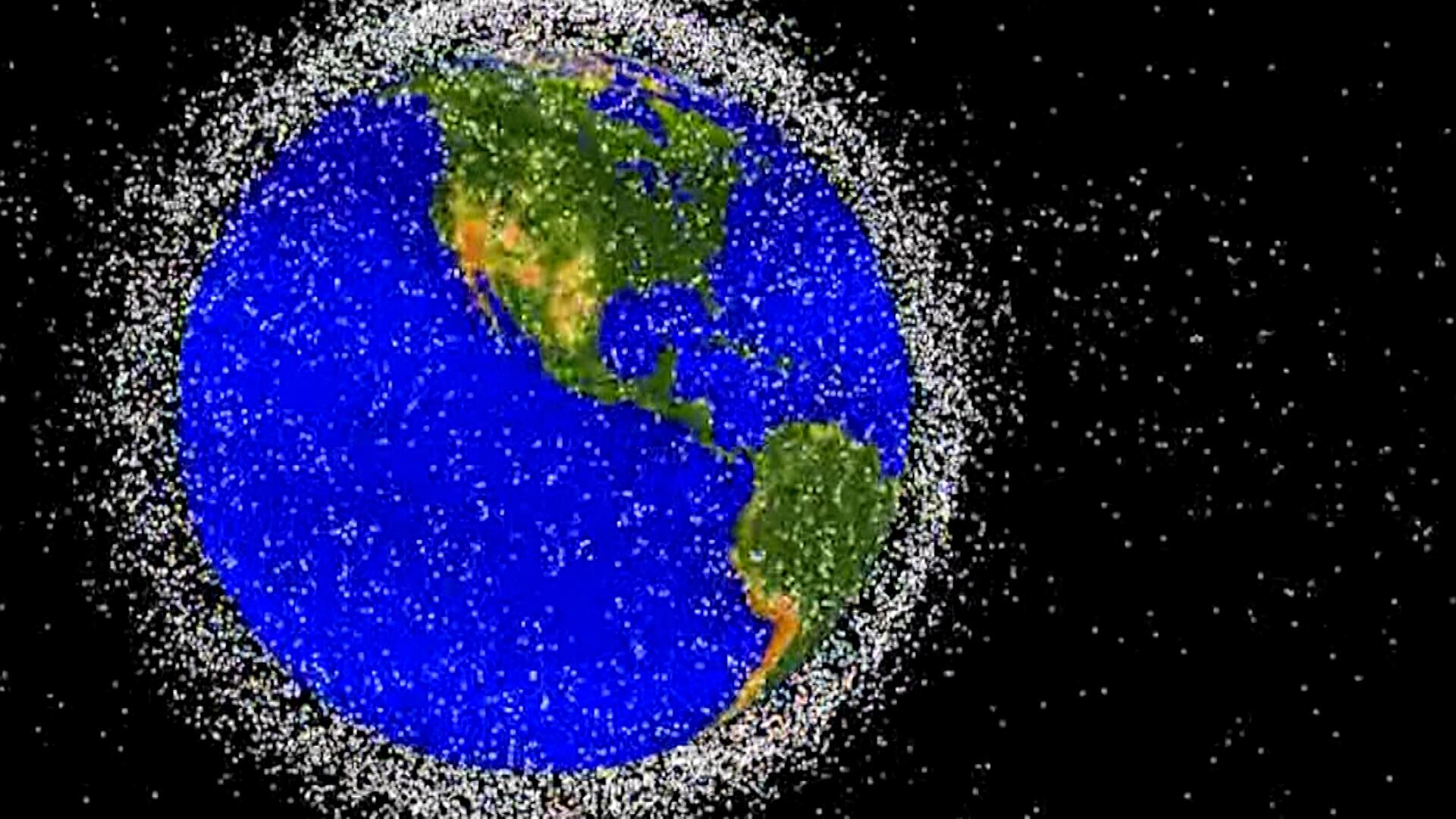
Alinda Mashiku, Conjunction Analysis and Risk Assessment Deputy Manager at the NASA Goddard Space Flight Center, joins Future of Space: Humankind's Leap Forward to explain how space debris is threatening operations in space at a time when more satellites are being deployed.
Marshall Smith, Senior Vice President of Space Systems at Nanoracks and Kirk Shireman, Vice President of the Lunar Exploration Campaign at Lockheed Martin join Future of Space: Humankind's Leap Forward to discuss upcoming plans for developing their Starlab commercial space station after being awarded a $160 million contract by NASA.
The CDC recently endorsed the advisory committee's recommendation that people should receive the Pfizer or Moderna COVID vaccines over the Johnson & Johnson shot, leaving some questions and concerns for the public. Epidemiologist Dr. Eric Feigl-Ding, spoke to Cheddar about the shift in the agency's stance, and what it might mean. "If you already have it, any side effects are already long past," he said. "Going forward is what they're saying. That getting a booster you should get the Moderna or the Pfizer booster, and I don't think they're encouraging anyone to get de novo Johnson & Johnson as their first shot anymore."
The billionaire space race took off in 2021, making major strides in space tourism. That growth is only expected to skyrocket in the next year, as the government and private institutions and companies look to shape the final frontier's exploration. Cheddar News dives into the biggest moments of the year in space, and what comes next for space travel and tourism.
Chloe and Halle Bailey are no strangers to hard work. The sisters got their start performing covers on YouTube and have become a force in the music industry. Since then, the two have spread their wings beyond their duo group to individual projects. Now they're coming together to face off in the LG OLED Ultimate Gaming Showdown. Chloe and Halle join Cheddar News to discuss.