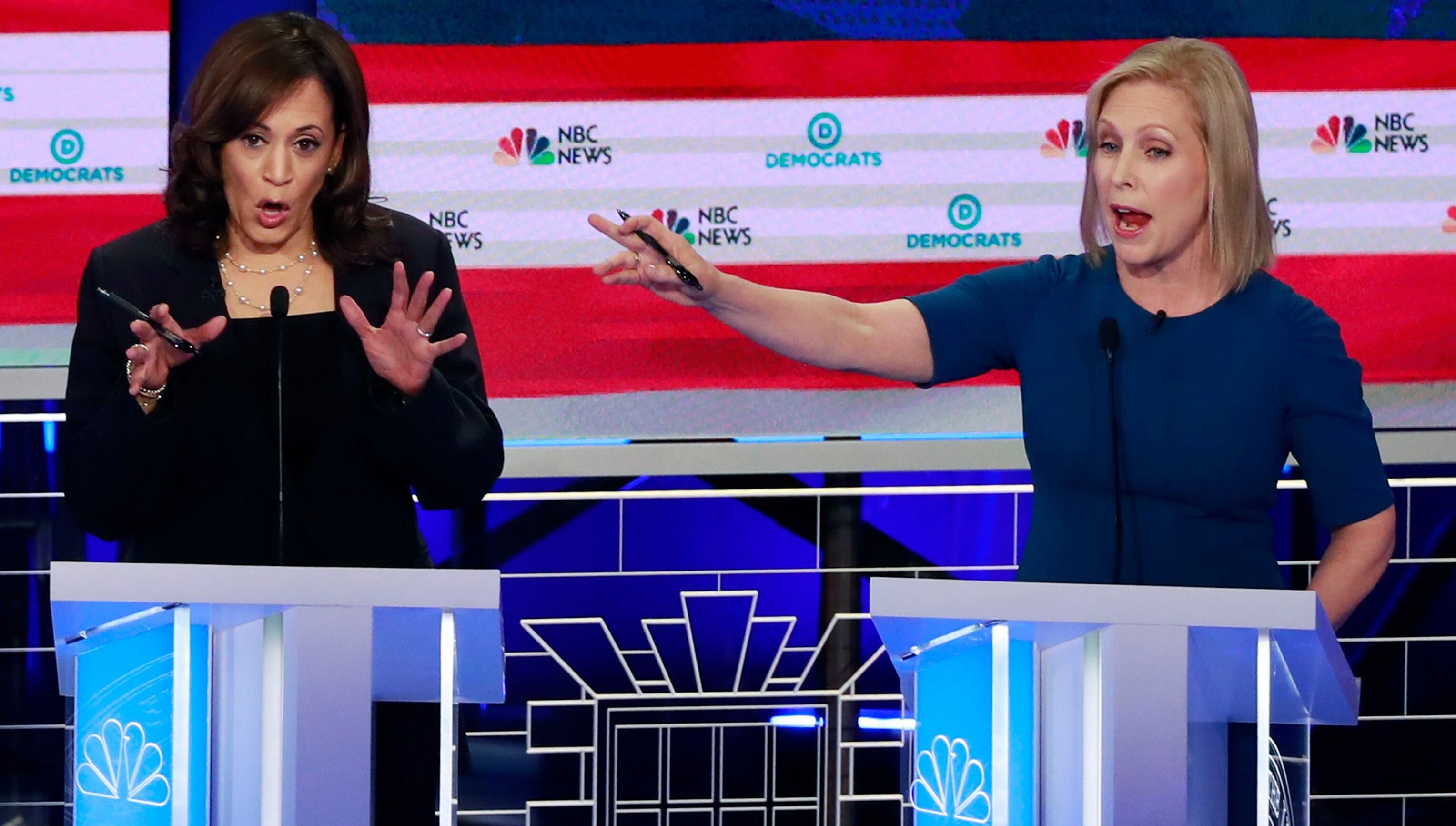
This presidential election cycle has a record number of women running for commander-in-chief. Still, these female candidates must navigate the question of "electability," a double-standard ー one former Hillary Clinton staffer says ー that they will have to beat back throughout the campaign.
"The ultimate answer is that to be electable, you have to win," said Amanda Litman, the executive director of Run for Something, a political action committee that aims to elect young Democrats. Litman previously served as the email director for Hillary Clinton's 2016 presidential campaign.
"It's important to step back and realize what we're talking about when we talk about electability. It's the understanding of what voters think that other voters wants. It is an entirely faulty premise based on racist, sexist, and classist understandings of what a president looks like."
"It is total garbage," she argues.
Litman says that in order to challenge the conception that women can't win higher elected offices, it will require support for different types of female leaders, finding ways to make voters and donors comfortable in expressing support for their favored-candidates, and building a stronger pipeline of qualified female politicians through state and local races.
"We saw Kamala Harris in the debate really take on her opponents in a way that was sort of masculine-coded leadership. We've seen Elizabeth Warren whip out plan after plan after plan. We've see Kirsten Gillibrand be aggressive with interviewers who she doesn't think are giving her a fair shake," said Litman. "Each of them is showing a different way of being a female leader."
"Over the last two years, the number of women of color in state legislatures has more than tripled. The number of women in state legislators writ large has gone up by huge numbers," added Litman. "This means, down the line, there will be more qualified women to run for Congress, for governor, and for president."
A record number of women were elected to Congress in the 2018 midterm election, and a record number of women of color were elected to the House of Representatives. Meanwhile, women hold nearly 30 percent of state legislative seats ー totaling more than more than 2,100 ー according to the Center for American Women and Politics at Rutgers.
"Women need this experience in order to be considered serious leaders," Litman said. "A woman couldn't get away with a weak resume like a man could."
She pointed out that the serious female contenders for president ー Sen. Kamala Harris, Sen. Elizabeth Warren, Sen. Kirsten Gillibrand, Sen. Amy Klobuchar, and Sen. Tulsi Gabbard ー are all current lawmakers. The exception: author and public speaker Marianne Williamson, who has qualified to participate in the second round of the Democratic debates.
Litman says that women can beat male competitors by being willing to work harder and engaging on issues like child care, health care, school, and the opioid crisis. "Mediocre women don't tend to run for office. Only excellent women do," she said.
"The ultimate answer is that to be electable, you have to win," Litman added.
Eli Yokley, Senior Reporter at Morning Consult, joins Cheddar News to discuss how Americans are prioritizing economic issues over the pandemic when it comes to voting.
President Biden's disapproval rating hit a new high in December according to a poll from CNBC and Change Research, as Americans expressed their disapproval over the current state of the economy. This comes just months after the president signed a historic infrastructure bill back in November that was promised to bring a surge of jobs, especially in the manufacturing sector.
Change Research Senior Pollster Nancy Zdunkewicz spoke to Cheddar News about just what is driving the President’s disapproval rating.
As the Omicron variant continues to sweep across the country. The US Supreme Court is expected to hear arguments at the end of this week on whether or not the Biden administration can force private companies to vaccinate or test millions of their employees. In addition, the National Nurses United has spearheaded legal action to protect nurses and health care workers, patients, and the public while on the job. President of the National Nurses Union, Zenei Cortez, joined Cheddar to discuss more.
Far too often, Americans are forced to navigate a tangled web of outdated government websites, offices way out of their reach, and hours of time 'on hold' to access the simple government services they depend on. A recent executive order, signed by President Biden, is intended to improve, streamline and modernize the 'customer' experience when accessing government services. Mina Hsiang, the administrator of the United States Digital Service, joins Cheddar News to discuss how the tech workforce is impacted by this executive order.
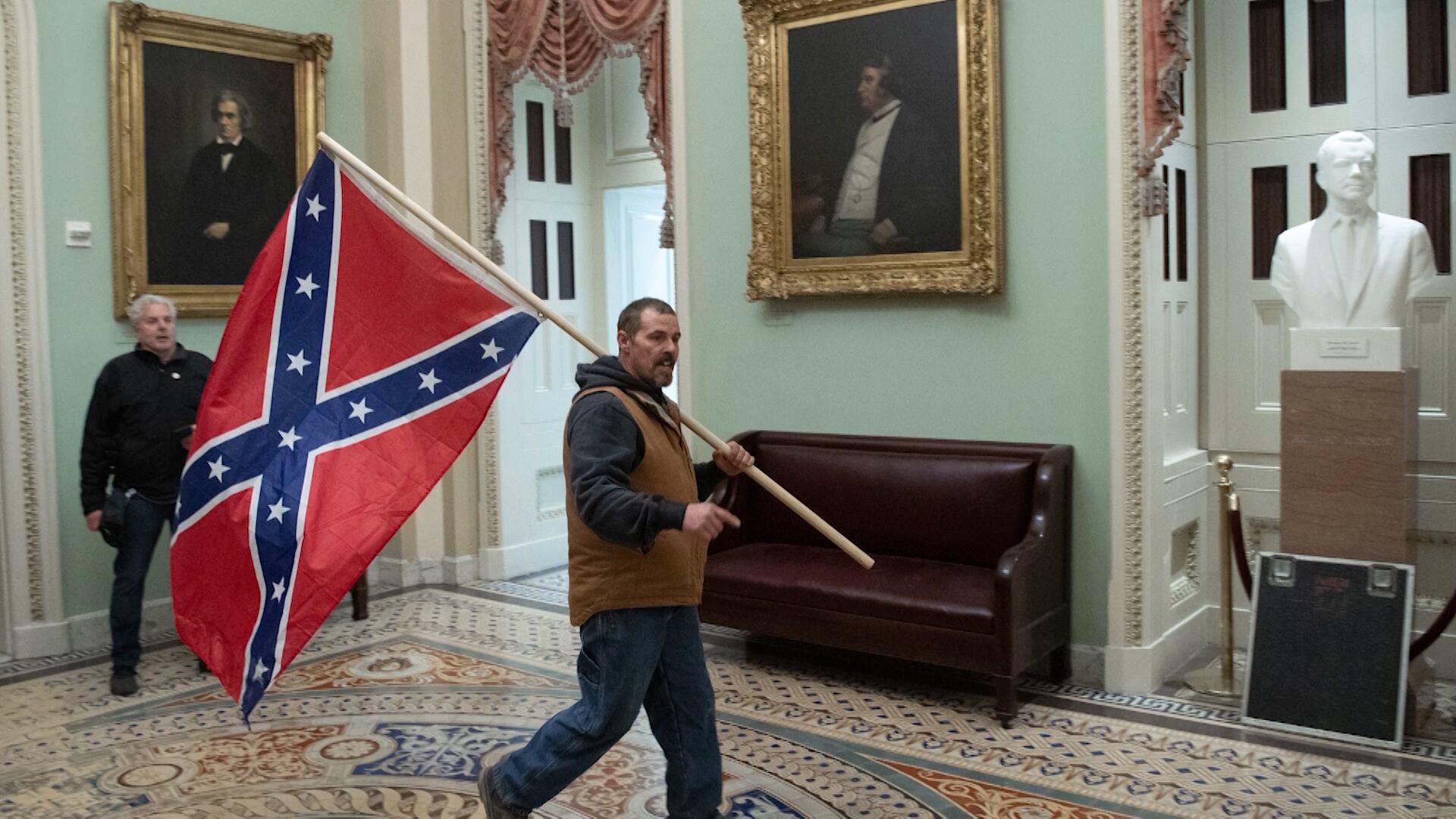
Today marks one year since the January 6 Attack on the United States Capitol. The Country watched as supporters of then-President Trump stormed what was assumed to be the most secure building in the country in an attempt to stop the certification of the 2020 Election. Several lawmakers, including the Vice President, could be seen ducking down as they feared for their lives. Democratic Michigan Representative Dan Kildee, joined Cheddar to discuss more.
Stocks closed lower on Friday as investors continue to worry over rate hikes. John Lynch, CIO of Comerica Wealth Management, joins Cheddar News' Closing Bell, where he says value is back in play with investors. Lynch also believes the market has overreacted to the latest Fed minutes, suggesting a bounce-back at some point.
Ben Armstrong, founder of Bitboy Crypto, joins Cheddar News to discuss Bitcoin's downward trend and what's next for crypto after protests in Kazakhstan cause crypto miners to shut down.
Washington, D.C. Attorney General Karl Racine joins Cheddar Politics to discuss his lawsuit against the extremist groups Proud Boys and Oath Keepers over their role in the January 6 attack on the U.S. Capitol.
Josh Pasek, a professor at the University of Michigan and expert on political communication and misinformation, joins Cheddar News to discuss how political radicalization happens and how America got to this point.
Kyle Kondik, managing editor at Sabato's Crystal Ball at the University of Virginia Center for Politics, joins Cheddar News to discuss what to expect at the 2022 midterm elections.