House Republicans made post-midnight changes to their sweeping debt ceiling package to win over holdouts, as Speaker Kevin McCarthy pushed ahead Wednesday with plans to launch debate and round up support from his slim majority for a vote this week.
Facing a revolt from Midwestern Republicans over doing away with biofuel tax credits that were just passed into law last year by President Joe Biden, Republicans relented and allowed the tax credits to stay on the books.
Republicans also agreed to more quickly launch the bolstered work requirements for recipients of government aid, starting in 2024 as proposed by another holdout, Freedom Caucus' Rep. Matt Gaetz, R-Fla., who has led previous challenges to McCarthy.
The changes were approved at a 2 a.m. session of the House Rules Committee despite earlier repeated insistence by McCarthy and his leadership team that there would be no changes.
The floor debate is expected to launch at noon Wednesday, a final vote on the sprawling package likely pushes to Thursday.
Republicans hold a five-seat majority and face several absences this week, leaving McCarthy with almost no votes to spare.
“This week, we will pass the bill on this floor,” McCarthy told reporters late Tuesday.
The top Democrat on the panel, Rep. Jim McGovern, derided the “midnight seance" that produced the final package, particularly “cruelly” imposing stricter work requirements on recipients of food stamps and other government aid.
“Taking food away from people is a rotten thing to do,” said McGovern of Massachusetts in the early hours of Wednesday morning.
While the 320-page package has almost no chance of becoming law, McCarthy is using it as a strategy to shake up the debate. Biden has so far refused to engage with House Republicans on what the White House calls “hostage taking” over the debt ceiling, and threatened to veto the package, which couples a debt ceiling increase with restrictions on federal spending. McCarthy hopes passage will kickstart talks with Democrats.
But McCarthy acknowledged after closed-door meetings late Tuesday that not all House Republicans were fully on board with the proposal. He insisted that passing this bill would be merely a starting point for negotiations with Biden and Democrats, and not the final product.
“There’s a number of members that will vote for it going forward and say there are some concerns they have,” he said. But he said they will also say they are ready to vote anyway: “They want to make sure the negotiation goes forward.”
It’s a first big test for the president and the Republican speaker, coming at a time of increased political anxiety about the need to raise the federal debt limit, now at $31 trillion, to keep paying the country’s already accrued debts.
The Treasury Department is taking “extraordinary measures” to pay the bills, but funding is expected to run out this summer. Economists and experts warn that even the threat of a federal debt default would send shockwaves through the economy.
In exchange for raising the debt limit by $1.5 trillion into 2024, the bill would rollback federal spending to fiscal 2022 levels and cap future spending increases at 1% a year for the next decade.
The package would also impose tougher work requirements on recipients of food stamps and government aid, halt Biden’s plans to forgive up to $20,000 in student loans and end the landmark renewable energy tax breaks Biden signed into law last year. It would tack on a sweeping Republican bill to boost oil, gas and coal production.
A nonpartisan Congressional Budget Office analysis released Tuesday showed the Republican plan would reduce federal deficits by $4.8 trillion over the decade if the proposed changes were enacted into law.
In February, Senator Jeff Merkley (D-Ore.) and Representative Jamaal Bowman (D-N.Y. 16th District) introduced the Fair College Admissions for Students Act. The bill looks to curb the admissions advantage given to the children of alumni and donors for colleges and universities. Sen. Merkley joined Cheddar news to discuss the push behind the legislation. "My dad was a mechanic. I was applying to schools around the country. I never thought about the fact that those students who came from the most privileged backgrounds also got a special advantage in applying to college," he said. "They take up 10-25 percent of the slots at many of our universities, and so this is kind of affirmative action for those who need it least rather than a level playing field for everyone else." If enacted, the law would amend the Higher Education Act of 1965 doing away with legacy or donor status admissions for any school participating in the federal student aid program.
Nancy Daoud, a private wealth adviser for Ameriprise Financial, joins Cheddar News' Closing Bell, where she discusses what led to a sharp spike on Wall Street during Tuesday's session and what she will be watching for most closely when the Fed announces it latest policy decision on Wednesday.
Russia's economy is effectively at a standstill after it was slapped with extensive western sanctions, and now it has to make the first of four monthly interest payments on dollar bonds. It's likely the country will not be able to pay — so what happens next? Major credit ratings agencies have downgraded Russian sovereign debt, with Fitch issuing a 'C' rating and S&P Global Ratings issuing a 'CCC-' rating. Caleb Silver, Editor in Chief of Investopedia, joins Closing Bell to discuss what a Russian debt default could mean for Russia's economy, U.S. consumers who have pensions with exposure to Russian assets, and whether this could create a global financial crisis.
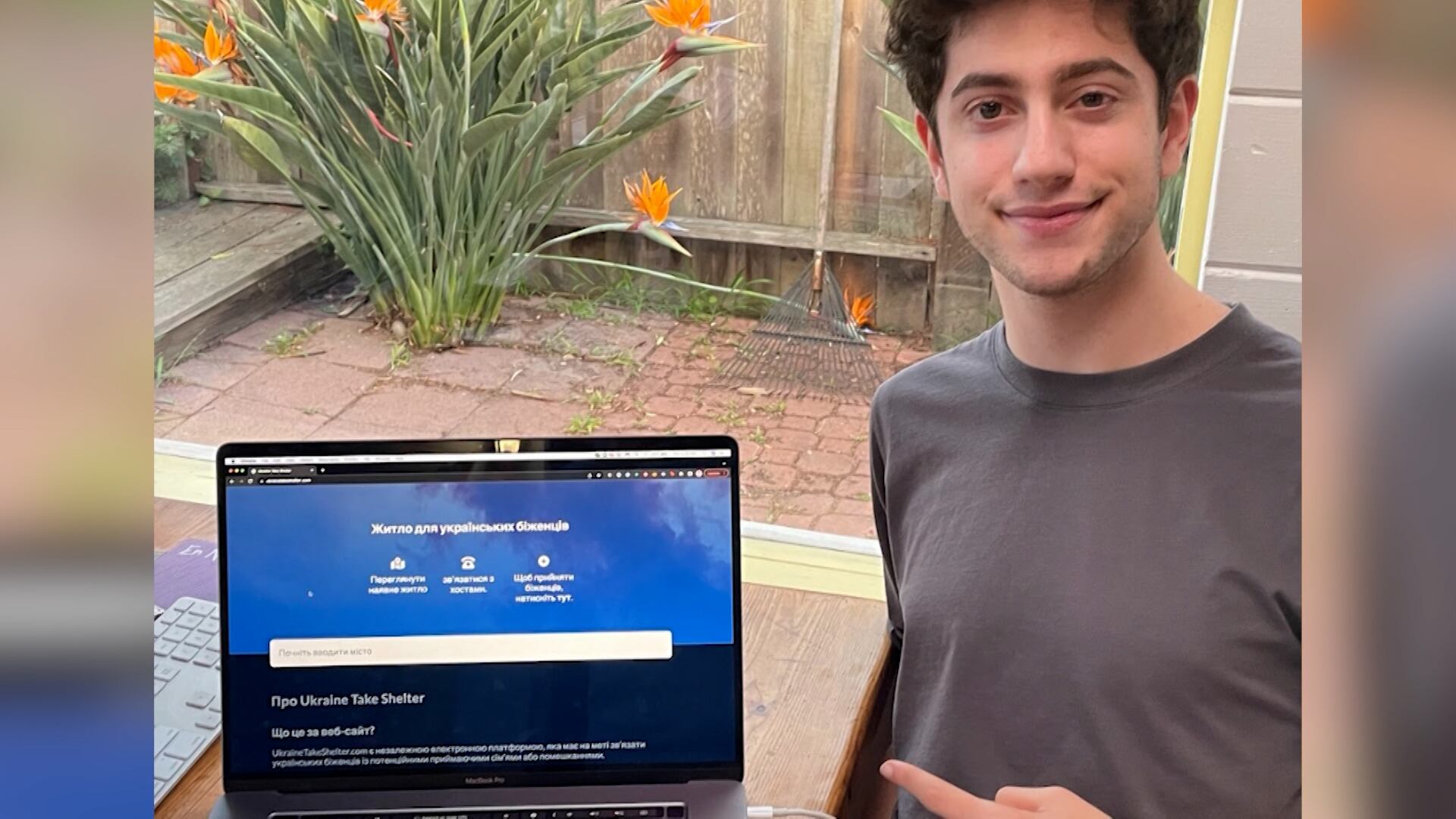
With the number of Ukrainians being displaced due to the Russian invasion surging, two students from Harvard took it on themselves to develop a website to help connect potential hosts with refugees seeking housing. The co-founder of the website Ukraine Takes Shelter, Marco Burstein, joined Cheddar news to discuss working together with fellow freshman Avi Schiffmann to streamline the effort to aid Ukrainian refugees. "We basically worked for three days straight developing the website, and since then the response has been pretty incredible," Burstein said.
Over three weeks ago, WNBA player Brittney Griner was arrested in Russia on drug charges. According to reports, the Star arrived at an airport near Moscow where authorities found Vape cartridges and hashish oil in her luggage. Grindr faces serious charges that could carry a possible sentence of 5-10 years in a Russian prison. Experts warn that Griner's arrest could be used as a bargaining chip. Partner at Stroock & Stroock & Lavan, Thomas Firestone, joined Cheddar to discuss more.
On a live broadcast, an employee on a Russian state news television channel held up a sign protesting propaganda about the war in Ukraine. Ruslan Deynychenko, executive director of the Ukrainian fact-checking organization StopFake, joined Cheddar News to discuss what he called the misinformation spread to the Russian people about the invasion. "They are not about informing people they are about brainwashing people," he said. "Russian government uses their media as an instrument, as a tool, of their foreign policy."
Student loan payments for millions of borrowers are set to resume on May 1st. However, signals from the Department of Education show that the date may be pushed back. Once again, it's been pushed back a few times. Initially, the Biden Administration stated loan payments would resume as the economy continues to show signs of recovery. Student Loan Expert and Author of "How to Appeal for More College Financial Aid", Mark Kantrowitz, joined Cheddar to discuss more.