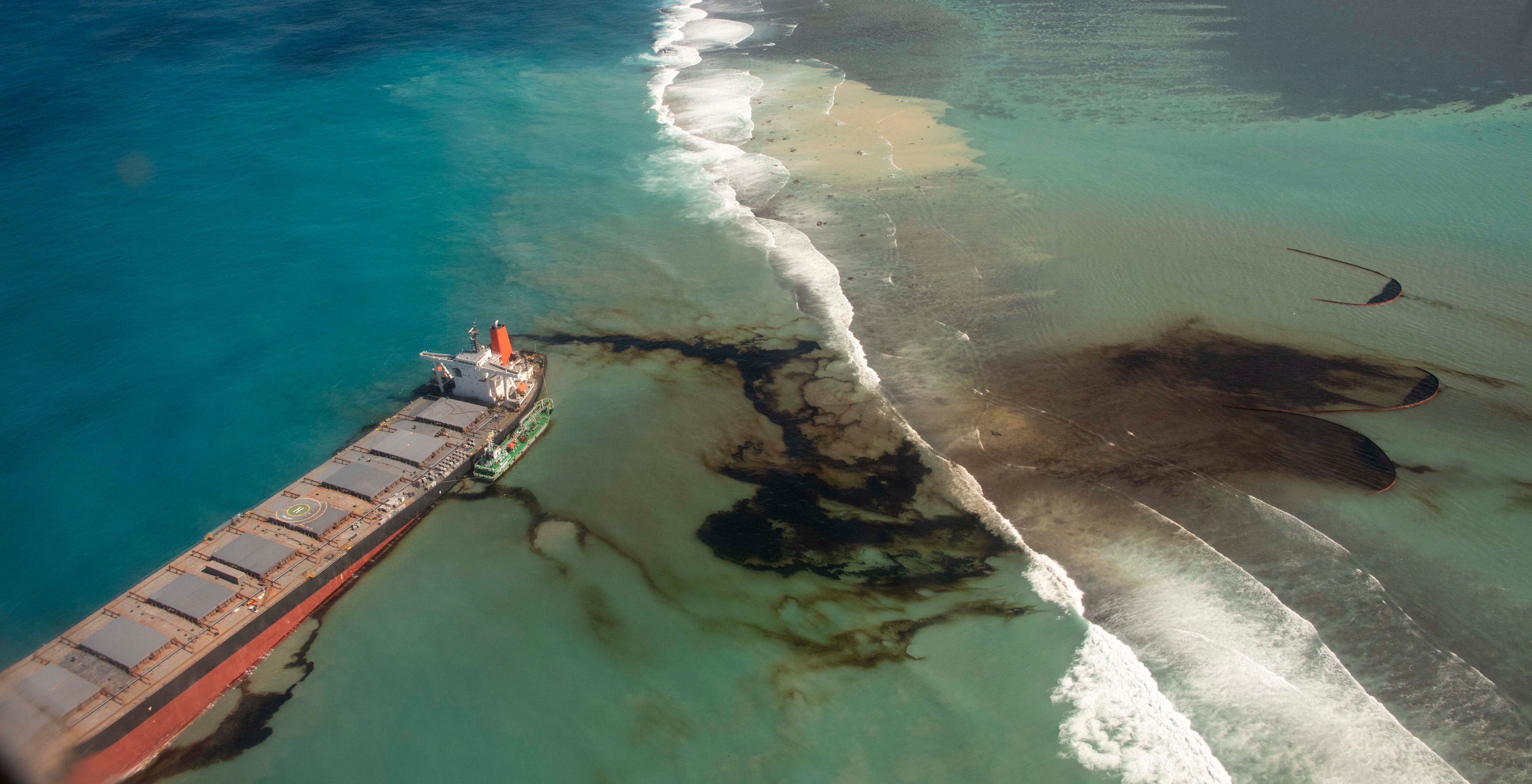
This photo provided by the French Defense Ministry shows oil leaking from the MV Wakashio, a bulk carrier ship that recently ran aground off the southeast coast of Mauritius,, Sunday Aug.9, 2020. The Indian Ocean island of Mauritius has declared a "state of environmental emergency" after the Japanese-owned ship that ran aground offshore days ago began spilling tons of fuel. (Gwendoline Defente/EMAE via AP)
By Andrew Meldrum
Urgent efforts increased in Mauritius on Monday to empty a stranded Japanese ship of an estimated 2,500 tons of oil before the vessel breaks up and increases the contamination of the island's once-pristine Indian Ocean coastline.
Already more than 1,000 tons of fuel has washed up on the eastern coast of Mauritius, polluting its coral reefs, protected lagoons, and shoreline.
High winds and waves are pounding the MV Wakashio, which was showing signs of splitting apart and dumping its remaining cargo oil into the waters surrounding Mauritius. The bulk carrier ran aground on a coral reef two weeks ago.
"We are expecting the worst," Mauritian Wildlife Foundation manager Jean Hugues Gardenne said.
"The ship is showing really big, big cracks. We believe it will break into two at any time, at the maximum within two days," Gardenne said. "So much oil remains in the ship, so the disaster could become much worse. It's important to remove as much oil as possible. Helicopters are taking out the fuel little by little, ton by ton."
French experts arrived from the nearby island of Reunion and were deploying booms to try to contain any new oil spill, Gardenne said. France sent a navy ship, military aircraft, and technical advisers after Mauritius appealed for international help Friday.
"The booms should be in place within hours, which we hope will help to protect the coastline from further damage," he said. The booms will boost the improvised barriers that thousands of volunteers in Mauritius created from fabric tubes stuffed with straw and sugar cane leaves.
Amid the rough seas, efforts were also underway to get other ships close enough to pump large amounts of oil out of the MV Wakashio.
"The danger of the ship breaking into two is increasing hour by hour," environmental consultant Sunil Dowarkasing, a former member of parliament in Mauritius, said. "The cracks have now reached the base of the ship and there is still a lot of fuel on the ship. Two ships are headed to the site so that fuel can be pumped into them, but it is very difficult."
The ship ran aground on July 25 but work to remove the oil it was carrying only started last week when the hull cracked and started emptying the fuel into the sea, according to Dowarkasing.
The MV Wakashio's owner, Nagashiki Shipping, said Monday that two ships arrived at the scene to pump oil from the endangered vessel. "A hose connection has been successfully established ... and the transfer of fuel oil is underway," said the company in a statement. It said it is working with Mauritian authorities "to mitigate the spill. The primary focus at this time is reducing the effects of the spill and protecting the environment."
Pressure is mounting on the government of Prime Minister Pravind Jugnauth to explain why it did not take immediate action to avert the environmental disaster. Jugnauth has declared the oil spill a national emergency, but some residents say he acted too late.
The opposition and activists are calling for the resignation of the environment and fisheries ministers. Volunteers have ignored a government order to leave the clean-up operation to local officials.
Japan said Sunday it would send a six-member expert team to assist.
L’Oréal is doubling down on its investment in tech. The French beauty giant unveiled two new high-tech products ahead of CES 2022, aimed at simplifying the hair coloring process. Guive Balooch, global vice president of L’Oréal Technology Incubator, joined Cheddar's Opening Bell to discuss the company's innovations for hair coloring, including the Colorsonic application device and the Coloright AI diagnostic tool.
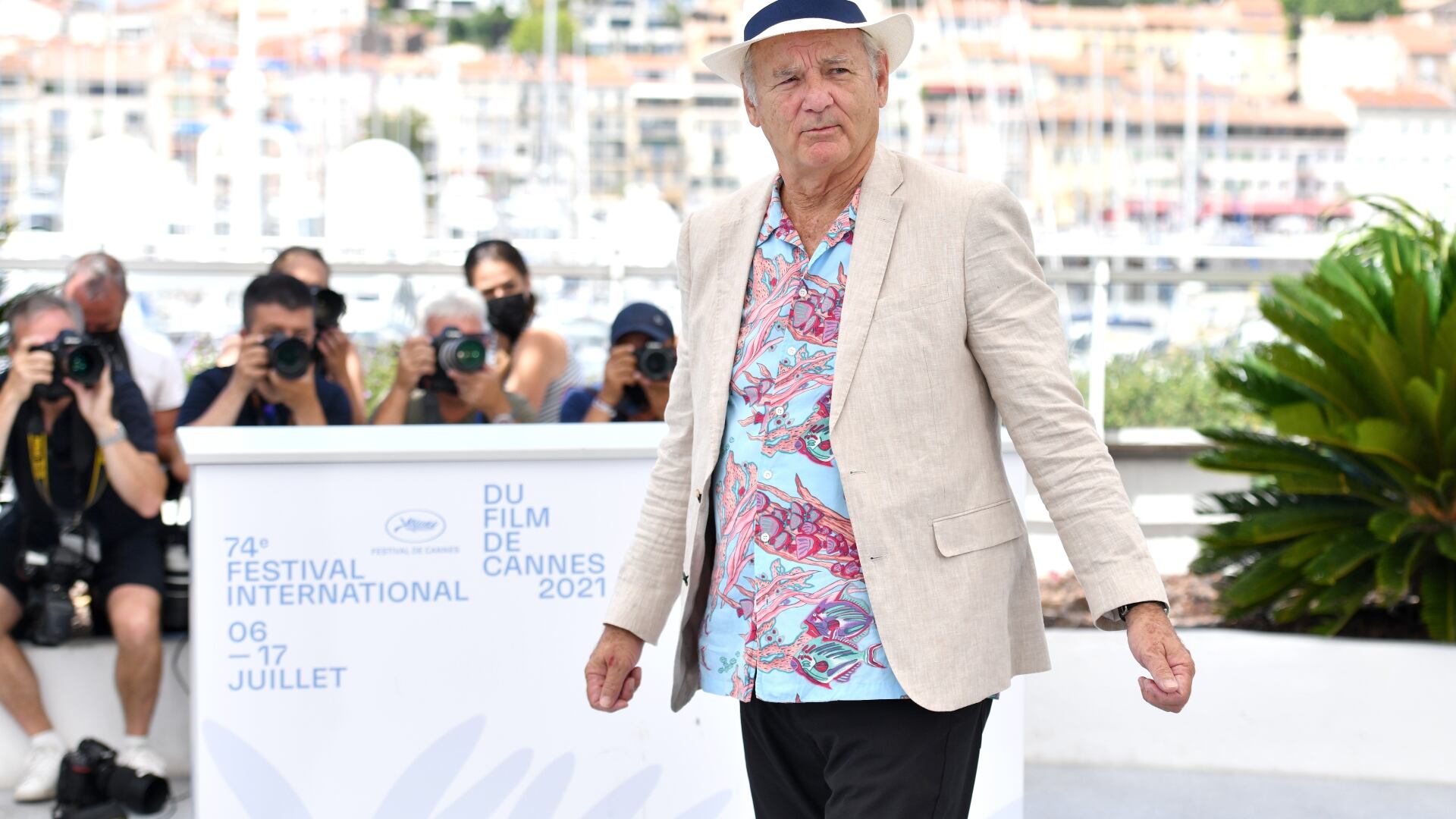
After meeting by chance in an airport, legendary actor Bill Murray and world-renowned cellist Jan Vogler joined forces to put out an album of poetry and music, go on a European concert tour, and release a feature documentary. Murray and Vogler joined Cheddar to dish about the experiences taking their “New Worlds: The Cradle of Civilization" on the road and filming the documentary that followed the pair, along with Mira Wang on violin and Vanessa Perez on piano, at their final show in Greece. "When this opportunity to play with Jan and Mira and Vanessa came along, I thought, well how bad can I be with these people behind me," Murray self-deprecatingly noted about his own musical talents.
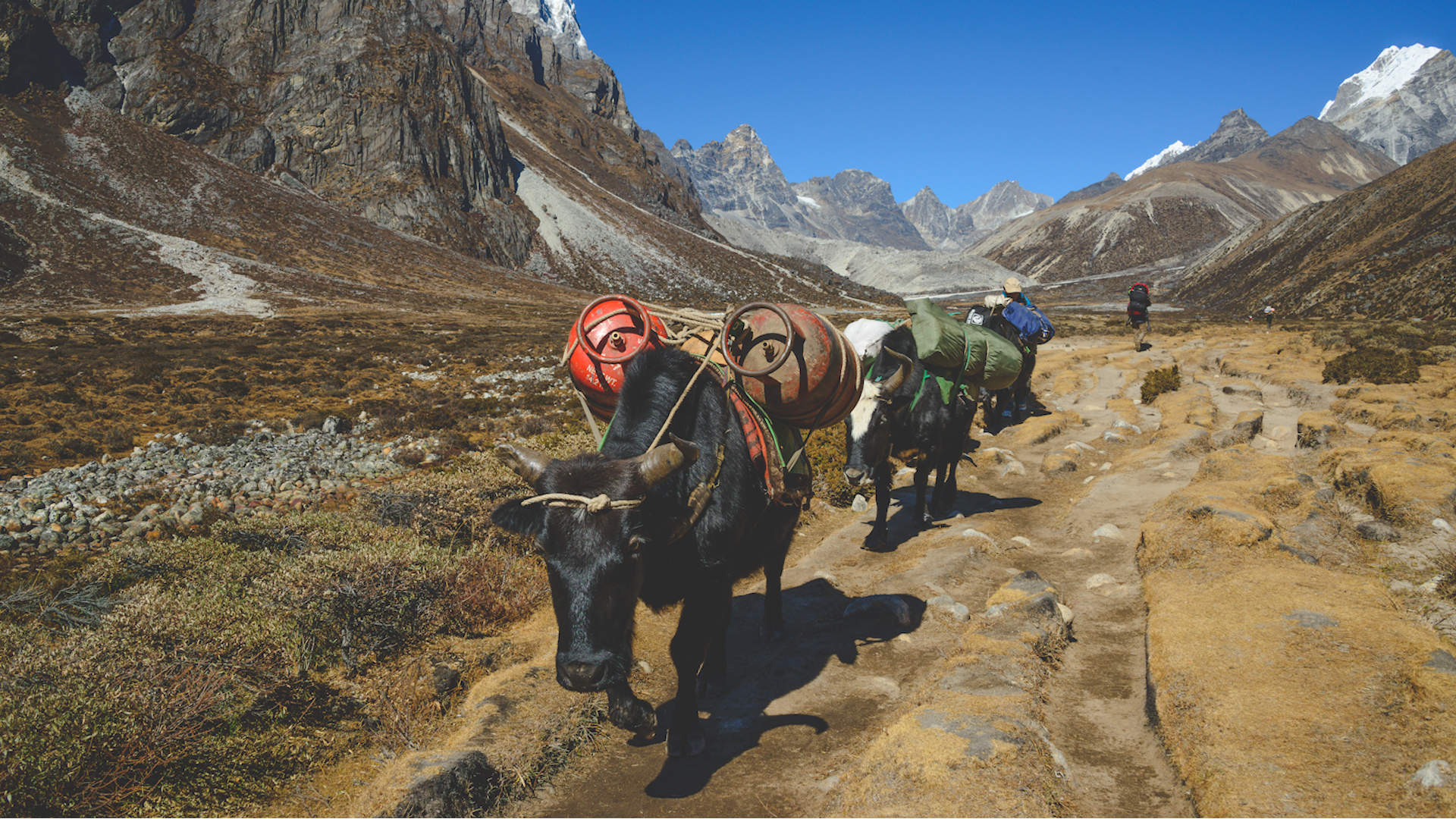
On this episode of Cheddar Reveals: Director of Programs at Alpine Ascents breaks down how to mentally and physically prepare for climbing Mount Everest; American Himalayan Foundation's Vice President discusses Sherpa culture and ethos, and why they are so critical to the climb; A look at Curiosity Stream's 'History by the Numbers.'
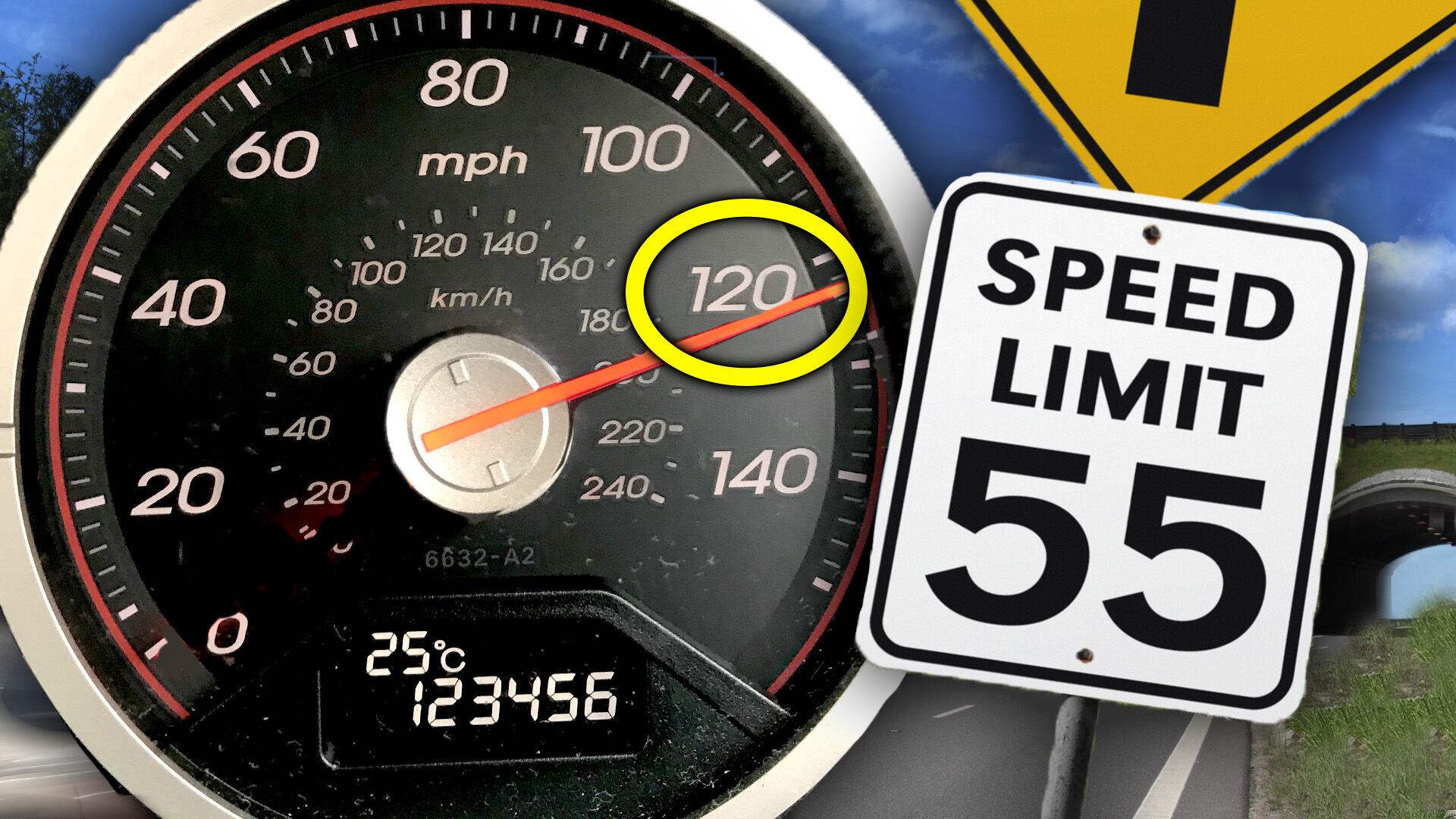
All around the world, speed limits are placed on public roads to promote car safety and save lives. In that same world, car manufacturers have continued to look for ways to build faster and faster cars. Despite the dangers of speeding, many drivers are guilty of pushing the pedal from time to time. With cars being such a prevalent culture in everyday life, especially in the US, it’s worth wondering what it would take for car companies to once and for all settle the argument of safety versus freedom.
A recent study by MSI uncovers a vast racial divide in influencer marketing. The research found a 35% racial pay gap between white and black influencers. This gap is extremely wider than the gap in other industries such as education, business, and finance. The research also suggests that brands and agencies have the power to close this gap. Tiffany Hardin, founder and CEO of Gild Creative Group, joins Cheddar News to discuss.
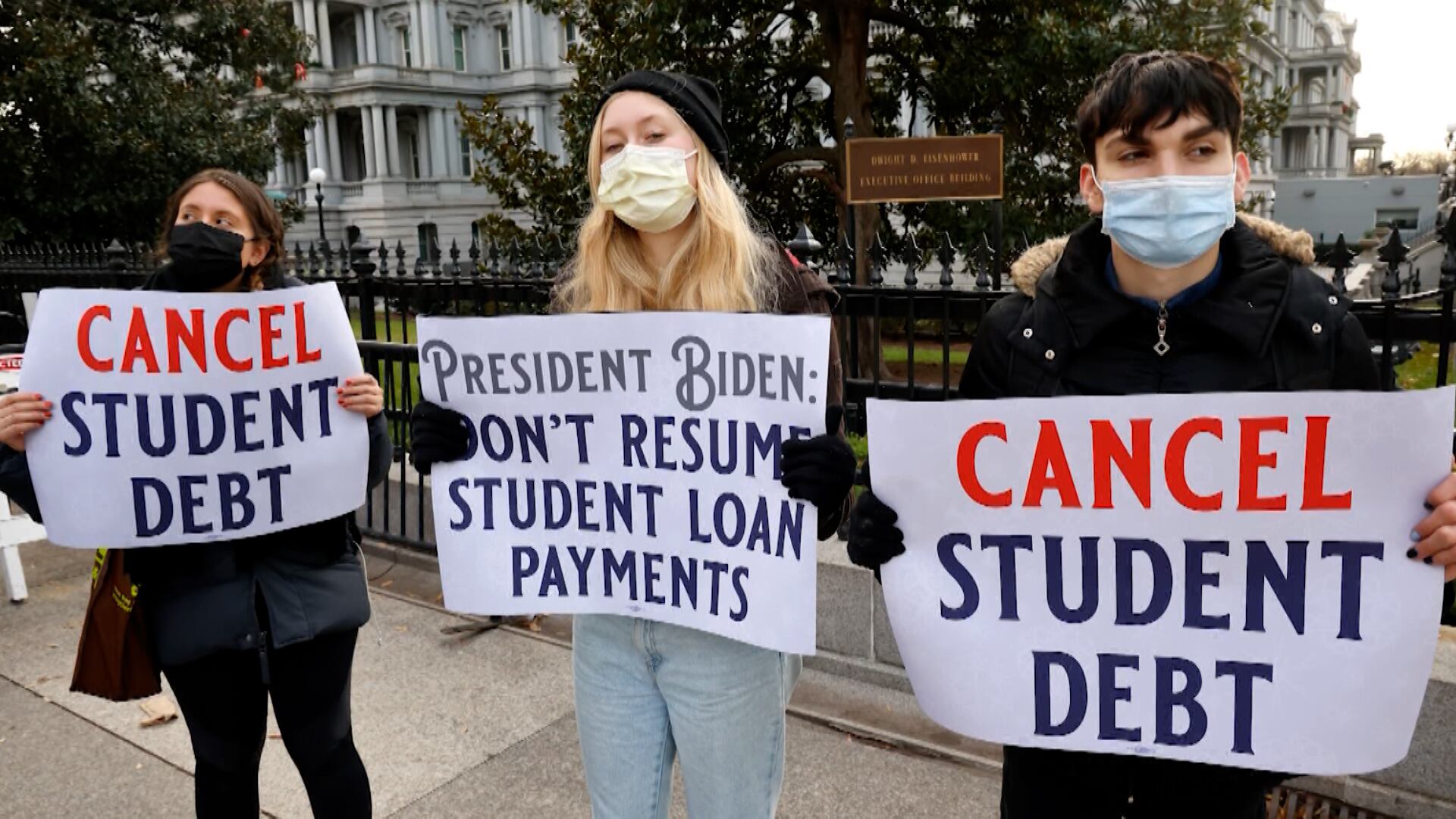
Student loan collection company Navient agreed to cancel $1.7 billion in debt and paid more than $140 million in other penalties to settle a lawsuit over abusive lending practices. Josh Shapiro, the attorney general of Pennsylvania who led negotiations in the settlement, joined Cheddar to go over the details of the company's predatory lending. "What Navient would do is charge [borrowers] these exorbitantly high rates, even though they knew people couldn't pay them or they would likely default on them," he explained.
Retail platform operator and delivery company, Foxtrot,
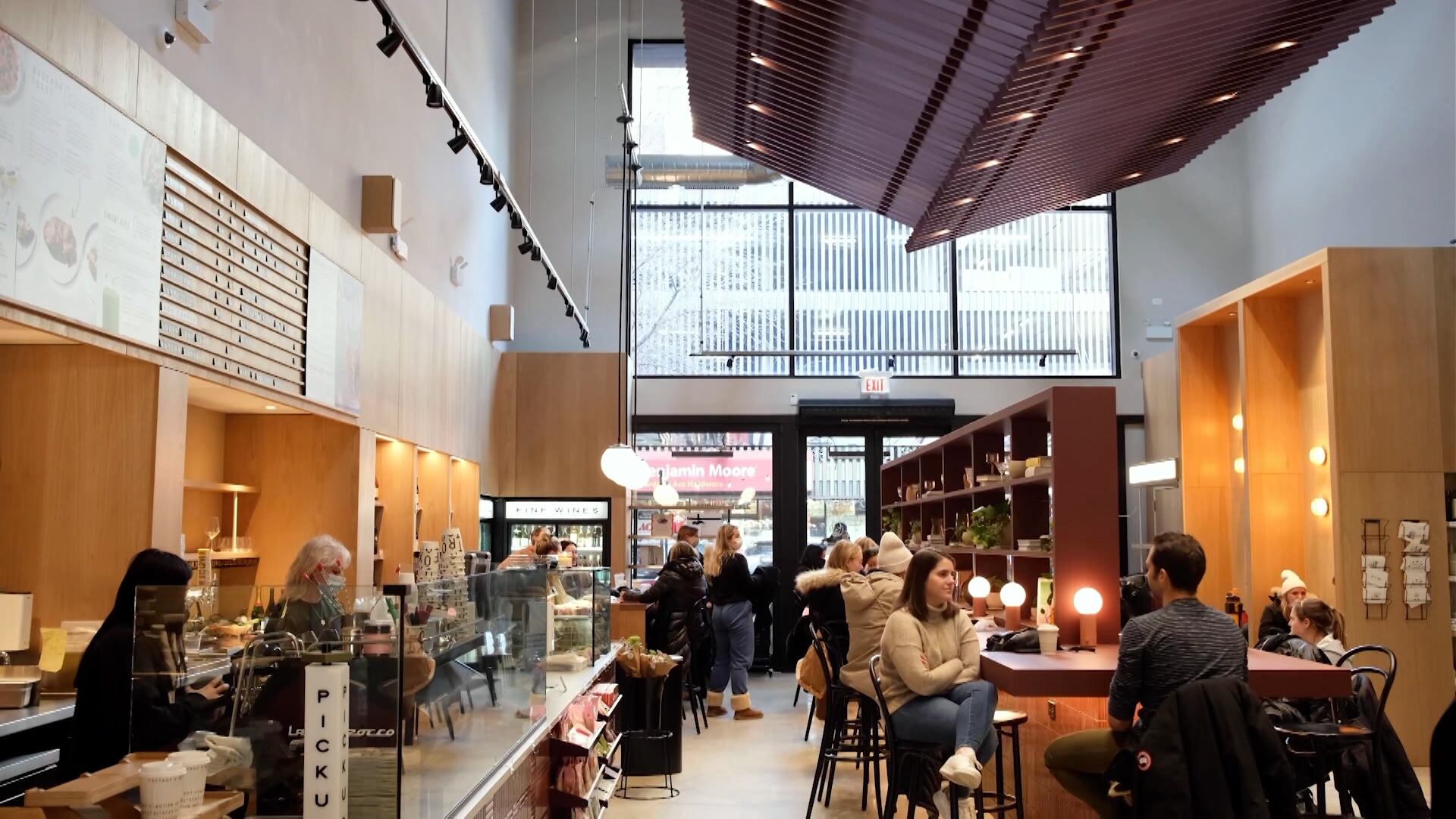
raised $100 million in a Series C round led by D1 Capital Partners. Foxtrot bills itself as the modern convenience store that combines what it calls in-store curated discovery with 30-minute delivery and 5-minute pickup. Since launching first as a digital-only delivery service, the company has since grown into a popular local retailer, opening 16 brick and mortar locations across Chicago, Dallas, and Washington, DC. Foxtrot co-founder and CEO Michael LaVitola joined Cheddar News' Closing Bell to discuss.