By Andrew Meldrum
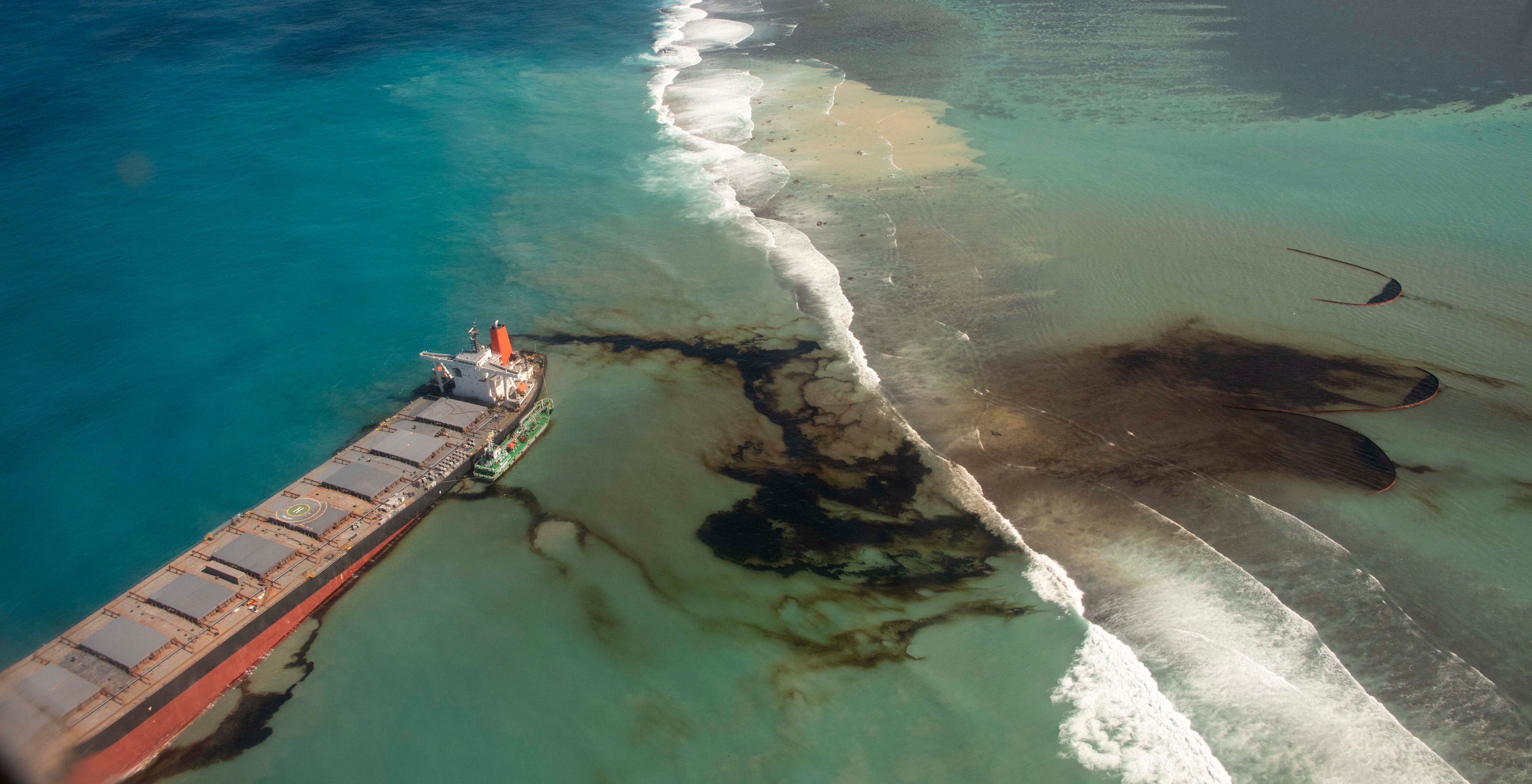
Urgent efforts increased in Mauritius on Monday to empty a stranded Japanese ship of an estimated 2,500 tons of oil before the vessel breaks up and increases the contamination of the island's once-pristine Indian Ocean coastline.
Already more than 1,000 tons of fuel has washed up on the eastern coast of Mauritius, polluting its coral reefs, protected lagoons, and shoreline.
High winds and waves are pounding the MV Wakashio, which was showing signs of splitting apart and dumping its remaining cargo oil into the waters surrounding Mauritius. The bulk carrier ran aground on a coral reef two weeks ago.
"We are expecting the worst," Mauritian Wildlife Foundation manager Jean Hugues Gardenne said.
"The ship is showing really big, big cracks. We believe it will break into two at any time, at the maximum within two days," Gardenne said. "So much oil remains in the ship, so the disaster could become much worse. It's important to remove as much oil as possible. Helicopters are taking out the fuel little by little, ton by ton."
French experts arrived from the nearby island of Reunion and were deploying booms to try to contain any new oil spill, Gardenne said. France sent a navy ship, military aircraft, and technical advisers after Mauritius appealed for international help Friday.
"The booms should be in place within hours, which we hope will help to protect the coastline from further damage," he said. The booms will boost the improvised barriers that thousands of volunteers in Mauritius created from fabric tubes stuffed with straw and sugar cane leaves.
Amid the rough seas, efforts were also underway to get other ships close enough to pump large amounts of oil out of the MV Wakashio.
"The danger of the ship breaking into two is increasing hour by hour," environmental consultant Sunil Dowarkasing, a former member of parliament in Mauritius, said. "The cracks have now reached the base of the ship and there is still a lot of fuel on the ship. Two ships are headed to the site so that fuel can be pumped into them, but it is very difficult."
The ship ran aground on July 25 but work to remove the oil it was carrying only started last week when the hull cracked and started emptying the fuel into the sea, according to Dowarkasing.
The MV Wakashio's owner, Nagashiki Shipping, said Monday that two ships arrived at the scene to pump oil from the endangered vessel. "A hose connection has been successfully established ... and the transfer of fuel oil is underway," said the company in a statement. It said it is working with Mauritian authorities "to mitigate the spill. The primary focus at this time is reducing the effects of the spill and protecting the environment."
Pressure is mounting on the government of Prime Minister Pravind Jugnauth to explain why it did not take immediate action to avert the environmental disaster. Jugnauth has declared the oil spill a national emergency, but some residents say he acted too late.
The opposition and activists are calling for the resignation of the environment and fisheries ministers. Volunteers have ignored a government order to leave the clean-up operation to local officials.
Japan said Sunday it would send a six-member expert team to assist.