In Maryland, the Montgomery County Council has introduced a resolution deeming racism a public health crisis.
In an interview with Cheddar, councilmember Will Jawando says disparities the black community faces are staggering. Recent social uprisings might have lit the flame under Jawando to introduce the resolution but the issue of racial inequality goes back hundreds of years, he said.
"Racism is the direct result, for 401 years, we've been either property or legally discriminated against for most of that time," Jawando told Cheddar.
In Montgomery County, systemic racism is not limited to just over-assertive and sometimes lethal policing of the black community, he said. It's also running rampant in the healthcare system. As COVID-19 continues to ravage communities of color nationwide, 18 percent of the black population in his county makes up a quarter of the deaths related to the virus.
For Jawando, racism in the Washington DC suburb is simply a reflection of society on a smaller scale.
"If you look at maternal health and childbirth, black women die at three times the rate," he said. "When they come in with problems, often doctors — look at Serena Williams — don't believe that they're sick."
Introducing the resolution, which he expects to pass next week, is a first step for curing the public health crisis in his county, Jawando said, but he hopes the measure is eventually recognized on both the state and federal levels. He also supports other methods of combating racism including the growing call to defund police departments nationwide.
"We shouldn't have stats driven by policing," he explained. "De-escalation, that should be rewarded just as much as we reward arrests and tickets."
Stocks are sinking again on Wall Street as more signs piled up of the economic and physical pain being caused by the coronavirus outbreak.
Former White House communications director Anthony Scaramucci says he's bullish about financial markets, but he's less keen on the way his old boss is handling the coronavirus pandemic.
During a Wednesday press conference, New York Gov. Andrew Cuomo said social distancing will be key to making sure state hospitals can handle the apex of cases expected in late April.
Tal Cohen, executive vice president and head of Nasdaq's North American Markets, told Cheddar Wednesday that the markets are beginning to grasp how to function during the outbreak.
Sabine Altendorf of the Food and Agriculture Organization of the United Nations warned that while so far the impact of the rapidly evolving crisis on food supply has been limited, it could change drastically.
Coronavirus stimulus checks are going to be distributed in the next three weeks, the Internal Revenue Service said Monday, and offered a little bit more clarity on how people can actually get their payments.
Stocks are sinking again on Wall Street as more signs piled up of the economic and physical pain being caused by the coronavirus outbreak.
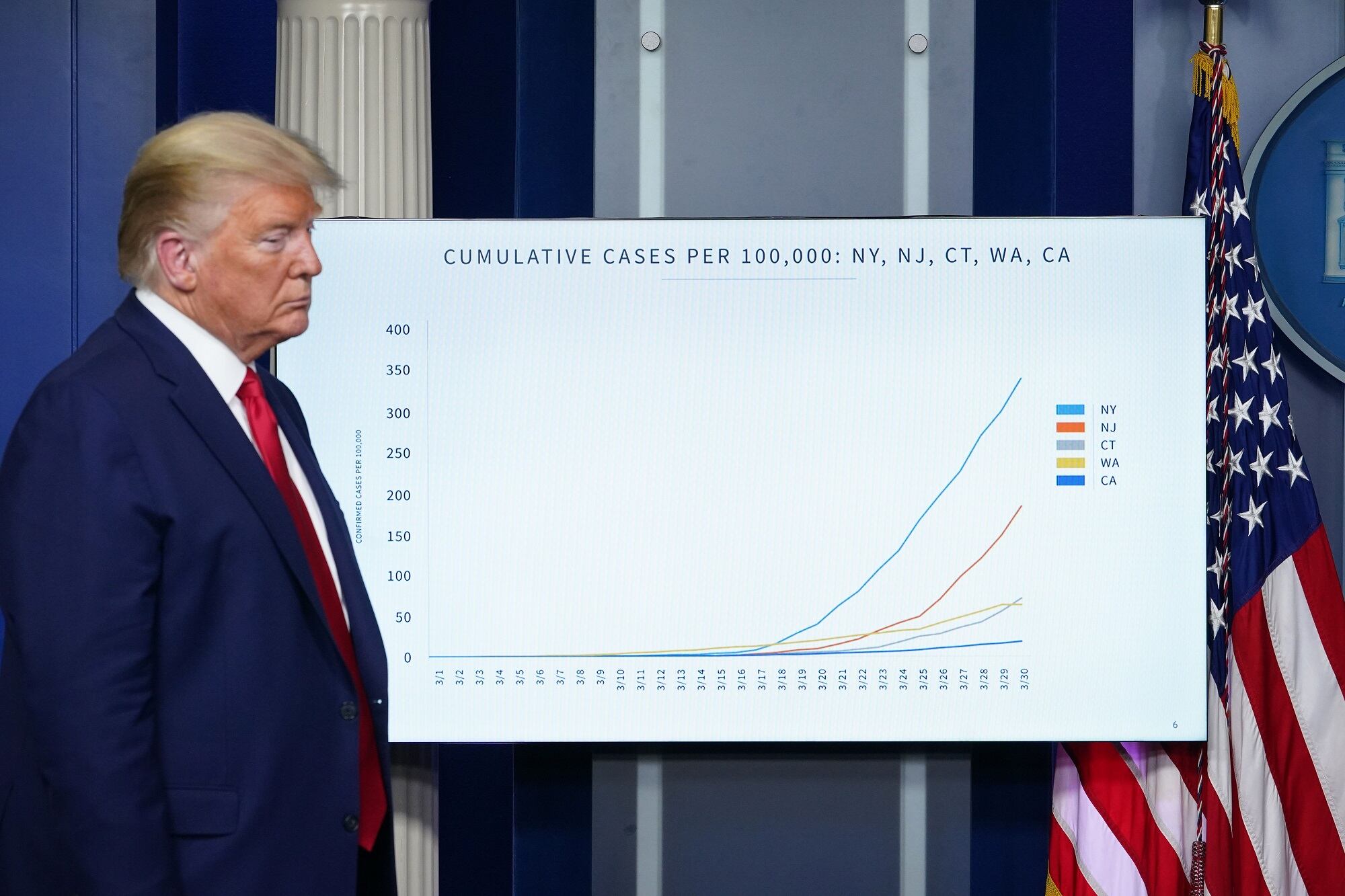
President Donald Trump on Tuesday warned Americans to brace for a “rough two-week period” ahead as the White House released new projections that there could be 100,000 to 240,000 deaths in the U.S. from the coronavirus pandemic even if current social distancing guidelines are maintained.
As some see promising returns from California’s early shelter in place orders, Governor Gavin Newsom announced Tuesday a growing number of cases and hospitalizations in the state as a record number of Californians file for unemployment.
Senator Amy Klobuchar told Cheddar on Tuesday that Americans need cash from canceled flights to provide immediate relief, but airline executives have not responded to the call.