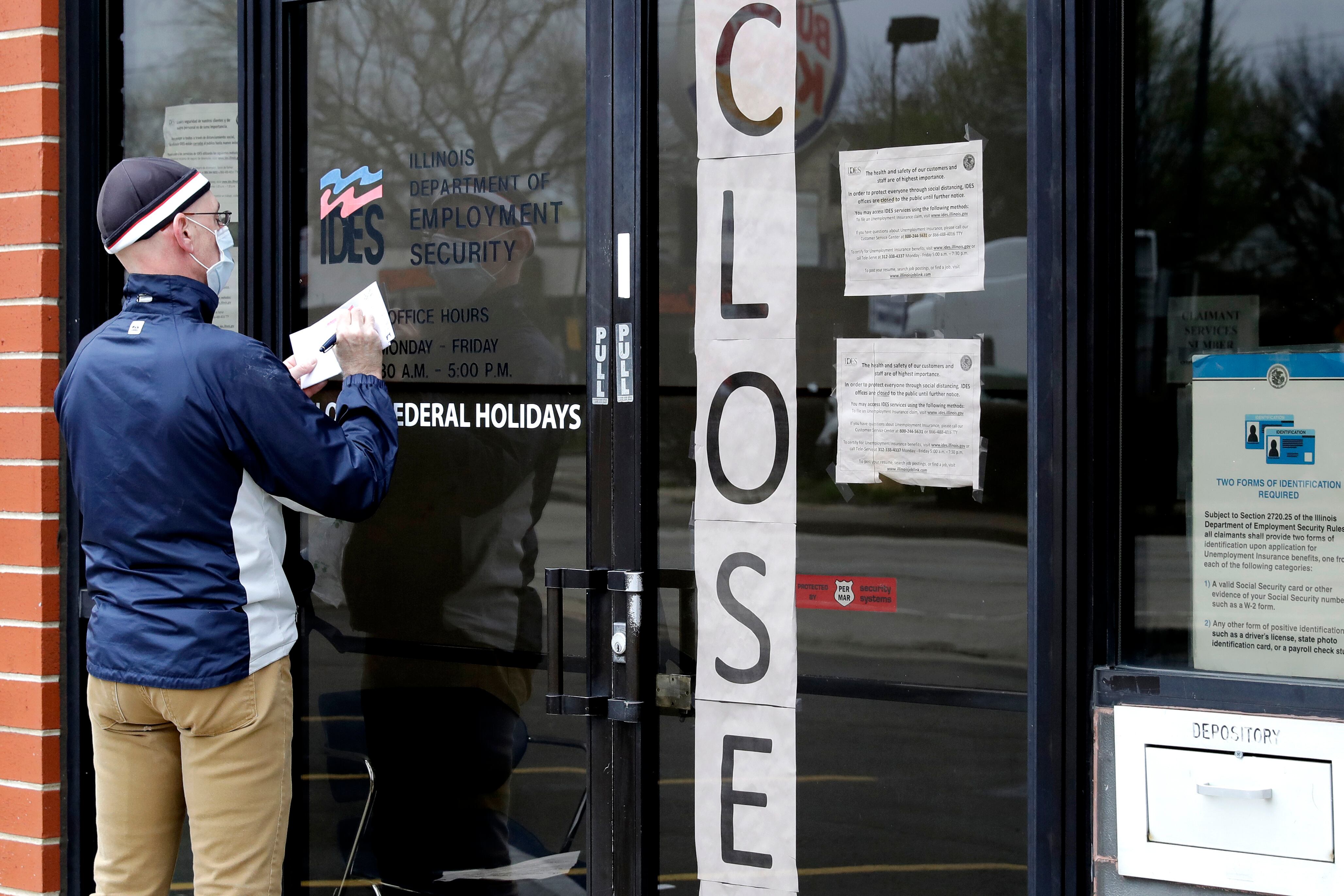
It's the paradox of a pandemic that has crushed the U.S. economy: 12.9 million lost jobs and a dangerous rash of businesses closing, yet the personal finances of many Americans have remained strong — and in some ways have even improved.
A new poll from The Associated Press-NORC Center for Public Affairs Research finds that 45 percent of Americans say they're setting aside more money than usual. Twenty-six percent are paying down debt faster than they were before the coronavirus pandemic. In total, about half of Americans say they've either saved more or paid down debt since the outbreak began.
The findings highlight the unique nature of the current crisis. Nearly $3 trillion in government aid in the form of direct payments, expanded jobless benefits and forgivable payroll loans helped cushion against the fastest economic downturn in American history. Meanwhile, health fears and mandated closures prompted many Americans to spend less on restaurant meals, clothing and travel.
About two-thirds say they're spending less than usual during the pandemic. Since February, there has been a $1.3 trillion jump in money kept in checking accounts — a 56 percent increase tracked by the Federal Reserve. While the greater savings helps to keep families more financially secure, it may also limit the scope of any recovery in a country that relies on consumer spending for growth.
Kent Sullivan, a landscape painter from Orlando, Florida, has been making extra mortgage payments. The 68-year-old and his wife received $1,200 in direct government payments and hope to own their home free and clear within 18 months.
"Everything goes into extra mortgage payments," he said. "As an artist, it's feast or famine. You never know if you're going to get a big commission or if the gallery does well."
The findings shed light on a persistent riddle of a global pandemic in which a weakened economy has somehow spared most U.S. families from the worst of the financial toll. Just 37 percent call the national economy good, down from 67 percent in January. But at the same time, 63 percent describe their personal financial situation as good, largely in line with what it was before the pandemic began more than six months ago.
People's positive feelings about their own finances might also be helping President Donald Trump as he seeks reelection this November against former Vice President Joe Biden. About half of Americans, 47 percent, approve of how Trump is handling the economy. That's significantly higher than his overall favorable rating of 35 percent.
"He's a businessman, not a politician," said Sally Gansz, 78, from Trinidad, Colorado. "He'll get jobs back — he did it before."
But while the initial burst of aid helped Americans, Trump — who touted his ability as a dealmaker in real estate — could not reach an agreement with Democrats to keep the money flowing after many of the benefits expired this month.
Alan Vervaeke, 59, from Gilford, New Hampshire, said the Trump administration's failure to contain COVID-19 has forced the government to take on debt, rather than investing in infrastructure and scientific research that could help growth long-term.
"The American economy is going to come back, but I don't think it's going to be as robust," said Vervaeke, a military veteran who manages software engineers. "We need an actual statesman who can create opportunities for average Americans, instead of politicians making a lot of promises they may never keep."
About a quarter of Americans say they've been unable to pay at least one bill because of the pandemic, including 14 percent who've been unable to make a rent or mortgage payment, 14 percent who have been unable to pay a credit card bill and 21 percent who have been unable to pay another type of bill. Seventeen percent have been unable to pay multiple types of bills.
The downturn has also exposed the depth of inequality in the United States.
About half of Black Americans and roughly 4 in 10 Hispanic Americans say they've been unable to pay a bill, compared with about 2 in 10 white Americans. And 66 percent of Hispanic Americans say they've experienced household income loss, compared with 50 percent of Black Americans and 44 percent of white Americans.
Overall, about half of Americans say they've experienced at least one form of household income loss. That includes 23 percent who say they've experienced a household layoff, 34 percent who say someone in the household has been scheduled for fewer hours, 22 percent who've taken unpaid time off, and 25 percent who've had their wages or salaries reduced.
People in households that have lost income, including a layoff, are about as likely as those who have not to say they've been spending less, saving more and paying down debt, though they are also more likely to say they've been unable to pay at least one type of bill.
Overall, 48 percent of those who say someone in their household has been laid off have been unable to pay at least one type of bill, compared with 19 percent of those who have not.
Those who say they've spent less during the pandemic are much more likely than those who have not to say they're putting more into savings (58 percent to 21 percent) and paying down debt faster than usual (32 percent to 15 percent).
Those savings might help sustain the economy if the downturn worsens or might propel growth if the coronavirus fades and people become more comfortable with venturing out. Brynn Alexander, 36, is cautiously optimistic.
"It's better than it was in March, a little bit better," said Alexander, a mother to four girls with her husband, who serves in Army at Fort Benning, Georgia. "A lot of my friends are getting back to work."
___
The AP-NORC poll of 1,075 adults was conducted Aug. 17-19 using a sample drawn from NORC's probability-based AmeriSpeak Panel, which is designed to be representative of the U.S. population. The margin of sampling error for all respondents is plus or minus 4.1 percentage points.