By Maddie Burakoff
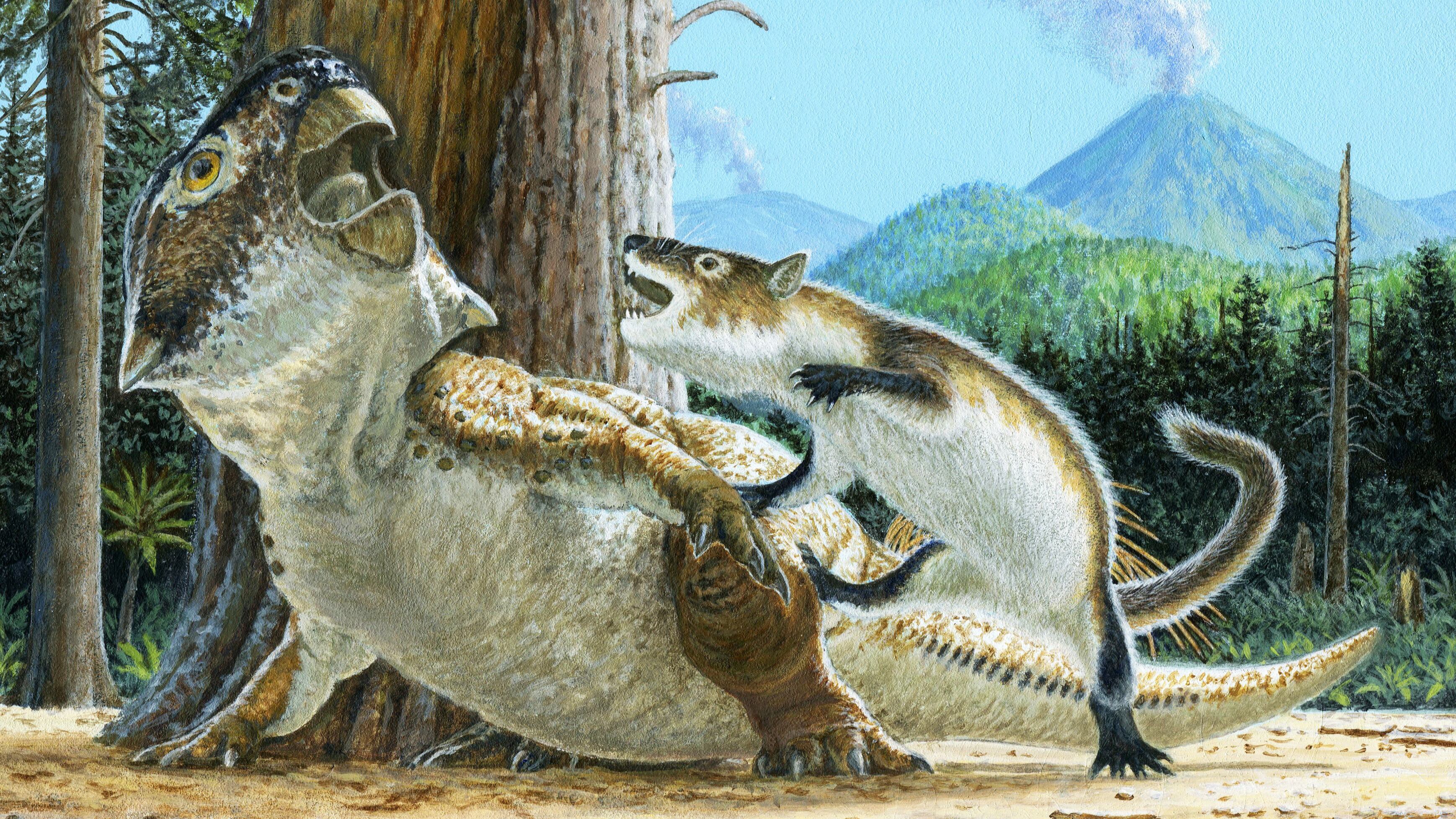
An unusual find in China suggests some early mammals may have hunted dinosaur for dinner. The fossil shows a badgerlike creature chomping down on a small, beaked dinosaur, their skeletons intertwined. The find comes from a site known as “China’s Pompeii,” where mud and debris from long-ago volcanoes buried creatures in their tracks. “It does seem like this is a prehistoric hunt, captured in stone, like a freeze frame,” University of Edinburgh paleontologist Steve Brusatte, who was not involved with the study, said in an email. The fossil, described Tuesday in the journal Scientific Reports, shows two creatures from around 125 million years ago, during the Cretaceous period.
Even though the mammal is much smaller, researchers think it was attacking the dinosaur when they both got caught in the volcanic flow, said study author Jordan Mallon, a paleobiologist at the Canadian Museum of Nature. The mammal is perched on the dinosaur, its paws gripping the reptile's jaw and a hind limb while its teeth plunge into the ribcage. “I’ve never seen a fossil like this before," Mallon said. That mammals ate dinosaur meat had been proposed before: another fossil showed a mammal died with dinosaur remains in its gut. But the new find also suggests that mammals may have actually preyed on dinosaurs several times their size, and didn’t just scavenge ones that were already dead, Mallon said. “This turns the old story on its head,” Brusatte said. “We’re used to thinking of the Age of Dinosaurs as a time when dinosaurs ruled the world, and the tiny mammals cowered in the shadows."
The study authors acknowledged that there have been some fossil forgeries known from this part of the world, which Mallon said was a concern when they started their research. But after doing their own preparations of the skeletons and analyzing the rock samples, he said they were confident that the fossil — which was found by a farmer in 2012 — was genuine, and would welcome other scientists to study the fossil as well. The mammal in the fossil duo is the meat-eating Repenomamus robustus, about the size of a house cat, Mallon said. The dinosaur — Psittacosaurus lujiatunensis — was about as big as a medium-sized dog with a parrotlike beak. This species was a plant eater, but other dinosaurs were meat eaters or ate both. In the end, dinosaurs were probably still eating mammals more often than the other way around, Mallon said. “And yet we now know that the mammals were able to fight back, at least at times," he said. The Associated Press Health and Science Department receives support from the Howard Hughes Medical Institute’s Science and Educational Media Group. The AP is solely responsible for all content.