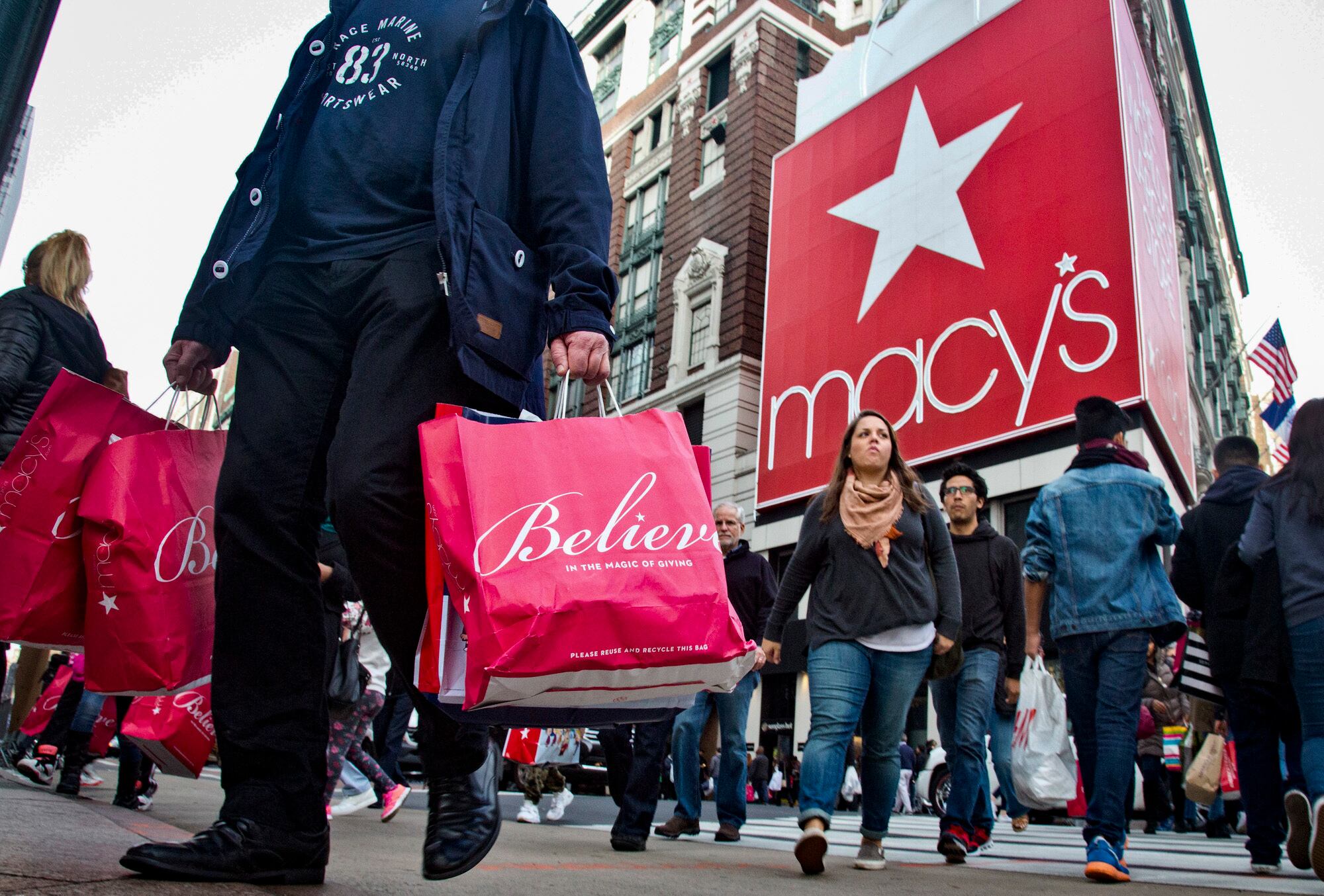
This file photo from Monday Oct. 17, 2016, shows shoppers and pedestrians in a crosswalk near a giant billboard next to Macy's flagship department store in Herald Square in New York. Macy's has filed a lawsuit against the company that owns the billboard, fighting to prevent Amazon from taking over the advertising space that carried Macy's name for almost 60 years. (AP Photo/Bebeto Matthews, File)
Macy's has filed a lawsuit against the company that owns the giant billboard next to its flagship Manhattan store, fighting to prevent Amazon from taking over the advertising space that carried Macy's name for almost 60 years.
In the lawsuit, filed last week in state Supreme Court in Manhattan, the department store retailer said there has been a restrictive covenant in place since 1963 barring the billboard space from being used by any Macy's competitor.
But Macy's said that when it tried to negotiate a lease renewal this year, the billboard's owners, the Kaufman Organization, told them they were in discussions with a “prominent online retailer," and there was “little doubt" that meant Amazon, according to the lawsuit.
Messages were left with the Kaufman Organization seeking comment. Amazon had no comment.
In the lawsuit, Macy's asked the judge for an injunction that would keep Kaufman from leasing the space to Amazon or any other competitor.
“The damages to Macy’s customer goodwill, image, reputation and brand, should a ‘prominent online retailer’ (especially, Amazon) advertise on the billboard are impossible to calculate," the company said in the lawsuit.
The lawsuit pointed out that the billboard is highly visible in its annual Thanksgiving Day parade, which is nationally televised.
Voice AI is moving into cars, restaurants and customer service. SoundHound CEO Keyvan Mohajer explains the company’s growth and the future of voice-powered AI.
Americans are still spending, but rising anxiety over jobs, AI, housing and tariffs tells a different story. Kearney Consumer Institute’s Katie Thomas explains.
Disney is back in focus after Q3 earnings. Investors are watching streaming profits, theme parks and ESPN as the entertainment giant looks for its next catalyst
Healthcare policy is shifting fast, raising questions about drug prices, Medicare and access. Leap Health CEO Hani Elias explains what patients need to know.
The U.S. job market is cooling as hiring slows and employers turn cautious. LinkedIn’s Kory Kantenga breaks down jobs, wages, spending and AI’s impact.
AI is entering a new phase as enterprises move beyond experimentation and demand measurable returns. Appian CEO Matt Calkins discusses what comes next.
Commercial Metals CEO Peter Matt reveals how a $2.5B acquisition spree is transforming the 111-year-old steelmaker into a construction solutions powerhouse.